Quick & Easy
Maple Balsamic Roasted Cauliflower
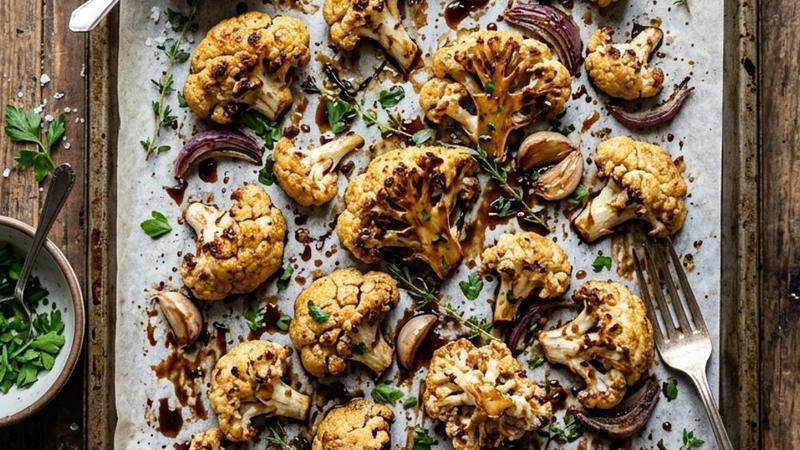
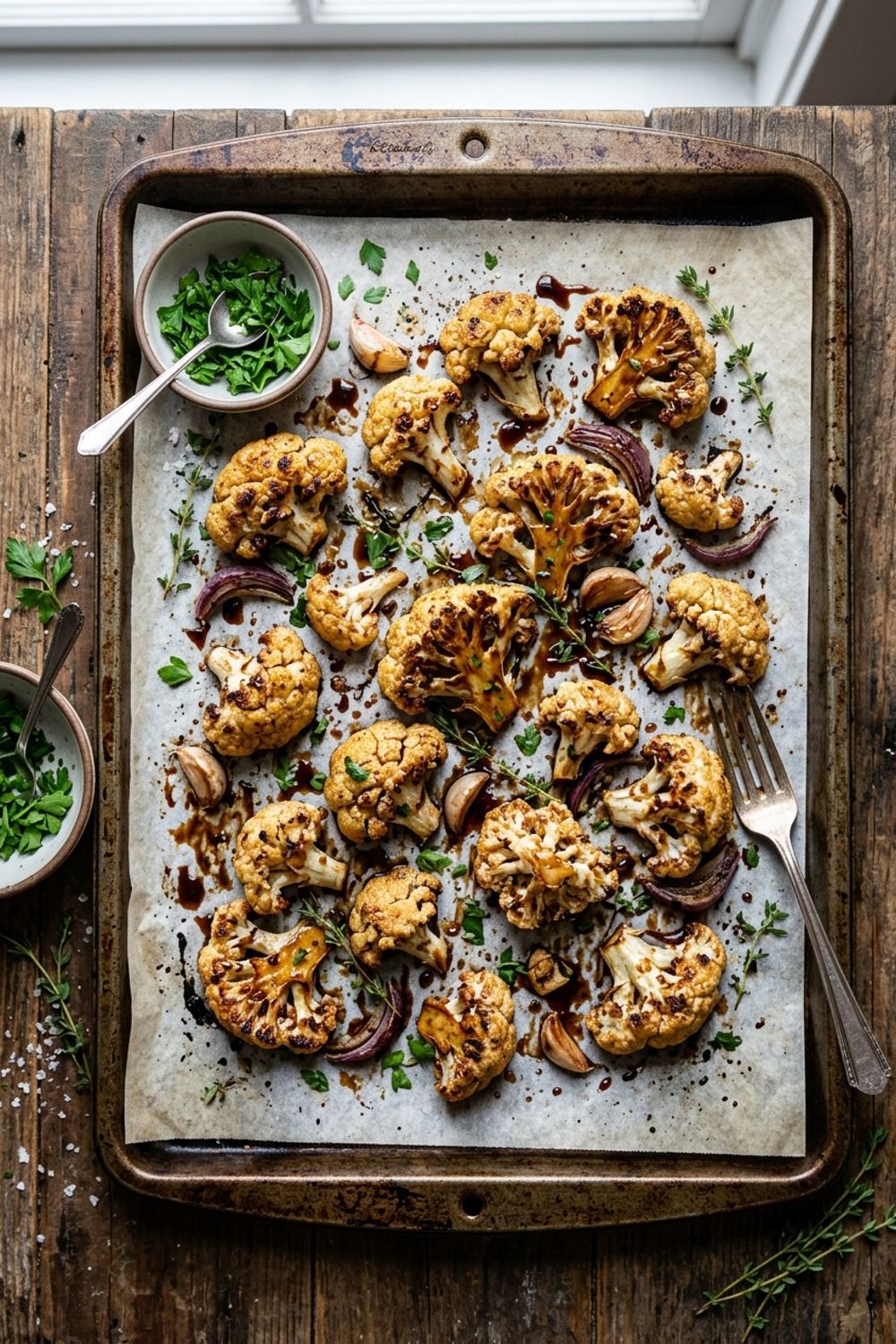
Crispy roasted cauliflower florets glazed with maple syrup and balsamic vinegar — a caramelized, savory-sweet side dish that steals the show every time.
Why This Recipe Is Special
I used to think cauliflower was boring — steamed until limp, unseasoned and unexciting. Then a friend roasted some at a dinner party with a maple balsamic glaze, and I genuinely could not believe it was the same vegetable. Roasting at high heat transforms cauliflower into something magical. The florets develop crispy, caramelized edges that shatter when you bite into them, giving way to a tender, almost creamy interior. Add a glaze of maple syrup and balsamic vinegar — both of which caramelize beautifully — and you have a side dish that regularly upstages the main course.
The flavor profile hits every note — sweet from the maple, tangy from the balsamic, savory from the soy sauce, and gentle heat from red pepper flakes. The toasted pine nuts add buttery crunch, and fresh parsley keeps everything bright. This recipe has converted more cauliflower skeptics than I can count.
The Science of Caramelizing Cauliflower
Two chemical reactions explain why roasted cauliflower tastes so different from steamed. The Maillard reaction occurs when sugars and amino acids meet high heat (above 300 degrees), producing nutty, toasty flavor compounds. Steaming never reaches these temperatures because water caps at 212 degrees. Caramelization is the breakdown of sugars at high heat — and the maple and balsamic amplify this dramatically.
This is why oven temperature and the flat-side-down technique matter so much. At 425 degrees, you are well above the threshold for both reactions. Placing florets flat-side-down maximizes surface contact with the scorching baking sheet. Crowding the pan traps steam and drops the temperature, so the florets steam instead of roast.
Tips for Perfect Results
Cut florets evenly. Aim for 1.5 to 2 inches. Cut through stems at an angle to create flat surfaces — these become the crispy, caramelized faces.
Place flat-side-down. This single step doubles the caramelization. Take an extra minute to flip each floret so a cut side faces the hot pan.
Use parchment paper, not foil. Parchment prevents sticking, promotes better browning, and avoids the hot spots foil creates.
Resist the urge to stir. Leave the cauliflower undisturbed for the full first 20 minutes to build that golden-brown crust.
Apply the glaze at the right moment. The 20-minute mark is the sweet spot — too early and it burns, too late and it does not caramelize.
Finish with flaky sea salt. Maldon or similar flaky salt provides pops of salinity that contrast beautifully with the sweet glaze. Add just before serving.
Variations to Try
Cauliflower Steaks. Cut the head into 1-inch thick slabs, brush with glaze, and roast 15 minutes per side. Gorgeous as a vegetarian main over arugula with tahini.
Sheet Pan Dinner. Add cubed sweet potatoes, red onion wedges, and chickpeas for a complete one-pan vegetarian meal.
Spicy Version. Increase red pepper flakes to a full teaspoon and add a diced chipotle pepper in adobo to the glaze.
Parmesan Crusted. Sprinkle grated Parmesan over the glazed cauliflower during the final 5 minutes for a crispy, savory crust.
Serving Ideas
As a side, it pairs beautifully with roasted chicken, grilled steak, or pan-seared fish. For a vegetarian dinner, serve over creamy polenta with arugula and extra balsamic glaze. As an appetizer, pile on a platter with toothpicks and whipped goat cheese for dipping.
How to Store
Leftovers keep in an airtight container in the refrigerator for up to 4 days. Reheat on a baking sheet at 400 degrees for 8-10 minutes to partially restore the crispy exterior. Cold leftovers are surprisingly delicious chopped into grain bowls or salads.
The glaze can be made up to a week in advance and refrigerated. It works beautifully on Brussels sprouts, carrots, and sweet potatoes too.
Troubleshooting
Cauliflower is soft and pale. The pan was too crowded. Use two sheets next time, and make sure your oven is fully preheated.
Glaze burned and turned bitter. Move the rack to the center position and reduce final roasting time to 8 minutes. If your oven runs hot, watch carefully.
Flavor is too sweet. Reduce maple syrup by one tablespoon and increase balsamic by the same amount. An extra teaspoon of soy sauce also adds savory balance.
This maple balsamic roasted cauliflower has permanently changed how I think about vegetable side dishes. If you make one new side this month, make it this one. For more favorites, try my honey curry roasted cauliflower or my creamy pesto chicken pasta.
Ingredients
Roasted Cauliflower
Maple Balsamic Glaze
Garnish
Instructions
Prep the Cauliflower
Preheat your oven to 425°F (220°C) and line a large rimmed baking sheet with parchment paper. Cut the cauliflower into evenly-sized florets — about 1.5 to 2 inches across. Even sizing ensures they cook at the same rate. Remove the tough core but do not discard the smaller leaves near the base — they roast into delicious crispy chips.
Season and Roast
Toss the florets with olive oil, salt, pepper, and garlic powder in a large bowl. Spread them in a single layer on the baking sheet with the flat cut sides facing down — this maximizes the surface area in contact with the hot pan, creating the best caramelization. Do not overcrowd; use two sheets if needed. Roast for 20 minutes without touching them.
Make the Glaze
While the cauliflower roasts, whisk together the maple syrup, balsamic vinegar, soy sauce, olive oil, minced garlic, and red pepper flakes in a small bowl. The mixture should be well combined and pourable.
Apply the Glaze
After 20 minutes, remove the baking sheet from the oven. The cauliflower should be golden on the bottom and starting to caramelize. Drizzle the maple balsamic glaze evenly over the florets and toss gently with a spatula to coat. Return to the oven for an additional 10-12 minutes until the glaze is caramelized, sticky, and the cauliflower is deeply golden brown with crispy edges.
Toast the Nuts
While the cauliflower finishes, toast the pine nuts or pepitas in a small dry skillet over medium-low heat, shaking frequently for 2-3 minutes until golden and fragrant. Transfer to a plate immediately — they burn very quickly in the residual heat of the pan.
Serve
Transfer the glazed cauliflower to a serving platter. Scatter with toasted nuts and fresh parsley. Drizzle with extra balsamic glaze and finish with a pinch of flaky sea salt. Serve immediately while hot and crispy.
Nutrition Information
Per serving (serves 4). Values are approximate.
| Calories | 175 calories |
| Total Fat | 10g |
| Saturated Fat | 1g |
| Carbohydrates | 20g |
| Sugar | 12g |
| Protein | 4g |
| Sodium | 520mg |
| Fiber | 3g |
* Percent Daily Values are based on a 2,000 calorie diet. Your daily values may be higher or lower depending on your calorie needs. Nutritional information is an estimate and may vary.
Never Miss a Recipe
Join 5,000+ home cooks and get new recipes straight to your inbox.
Frequently Asked Questions
Can I use frozen cauliflower?
I strongly recommend fresh cauliflower for this recipe. Frozen cauliflower contains too much water and steams instead of roasting, so you will not get the crispy, caramelized edges that make this dish special. If you must use frozen, thaw completely and pat dry with paper towels, pressing firmly to remove as much moisture as possible.
What kind of maple syrup should I use?
Always use pure maple syrup, not pancake syrup. Pure maple syrup has a complex, slightly smoky flavor that pairs beautifully with balsamic vinegar. Grade A Dark Amber or Grade B have the strongest maple flavor and stand up best to the vinegar. Pancake syrup is mostly corn syrup with artificial flavoring and will not produce the same result.
Can I make this on the stovetop?
You can, but the result will be different. Heat a large skillet over medium-high heat with olive oil, add the cauliflower in a single layer, and cook without moving for 4-5 minutes to get a sear. Then add the glaze and toss for another 3-4 minutes. You will get good browning but not the same deep, all-over caramelization that the oven provides.
How do I reduce balsamic vinegar for the drizzle?
Simmer half a cup of balsamic vinegar in a small saucepan over medium-low heat for 10-15 minutes until it reduces by half and coats the back of a spoon. It will thicken further as it cools. Store in a squeeze bottle at room temperature. You can also buy pre-made balsamic glaze — it is the same thing.

Hi, I'm Lisa!
I create simple, tested recipes from around the world that anyone can make at home.
Learn More →Reader Reviews
Based on 306 reviews