Soups & Comfort Food
Creamy Asparagus Soup
Learn how to make silky creamy asparagus soup at home. This elegant yet simple recipe is ready in 45 minutes with fresh asparagus, cream, and aromatic herbs.

Why I Love Making Creamy Asparagus Soup
There’s something magical about springtime, and for me, it always starts with fresh asparagus. I remember the first time I made creamy asparagus soup—I was living in a small apartment in Paris during my early twenties, and my neighbor, Margot, invited me over for lunch. She made this soup from asparagus she’d bought at the local market that morning, and I was absolutely captivated. The way the bright green color transformed into something so silky and elegant, the subtle nutmeg note that made you pause and wonder what it was—I knew I had to learn how to make it.
Now, years later and back home, I make this soup every spring when fresh asparagus appears at my local farmers market. It’s become my go-to recipe for impressing guests because it looks and tastes far more complicated than it actually is. The beauty of this soup is in its simplicity—just a handful of quality ingredients treated with care and attention. It’s the kind of dish that reminds me why I fell in love with cooking in the first place: the ability to transform humble vegetables into something that feels like a warm hug in a bowl.
Choosing and Preparing Your Asparagus
The quality of your asparagus makes all the difference in this soup. When I’m at the market, I look for spears that are bright green, firm, and snap when I bend them slightly. Avoid any that look wilted, yellowed, or have soft spots. Thinner asparagus tends to be more tender, while thicker spears can be woodier, but both work beautifully in soup since we’re blending everything anyway.
One of my favorite tips is to save those asparagus tips for garnish. After you trim the woody ends, set aside a handful of the tender tips and blanch them separately in salted boiling water for just 2-3 minutes until they’re bright green and tender-crisp. These make a gorgeous garnish that adds visual appeal and a little textural contrast to your finished soup. It’s these small touches that elevate a simple soup into something restaurant-worthy.
I always rinse my asparagus thoroughly under cold running water and pat it completely dry. Any excess water can dilute your soup, and we want maximum flavor in every spoonful. If you’re buying asparagus a day or two before making this soup, store it upright in a glass of water in the refrigerator, like a bouquet of flowers. This keeps it fresh and crisp until you’re ready to cook.
The Secret to Silky Smooth Texture
The key to achieving that luxurious, velvety texture is thorough blending. I cannot stress this enough—you want absolutely no graininess or chunks in your finished soup. An immersion blender is my preferred tool because you can blend the soup right in the pot, which means less cleanup and better control over the texture. If you’re using a regular blender, work in batches and never fill it more than halfway with hot liquid. The steam needs somewhere to escape, and an overfull blender is a safety hazard.
I blend for a good 2-3 minutes, making sure to get into all the corners of the pot where little asparagus pieces might hide. If you want an even silkier result, you can strain the blended soup through a fine-mesh sieve, though I find this unnecessary with a good blending technique. The color should be a beautiful pale green, almost like spring itself in a bowl.
Another factor in achieving creaminess is the ratio of cream to broth. I use a combination of heavy cream and whole milk because it gives richness without being overwhelming. If you use only heavy cream, the soup becomes almost too rich and heavy. If you use only milk, it lacks that luxurious mouthfeel. The combination is perfectly balanced.
Flavor Building and Seasoning
What makes this soup special is how the flavors build layer by layer. It starts with butter and aromatics—the onion and garlic create a savory foundation. Then the asparagus adds its delicate, slightly grassy sweetness. The broth brings umami and body. The cream adds richness and smoothness. And finally, the nutmeg ties everything together with a warm, sophisticated note that makes people pause and ask what the secret ingredient is.
I always add the nutmeg at the very end, after the soup is blended and the cream is incorporated. This way, the nutmeg flavor remains bright and distinct rather than getting lost in the blending process. Start with just a quarter teaspoon—you can always add more, but you can’t take it out. The nutmeg should be a whisper, not a shout.
Salt and pepper are equally important. I season in stages: a pinch when I add the broth, and then I taste and adjust at the end. This prevents over-salting and allows you to fine-tune the flavors to your preference. Remember that the broth already contains salt, so taste before adding more. Fresh cracked black pepper adds a subtle spice that complements the delicate asparagus beautifully.
Serving Suggestions and Variations
This creamy asparagus soup is incredibly versatile. I serve it as a first course at dinner parties, as a light lunch with crusty bread, or even as a sophisticated starter for a spring menu. The garnishes are where you can get creative and make it your own.
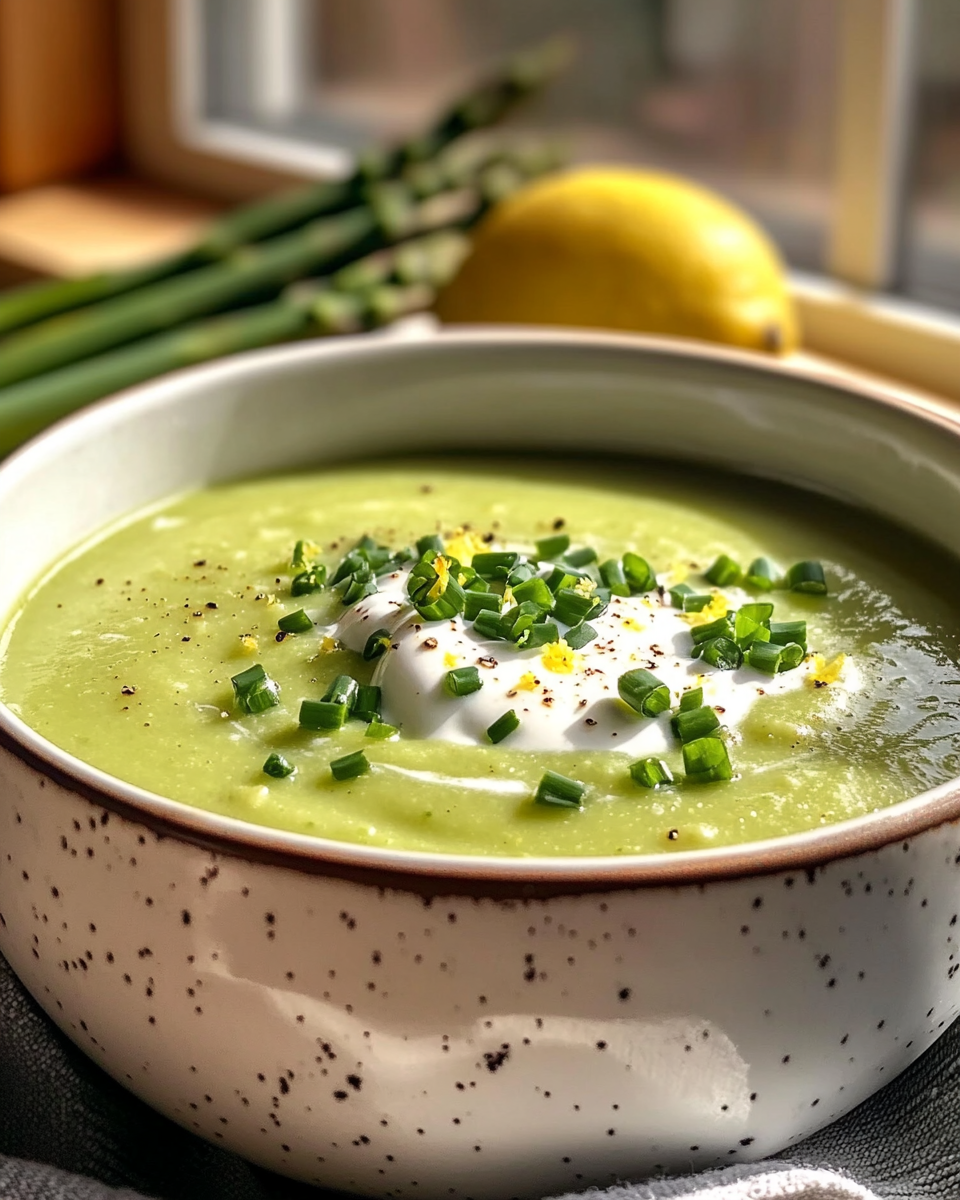
My favorite way to serve it is with a dollop of sour cream, fresh chopped chives, and a tiny pinch of lemon zest. The sour cream adds tang that brightens the richness, the chives echo the onion notes, and the lemon zest adds a fresh citrus zing. Sometimes I add crispy croutons for texture, or a drizzle of good quality olive oil and a crack of fleur de sel for elegance.
You can also make this soup with other spring vegetables. Peas, leeks, or even fresh herbs like tarragon or dill work wonderfully. I’ve made a version with half asparagus and half fresh peas that’s absolutely divine. The technique remains the same—sauté aromatics, add vegetables and broth, simmer until tender, blend until smooth, add cream, and season to taste. Once you master this basic method, you can adapt it to whatever vegetables are in season and available at your market.
Ingredients
Main Ingredients
Garnish & Optional
Instructions
Prepare the Asparagus
Start by rinsing your fresh asparagus under cold water and patting it dry. I always trim about 1-2 inches from the woody bottom ends of each spear—this is where the tough, fibrous parts are. Cut the asparagus into 2-inch pieces, keeping the tender tips separate from the thicker stalk pieces. This separation helps ensure even cooking and allows the tips to maintain their delicate texture for garnishing later. Set everything aside on a cutting board.
Sauté the Aromatics
Melt the butter in a large pot or Dutch oven over medium heat. Once it's foaming and fragrant, add your diced onion and cook for about 4-5 minutes, stirring occasionally, until the onion becomes translucent and softens. This is when I add the minced garlic and cook for another minute, just until the raw garlic smell disappears and you get that wonderful toasted aroma. Don't let the garlic brown—we want it sweet and mellow, not bitter.
Add Asparagus and Broth
Pour in your broth and add all the asparagus pieces (both the stalks and tips). Bring the mixture to a gentle boil, then reduce the heat to medium-low and let it simmer for 12-15 minutes. The asparagus should become very tender and easily pierced with a fork. This is the key to getting that silky texture in your final soup. I like to taste a piece to make sure it's completely soft before moving to the next step.
Blend Until Smooth
Remove the pot from heat and let it cool for about 2-3 minutes. Using an immersion blender, carefully blend the soup until completely smooth and creamy. If you don't have an immersion blender, you can carefully transfer the soup in batches to a regular blender, blend until smooth, and return it to the pot. Be cautious with hot liquids—never fill the blender more than halfway. Blend until there are no visible chunks and the color is a beautiful pale green.
Incorporate Cream and Seasonings
Return the pot to medium-low heat and stir in the heavy cream and whole milk. I use a combination of both because the whole milk lightens the richness slightly while the heavy cream gives that luxurious mouthfeel. Whisk everything together gently and let it warm through for about 3-4 minutes. Now add your salt, black pepper, and nutmeg. The nutmeg is subtle but essential—it adds a warm, sophisticated note that makes people ask what the secret ingredient is.
Taste and Adjust
Give your soup a good stir and taste it. This is your moment to adjust the seasonings to your preference. Need more salt? Add it gradually. Want it thinner? Stir in a bit more broth or milk. Prefer it richer? A splash more cream works beautifully. I always taste as I go because everyone's palate is different, and I want you to love this soup exactly as you make it.
Serve and Garnish
Ladle the creamy asparagus soup into bowls and top with fresh chopped chives, a dollop of sour cream, and a sprinkle of lemon zest if you're using it. The chives add a fresh onion note, the sour cream adds tang and richness, and the lemon zest brightens everything up. Serve immediately while the soup is hot, with crusty bread or croutons on the side for dipping.
Nutrition Information
Per serving (serves 4). Values are approximate.
| Calories | 245 calories |
| Total Fat | 18g |
| Saturated Fat | 11g |
| Carbohydrates | 12g |
| Sugar | 4g |
| Protein | 8g |
| Sodium | 680mg |
| Fiber | 2g |
* Percent Daily Values are based on a 2,000 calorie diet. Your daily values may be higher or lower depending on your calorie needs. Nutritional information is an estimate and may vary.
Never Miss a Recipe
Join 5,000+ home cooks and get new recipes straight to your inbox.
Frequently Asked Questions
Can I make creamy asparagus soup ahead of time?
Absolutely! This soup actually tastes even better the next day as the flavors meld together. I store it in an airtight container in the refrigerator for up to 3 days. When reheating, do it gently over medium-low heat, stirring occasionally and adding a splash of broth or milk if it's thickened too much. You can also freeze it for up to 2 months—just thaw it overnight in the fridge before reheating.
What if I don't have heavy cream?
You have several options! You can use all whole milk for a lighter version, though it won't be quite as rich. Greek yogurt works beautifully and adds a nice tang—stir it in at the end off the heat. Coconut milk is another wonderful substitute if you want a dairy-free version. Even cashew cream blended with water creates a luxurious texture. The soup will still be delicious, just with slightly different characteristics.
Can I use frozen asparagus instead of fresh?
Yes, you can! Frozen asparagus works in a pinch, though fresh asparagus has a slightly better flavor and texture. If using frozen, there's no need to thaw it first—just add it directly to the broth. You might need to reduce the cooking time slightly since frozen asparagus is already partially cooked. The soup will still turn out creamy and delicious.
How do I make this soup vegan?
To make a vegan version, substitute the butter with olive oil or vegan butter, use vegetable broth instead of chicken broth, and replace the heavy cream and milk with full-fat coconut milk or cashew cream. The nutmeg and seasonings remain the same. You'll lose some richness, but it's still a wonderfully creamy and satisfying soup. Top with vegan sour cream and fresh chives for serving.
Why is my soup not creamy enough?
If your soup isn't as creamy as you'd like, you likely need more cream or milk. Add it gradually while stirring until you reach your desired consistency. Another reason could be that you didn't blend it thoroughly enough—make sure there are no lumps and the texture is completely smooth. Finally, ensure you're using full-fat dairy products, as low-fat versions won't create that luxurious mouthfeel we're going for.

Hi, I'm Lisa!
I create simple, tested recipes from around the world that anyone can make at home.
Learn More →Reader Reviews
Based on 414 reviews
Leave a Review
You Might Also Like

Soups & Comfort Food
Slow-Cooker Curried Beef Stew

Soups & Comfort Food
French Onion Stew Recipe: Cozy, Soul-Warming Classic
Soups & Comfort Food
Comforting Ham and Lentil Soup Recipe
Soups & Comfort Food