Soups & Comfort Food
French Onion Stew Recipe: Cozy, Soul-Warming Classic
Master this French Onion Stew with caramelized onions, rich beef broth, and crusty bread. A timeless comfort dish that's easier than you think!
Why I’m Obsessed with French Onion Stew
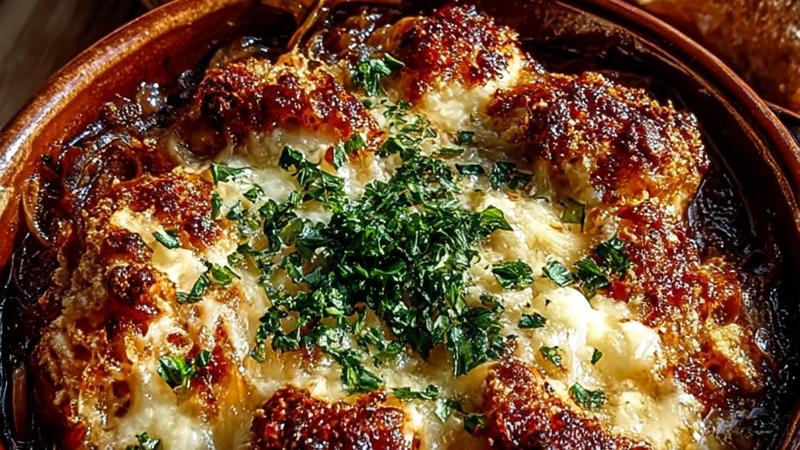
There’s something absolutely magical about French Onion Stew that just captures my heart every single time I make it. I was first introduced to this dish during a culinary trip through the Lyonnaise region of France, where onion-based dishes are practically a way of life. I remember sitting in a small bistro on a chilly evening, and this stew was served in a rustic ceramic bowl with melted Gruyère stretching across the top like golden ribbons. One spoonful, and I was completely hooked.
What fascinates me most about this recipe is its elegance in simplicity. You’re working with just a handful of ingredients—primarily onions, butter, broth, and bread—yet somehow it transforms into something so sophisticated and deeply satisfying. The caramelization process is where the real alchemy happens. As those onions slowly cook down, their sugars concentrate and deepen, creating this rich, sweet, savory base that tastes like it took hours of professional cooking to achieve.
I love this stew because it’s a lesson in patience and technique. There’s no rushing the caramelization, no shortcuts that actually work. Instead, you’re rewarded with understanding why French cuisine is so respected—it’s about respecting your ingredients and giving them the time they need to shine. This isn’t just soup; it’s comfort in a bowl, tradition on a spoon, and proof that sometimes the simplest recipes are the most profound.
The Science Behind Perfect Caramelization
Let me geek out for a moment about what’s actually happening when you caramelize onions—because understanding the science makes you a better cook. When you expose the natural sugars in onions to heat over an extended period, a chemical reaction called the Maillard reaction occurs. This is the same reaction that creates the golden crust on a perfectly seared steak or the deep color in a caramelized cake.
The key to success is low and slow heat. High heat will brown the sugars quickly but also create bitter compounds. Medium-low heat allows the moisture to evaporate gradually, concentrating the onion’s natural sweetness while the sugars slowly caramelize into complex, deep flavors. By the end of 40 minutes, your onions will have reduced to about one-quarter of their original volume, and they’ll be packed with umami—that savory, mouth-filling quality that makes food taste incredible.
I always tell people that caramelizing onions is like meditation. You’re not frantically stirring; you’re gently tending to them every few minutes, watching their transformation, and being present in the cooking process. It’s one of those techniques that teaches you patience while rewarding you with extraordinary flavor. Once you master caramelizing onions, you’ll find yourself using this technique in countless other dishes—French dips, burgers, risottos, and more.
Building Depth: The Role of Wine and Aromatics
After you’ve achieved that perfect caramelization, the next layer of flavor comes from deglazing with white wine. I love using a dry white wine like Sauvignon Blanc or Pinot Grigio—something I’d actually enjoy drinking. The wine serves multiple purposes: it dissolves those flavorful browned bits stuck to the bottom of the pot (a process called deglazing), it adds acidity to balance the sweetness of the caramelized onions, and it brings its own subtle fruity notes to the stew.
Then come the aromatics—bay leaves and fresh thyme. These aren’t just garnish; they’re essential components that add earthy, herbal complexity. The bay leaves provide a slight floral note and subtle bitterness, while the thyme brings peppery, minty undertones. I always use fresh herbs when possible because the difference in flavor is noticeable. Dried herbs are fine in a pinch, but fresh thyme has this bright quality that dried versions lack.
The balsamic vinegar is my secret weapon—just a teaspoon adds incredible depth and slightly rounds out the flavor profile, enhancing the savory notes without making the stew taste vinegary. It’s the kind of ingredient that people taste but can’t quite identify, which is exactly what you want. These elements working together create a stew that tastes like it’s been simmering for hours, when you’ve actually only invested about 70 minutes of hands-on cooking time.
The Cheese Topping: Achieving That Perfect Melt
Now, let’s talk about the crown jewel of this dish—that gorgeous, bubbling cheese topping. Gruyère is the traditional choice, and honestly, it’s traditional for a reason. This Swiss cheese has a higher melting point than most cheeses, which means it creates that beautiful, slightly crispy exterior while staying creamy underneath. It also has a naturally nutty, slightly sweet flavor that complements the caramelized onions perfectly.
Here’s my pro tip for getting the cheese perfectly melted: always use freshly grated cheese, never pre-shredded. Pre-shredded cheese contains anti-caking agents and cellulose that prevent smooth, even melting. When you grate it fresh, the pieces are smaller and more uniform, allowing them to melt evenly and create that gorgeous, cohesive layer on top.
I like to broil the stew rather than bake it because the high heat from above creates that crispy, golden exterior on the cheese while the interior stays creamy. Watch it carefully—just 2-3 minutes under the broiler is enough. If you leave it too long, the cheese can separate and become oily. The moment you see it bubbling and slightly golden at the edges, it’s perfect. The bread underneath should be crispy but not hard, and when you dip it into the stew, it should soften slightly while the cheese adds that luxurious, creamy component. It’s the texture contrast that makes this dish so irresistible.
Serving and Presentation Tips
French Onion Stew is meant to be served piping hot in individual oven-safe bowls or crocks. There’s something about serving it this way—in its own vessel—that makes the experience feel special and restaurant-quality. I love using ceramic bowls with handles because they stay hot longer and are safer to hold.
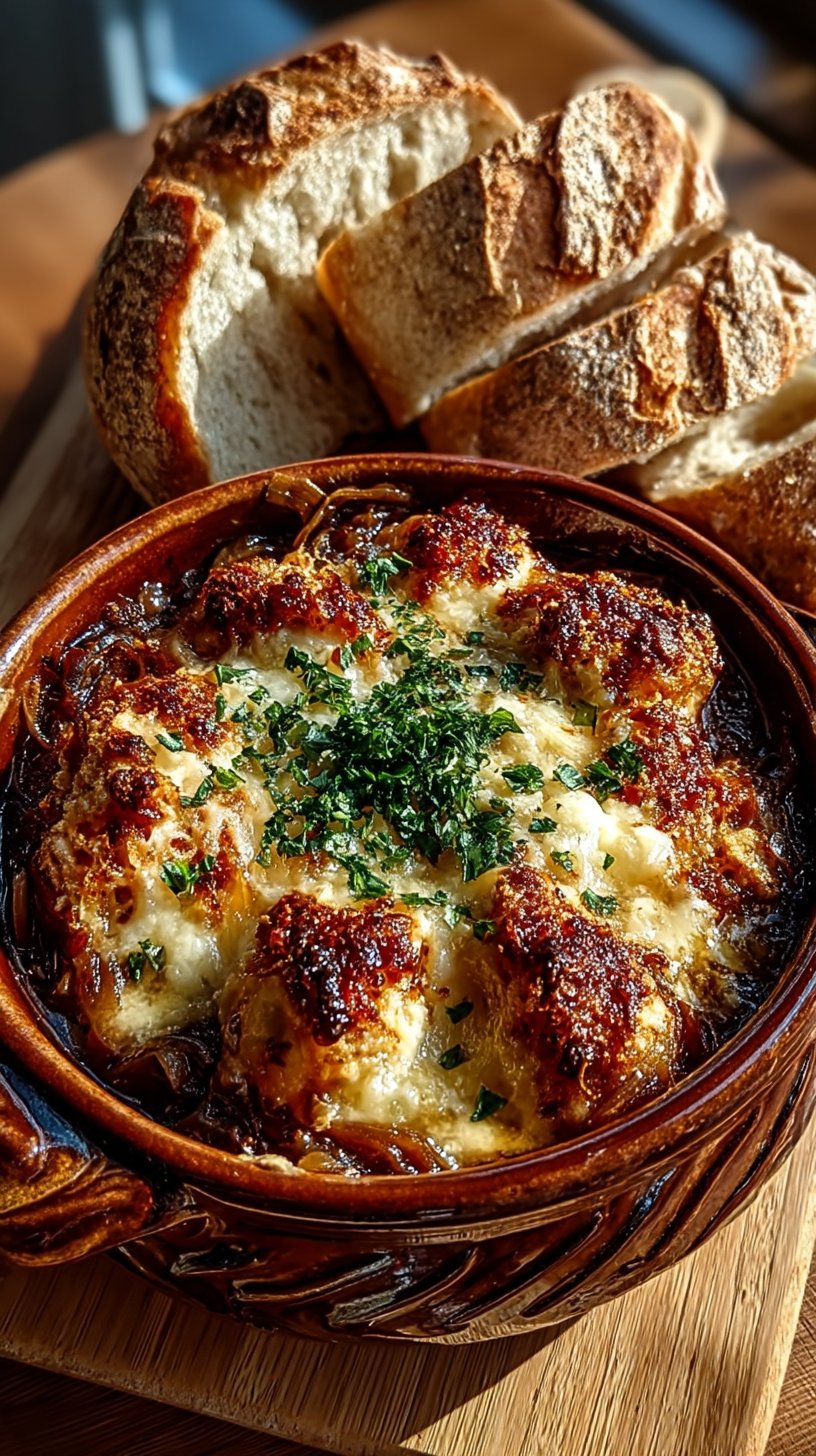
Here’s how I like to present it: the stew itself is a beautiful deep amber color from the caramelized onions. The bread on top is golden and crispy, and the cheese is melted and bubbly with just a hint of browning. A small garnish of fresh parsley not only adds a pop of color but also provides a fresh, herbal counterpoint to the rich, savory stew.
I always serve this with crusty bread on the side and maybe a simple green salad dressed with vinaigrette to balance the richness. A glass of the same white wine you used in the stew pairs beautifully. The stew is warm and comforting, perfect for cold weather, but I’ve also served it in spring and summer—it transcends seasons because it’s fundamentally satisfying and delicious.
One last thing: resist the urge to eat it immediately when it comes out of the broiler. Let it sit for just a minute or two. This allows the cheese to set slightly and prevents those scalding burns on the roof of your mouth. I’ve learned this the hard way more times than I’d like to admit!
Ingredients
Main Ingredients
For Serving
Instructions
Prep Your Onions
Start by slicing your onions as thinly as possible—this is honestly the most important step! I usually cut them in half first, then slice them into thin crescents. Don't worry if they're not perfectly uniform; the magic happens in the cooking. Set your sliced onions aside in a large bowl. This initial prep sets you up for success, and trust me, the aroma once you start cooking will be absolutely incredible.
Begin the Caramelization
Heat your butter and olive oil in a large, heavy-bottomed pot or Dutch oven over medium heat. Once the butter is foaming, add all your sliced onions along with the salt and pepper. Stir everything together to coat the onions evenly. At first, they'll look like way too much—I promise they'll cook down! Let them cook for about 5 minutes, stirring occasionally, until they start to soften and release their moisture.
Caramelize Slowly and Patiently
Reduce the heat to medium-low and continue cooking the onions for 30-40 minutes, stirring every 5-10 minutes. This slow caramelization is the soul of this stew. You're looking for the onions to transform from pale and wet to deep golden brown and sweet. Around the 20-minute mark, sprinkle the sugar over them—this enhances the natural caramelization process. The onions should smell like caramelized candy, and they'll have lost about three-quarters of their original volume. Don't rush this step; good things take time!
Build Your Flavor Base
Once your onions are gorgeously caramelized, sprinkle the flour over them and stir constantly for about 2 minutes. This creates a light roux that'll thicken your stew beautifully. Pour in the white wine, scraping up all those delicious browned bits from the bottom of the pot with your wooden spoon. Let it simmer for 3-4 minutes, allowing the wine to reduce slightly and the alcohol to cook off.
Add Your Broth and Aromatics
Pour in the beef broth, then add your bay leaves and fresh thyme sprigs. Stir in the balsamic vinegar, which adds depth and complexity to the broth. Bring everything to a gentle simmer over medium heat, then reduce to medium-low. Let it simmer uncovered for about 15-20 minutes, allowing the flavors to meld together. The stew should smell absolutely divine at this point—I love standing over the pot and just breathing in those savory, oniony aromas.
Toast Your Bread and Prepare Cheese
While your stew simmers, preheat your oven to 400°F (200°C). Slice your French bread into thick pieces and arrange them on a baking sheet. Toast them in the oven for about 5 minutes until they're golden and crispy. In a small bowl, combine your grated Gruyère and Parmesan cheese. Set both aside until you're ready to serve.
Season and Serve
Taste your stew and adjust seasoning with additional salt and pepper as needed. Remove the bay leaves and thyme sprigs. Ladle the hot stew into oven-safe bowls or a large pot, top with your toasted bread slices, then generously sprinkle the cheese mixture over the top. Place the bowls or pot under a preheated broiler for 2-3 minutes until the cheese is melted, bubbly, and slightly golden. Garnish with fresh parsley if desired, and serve immediately while everything is piping hot and the cheese is gloriously melted.
Nutrition Information
Per serving (serves 4). Values are approximate.
| Calories | 320 calories |
| Total Fat | 12g |
| Saturated Fat | 6g |
| Carbohydrates | 28g |
| Sugar | 8g |
| Protein | 18g |
| Sodium | 680mg |
| Fiber | 2g |
* Percent Daily Values are based on a 2,000 calorie diet. Your daily values may be higher or lower depending on your calorie needs. Nutritional information is an estimate and may vary.
Never Miss a Recipe
Join 5,000+ home cooks and get new recipes straight to your inbox.
Frequently Asked Questions
Can I make French Onion Stew ahead of time?
Absolutely! I actually prefer making this the day before. Prepare it completely through step 5, let it cool, then refrigerate in an airtight container for up to 3 days. The flavors actually deepen overnight, which is a beautiful bonus. When you're ready to serve, reheat gently on the stovetop, then proceed with toasting the bread and broiling with cheese.
What if I don't have Gruyère cheese?
While Gruyère is traditional and adds that perfect nutty flavor, you can absolutely substitute Swiss cheese, Emmental, or even a sharp white cheddar. I've used all of these with great results. The key is choosing a cheese that melts well and has some flavor depth. Avoid pre-shredded cheese if possible, as it contains additives that prevent smooth melting.
Is there a vegetarian version of this stew?
Yes! Replace the beef broth with vegetable broth or mushroom broth for a vegetarian version that's equally delicious. You could also add sautéed mushrooms during the caramelization process for extra umami depth. The caramelized onions provide so much flavor that you won't miss the meat at all.
How long does caramelization really take?
True deep caramelization takes 30-45 minutes of patient cooking over medium-low heat. I know it seems long, but this is what transforms ordinary onions into something magical. The lower the heat and slower the process, the sweeter and more complex the onions become. High heat will brown them too quickly and create a bitter flavor instead of that beautiful sweetness.
Can I freeze French Onion Stew?
Yes, but here's my tip: freeze the stew without the bread and cheese. Let it cool completely, portion it into freezer-safe containers, and freeze for up to 3 months. Thaw overnight in the refrigerator and reheat gently. Add fresh toasted bread and cheese when serving for the best texture and melted cheese effect.

Hi, I'm Lisa!
I create simple, tested recipes from around the world that anyone can make at home.
Learn More →Reader Reviews
Based on 402 reviews