World Cuisine
Fermented Cabbage Kimchi Bowl
Learn how to make a vibrant fermented cabbage kimchi bowl with perfectly seasoned napa cabbage, gochugaru, and crispy toppings for an authentic Korean experience.
Why This Fermented Cabbage Kimchi Bowl Is My Go-To Comfort Meal
I still remember my first taste of authentic kimchi at a tiny restaurant in Seoul’s Myeongdong district. The tang, the crunch, the slow burn of gochugaru — it was unlike anything I had experienced. That bite turned me into a lifelong devotee of Korean fermented foods.
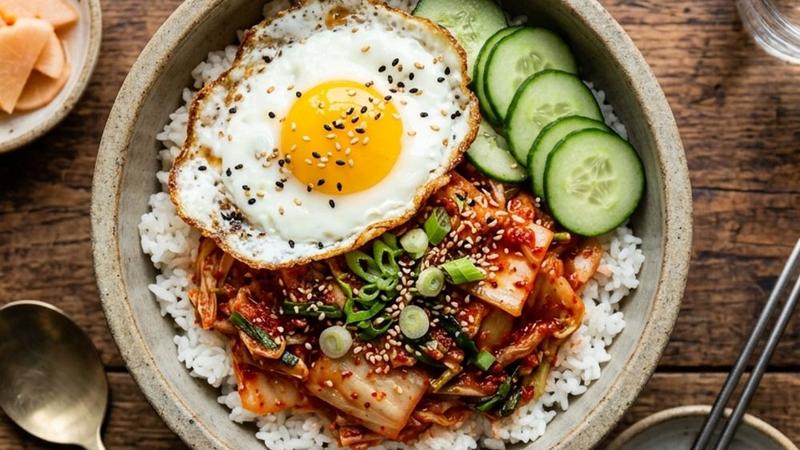
What makes this kimchi bowl special is the balance between the sour, spicy punch of fermented cabbage and the comforting warmth of freshly steamed rice. The runny egg yolk creates an incredible sauce when you break it open and mix it in. It is one of those meals that satisfies on every level — your hunger, your belly, and your taste buds all at once.
I designed this recipe to be approachable whether you are a beginner or experienced with Korean cooking. The fermentation might sound intimidating, but it is one of the simplest kitchen projects you will undertake — salt, time, and beneficial bacteria do all the heavy lifting.
The Art of Proper Cabbage Fermentation
When you salt napa cabbage, you draw out excess moisture and create an environment where beneficial lactobacillus bacteria thrive while harmful bacteria cannot. Use coarse sea salt because it dissolves more slowly and draws moisture more gradually, resulting in crunchier kimchi.
Temperature plays a huge role. Fermenting at 68-72 degrees produces the best balance of tang and depth. Warmer kitchens speed fermentation to as little as 12 hours; cooler environments may need up to 3 days. Taste twice daily — when the kimchi has pleasant effervescence and a sharp tanginess, it is ready for the fridge.
Press the kimchi down firmly after packing to keep vegetables submerged in their own brine, preventing mold. I also place plastic wrap directly on top before sealing the jar.
Building the Perfect Rice Foundation
The rice is not just filler — it is the canvas for all the other flavors. Rinse short-grain rice three to four times until the water runs almost clear, removing excess starch that would make it gummy. I use a 1.25:1 water-to-rice ratio and always let it rest covered for 10 minutes after cooking for the starches to set properly.
The sesame oil drizzle creates a thin coating on each grain that prevents it from immediately absorbing the kimchi juice, keeping your bowl beautifully layered rather than turning into a mushy mess. Use toasted sesame oil for deeper flavor that stands up to the powerful kimchi.
Tips for Perfect Kimchi Bowl Results
Use the freshest napa cabbage. Look for heads that feel heavy with tightly packed, crisp leaves — white at the base, pale green at the tips. Buy from Asian grocery stores where turnover is higher.
Do not rush the salting. The 1.5-2 hour brine is essential for the salt to penetrate thick white parts while gently wilting the greens. Test by bending a thick white piece — it should flex without snapping.
Control your gochugaru quality. Look for sun-dried Korean gochugaru with vibrant red color and a slightly oily feel. Good gochugaru provides complex sweetness, smokiness, and gradual heat, not sharp one-dimensional spice.
Perfect your egg technique. Use medium heat and a well-oiled non-stick pan. Cover for the last minute to set whites without overcooking the yolk. That liquid gold is the secret sauce of this dish.
Season in layers. Rice gets sesame oil, kimchi brings its fermented funk, the egg gets flaky salt, and the final drizzle of gochujang ties everything together.
Variations to Try
Kimchi Fried Rice Bowl. Chop kimchi finely and stir-fry with day-old rice, a tablespoon of butter, and soy sauce until caramelized. Works especially well with strongly fermented kimchi.
Tofu Kimchi Bowl. Press and cube extra-firm tofu, pan-fry in sesame oil until golden. Use soy sauce instead of fish sauce in the kimchi and add miso paste for depth.
Spicy Pork Kimchi Bowl. Marinate sliced pork belly in gochujang, soy sauce, garlic, and honey. Grill until caramelized and serve alongside the kimchi and rice.
Seafood Kimchi Bowl. Sear gochugaru-coated shrimp or squid over high heat. The briny sweetness pairs remarkably well with the fermented cabbage.
How to Store
Store kimchi in an airtight glass jar in the refrigerator, where it continues developing flavor. Peak flavor comes at two to three weeks, though it remains good for up to three months. Always use clean utensils to prevent introducing unwanted bacteria.
For assembled bowls, eat immediately for the best experience. If storing leftovers, keep components separate. Rice refrigerates for up to 3 days. Cook eggs fresh. Prep vegetables up to 2 days ahead.
Troubleshooting
Kimchi is too salty. Rinse cabbage more thoroughly — three full times under cold water. Taste a piece before mixing with the paste.
White spots on the surface. Usually harmless kahm yeast. Scrape off and push kimchi below the brine. If you see pink, black, or green mold, discard entirely.
Kimchi is not fermenting. Your kitchen may be too cold. Move the jar to a warmer spot or add a pinch of sugar to jump-start the process.
This kimchi bowl has become one of my most-loved recipes. For more dumpling adventures, try my Cabbage Dumplings Gyoza. For something completely different but equally comforting, try my Homemade Butter Chicken or my warming Thai Coconut Red Lentil Soup.
Ingredients
Kimchi Base
Rice Bowl
Instructions
Prepare the Cabbage
Cut the napa cabbage lengthwise into quarters, then chop each quarter crosswise into 2-inch pieces. Place the cabbage in a large bowl and sprinkle evenly with the coarse sea salt. Toss and massage the salt into the cabbage leaves for about 2 minutes. Pour the cold water over the cabbage, ensuring all pieces are submerged. Let it sit at room temperature for 1 1/2 to 2 hours, turning the cabbage halfway through.
Make the Kimchi Paste
While the cabbage is brining, combine the gochugaru, fish sauce, soy sauce, sugar, minced garlic, and grated ginger in a medium bowl. Stir until a smooth, vibrant red paste forms. Add the sliced scallions and mix gently to combine. Set aside.
Combine and Ferment
Drain the cabbage thoroughly and rinse under cold running water three times to remove excess salt. Squeeze out as much water as possible. Transfer the cabbage to a large mixing bowl and add the kimchi paste. Using gloves, massage the paste into every leaf until evenly coated. Pack the kimchi tightly into a clean glass jar, pressing down to remove air pockets. Leave about 1 inch of headspace. Seal loosely and let ferment at room temperature for 1-2 days, then refrigerate.
Cook the Rice
Rinse the short-grain rice under cold water until the water runs clear, about 3-4 rinses. Combine the rice and 2 1/2 cups water in a medium saucepan. Bring to a boil over high heat, then reduce to low, cover, and simmer for 15 minutes. Remove from heat and let steam, covered, for an additional 10 minutes. Fluff with a fork and drizzle with 1 tablespoon of sesame oil.
Prepare the Toppings
Heat the vegetable oil in a non-stick skillet over medium heat. Crack the eggs into the pan and fry until the whites are set but the yolks remain runny, about 3-4 minutes. Slice the cucumber and julienne the carrot. Toast the sesame seeds in a dry pan over medium heat for 1-2 minutes until golden and fragrant.
Assemble the Bowls
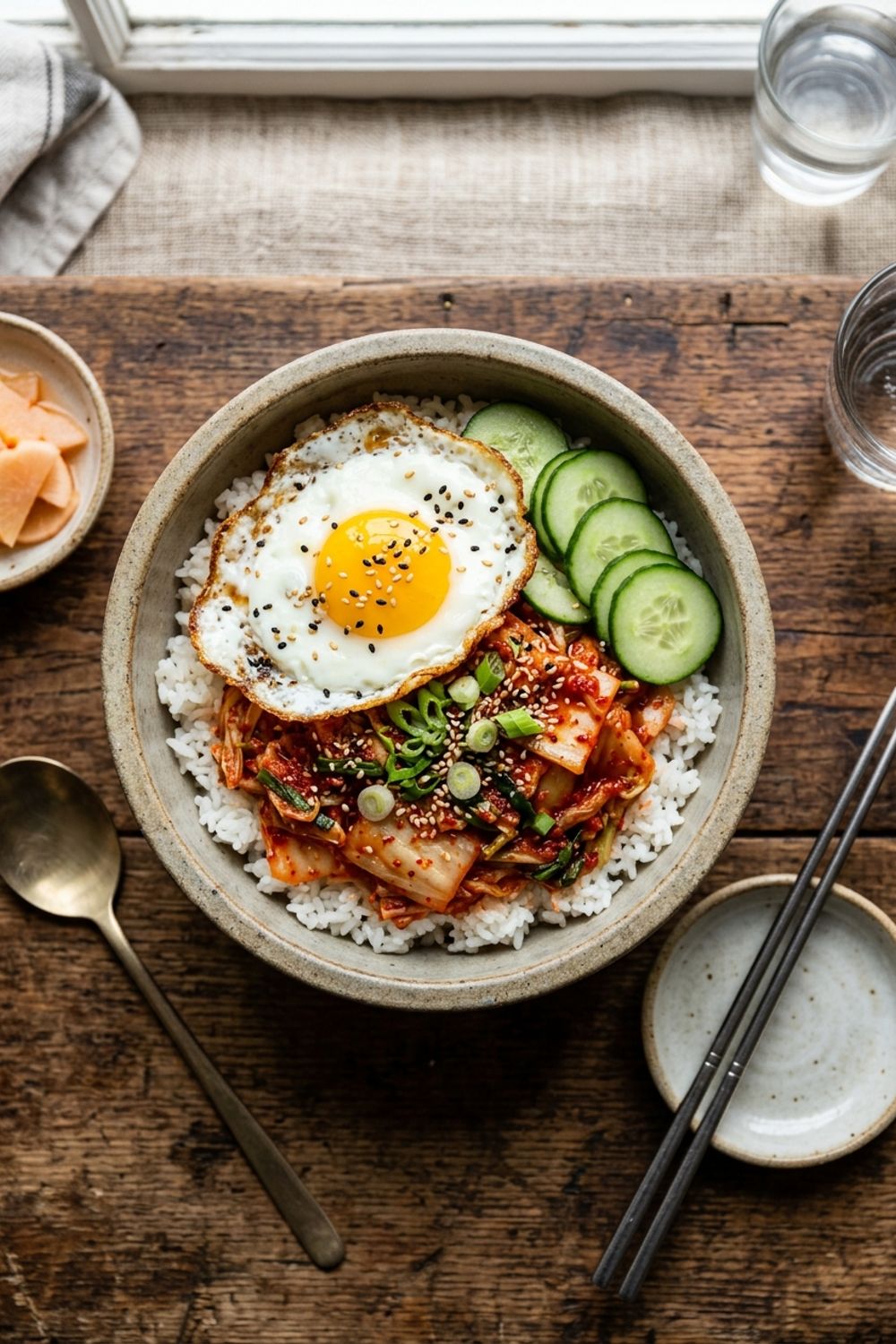
Divide the warm rice among four bowls. Top each with a generous portion of kimchi (about 1/2 cup per bowl), sliced cucumber, julienned carrot, and a fried egg. Drizzle with the remaining sesame oil and sriracha or gochujang. Garnish with toasted sesame seeds and nori strips. Serve immediately.
Nutrition Information
Per serving (serves 4). Values are approximate.
| Calories | 380 calories |
| Total Fat | 14g |
| Saturated Fat | 3g |
| Carbohydrates | 48g |
| Sugar | 6g |
| Protein | 16g |
| Sodium | 850mg |
| Fiber | 4g |
* Percent Daily Values are based on a 2,000 calorie diet. Your daily values may be higher or lower depending on your calorie needs. Nutritional information is an estimate and may vary.
Never Miss a Recipe
Join 5,000+ home cooks and get new recipes straight to your inbox.
Frequently Asked Questions
How long does homemade kimchi need to ferment?
For best flavor, ferment your kimchi at room temperature for 1-2 days, then transfer to the refrigerator. It will continue to develop flavor over the next 1-2 weeks in the fridge. Taste it daily to find your preferred level of tanginess.
Can I make this bowl without fish sauce?
Yes! For a vegetarian version, substitute the fish sauce with 3 tablespoons of soy sauce mixed with 1 teaspoon of miso paste. The flavor profile will be slightly different but still delicious and umami-rich.
What type of rice works best for kimchi bowls?
Short-grain white rice or sushi rice works best because its sticky texture pairs perfectly with the tangy kimchi. You can also use short-grain brown rice for added fiber, though you will need to increase the cooking time by about 15 minutes.
How spicy is this kimchi recipe?
With 1/4 cup of gochugaru, this recipe has a moderate heat level. For milder kimchi, reduce the gochugaru to 2 tablespoons. For extra heat, add 1-2 minced Thai chilies to the paste.

Hi, I'm Lisa!
I create simple, tested recipes from around the world that anyone can make at home.
Learn More →Reader Reviews
Based on 547 reviews