World Cuisine
Nam Jim Jaew — Thai Dipping Sauce
Authentic Thai nam jim jaew dipping sauce with roasted chili flakes, lime juice, fish sauce, and toasted rice powder — the perfect condiment for grilled meats.
Why Nam Jim Jaew Is the Greatest Dipping Sauce You Have Never Tried
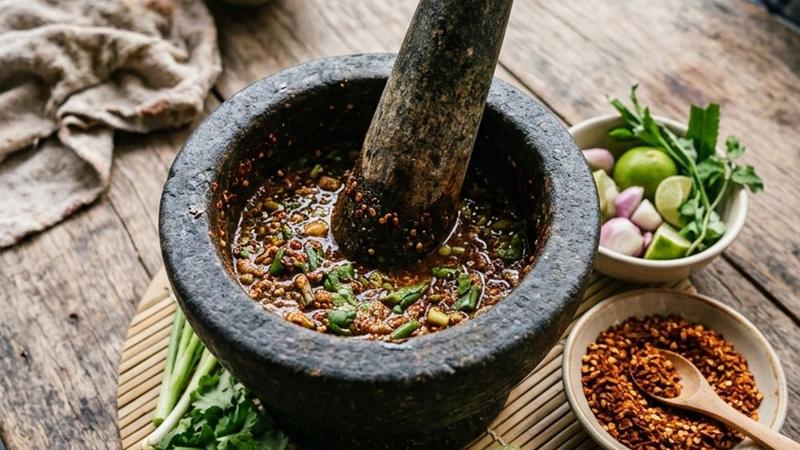
If I could only have one condiment for the rest of my life, it would be nam jim jaew. This Thai dipping sauce from the Isaan region of northeastern Thailand is everything I want — fiery, tangy, sweet, salty, and complex in a way that makes taste buds sing with every dip. I first encountered it at a street food stall in Chiang Mai, served alongside charred gai yang with sticky rice and raw cabbage wedges. I ordered it three nights in a row.
What makes it extraordinary is how much flavor it packs into such simple preparation. The toasted rice powder adds a uniquely nutty, smoky quality found in no other world cuisine. The balance of fish sauce (salty), lime juice (sour), palm sugar (sweet), and chili flakes (spicy) hits every taste receptor. There are layers — the initial salt and acid, slow-building chili heat, nutty rice powder coating your palate, and fresh herbs leaving a clean finish.
I make this at least twice a week. It has become my universal condiment — drizzled over grilled steak, tossed with noodles, used as salad dressing, spooned over fried eggs. The versatility is genuinely endless.
The Essential Art of Toasted Rice Powder
Toasted rice powder (khao khua) is the ingredient that sets nam jim jaew apart from every other dipping sauce. It adds a deeply toasted, nutty flavor with a pleasant grittiness that gives body to sauces.
Use raw sticky rice for superior results — its higher starch caramelizes more deeply. Toast in a completely dry pan over medium heat, stirring constantly, watching it transform from white to pale gold to deep peanut-butter brown. This takes 5-7 minutes. Under-toasted is bland and starchy; over-toasted becomes bitter. When the color matches natural peanut butter and the aroma is irresistibly nutty, transfer immediately.
Grind to a coarse powder — think cornmeal texture, not flour. A mortar and pestle gives the most control, but a spice grinder works. Make extra and store in a jar for months — it is incredible sprinkled on larb, papaya salad, and grilled meats.
Balancing the Four Essential Flavors
Thai cooking lives in the balance between salty, sour, sweet, and spicy. I build the sauce one flavor at a time, tasting frequently.
Fish sauce provides the salt and a deep umami richness. Use quality Thai brands like Squid Brand or Tiparos. Three tablespoons provides robust saltiness that stands up to the intense sour and spicy elements.
Fresh lime juice is the sour backbone — bottled has an artificial quality particularly noticeable in raw sauces. Squeeze right before mixing. The sour-to-salty ratio is roughly 1:1 by volume.
Palm sugar and tamarind paste work together for the sweet component. Palm sugar has a caramel-like depth with a butterscotch hint that pairs beautifully with toasted rice. Tamarind bridges sweet and sour with its own fruity tartness.
Roasted chili flakes provide the heat. The smokiness from dry-roasting gives them complexity beyond raw chili.
Tips for Exceptional Results
Use the best fish sauce you can find. In a sauce this simple, quality is magnified. Red Boat, Squid Brand, and Megachef are excellent options.
Slice shallots paper-thin. They are eaten raw, so thick slices are unpleasantly sharp. Use a mandoline or very sharp knife. Soak in cold water for 5 minutes if too pungent.
Toast rice slowly. Medium heat and constant stirring ensure even toasting. The color should be uniformly deep golden-brown with no white spots.
Make extra rice powder. Store in an airtight jar for 2-3 months. An incredible seasoning for everything from grilled meats to salads.
Taste and adjust. The balance is personal. Too salty, add lime. Too sour, add sugar. Lacking depth, add fish sauce. Trust your palate.
Variations to Try
Nam Jim Seafood. Increase lime juice, use fresh Thai bird’s eye chilies instead of roasted flakes, omit rice powder, and add minced lemongrass. Stunning with grilled shrimp or steamed fish.
Vegan Nam Jim Jaew. Replace fish sauce with equal parts soy sauce and mushroom oyster sauce. Add crumbled toasted nori for briny depth.
Smoky Charred Chili Version. Char dried Thai chilies over a flame or under a broiler until blistered, then crumble by hand. Adds incredible smokiness for charcoal-grilled meats.
Nam Jim Jaew Vinaigrette. Thin with rice vinegar and neutral oil. Toss with green papaya, carrots, cherry tomatoes, and roasted peanuts for a quick som tum-inspired salad.
How to Store
Nam jim jaew is fundamentally a fresh sauce, best within 2-3 hours. The herbs are brightest and the rice powder has optimal texture during this window.
To prepare ahead, make the liquid base up to 24 hours in advance. Store chili flakes and toasted rice powder in airtight containers at room temperature for weeks. When ready to serve, combine the base with shallots, herbs, and dry components — reducing last-minute prep to about 3 minutes.
Troubleshooting
Tastes too fishy. The fish sauce may be low quality, or the ratio is off. Add more lime juice and sugar to balance. For the future, invest in a better brand.
Tastes flat. Usually insufficient lime juice — people tend to under-squeeze. May also need more chili or sugar. Nam jim jaew should taste bold and punchy.
Rice powder tastes bitter. It was toasted too aggressively. Start over with medium heat and constant stirring. Remove from the pan the moment it reaches deep golden — residual heat continues darkening it.
This nam jim jaew has become the condiment I cannot live without. For more Thai cooking, try my Thai Coconut Red Lentil Soup. For bold flavors from another tradition, explore my Fermented Cabbage Kimchi Bowl.
Ingredients
Toasted Rice Powder
Sauce
Instructions
Make the Toasted Rice Powder
Heat a dry skillet or wok over medium heat. Add the sticky rice and toast, stirring constantly, for 5-7 minutes until the grains are deep golden brown and nutty smelling. Some grains may pop slightly — this is normal. The color should be the shade of peanut butter, not pale gold. Transfer to a mortar and pestle or spice grinder and grind to a coarse powder. You want some texture — not flour-fine, but broken into rough pieces. Set aside.
Dissolve the Sugar and Tamarind
In a small bowl, combine the palm sugar, tamarind paste, and 1 tablespoon of warm water. Stir until the sugar dissolves and the mixture is smooth. If using block tamarind, you may need to press it through a fine strainer to remove any fibers or seeds.
Combine the Wet Ingredients
In a medium bowl, combine the fish sauce, fresh lime juice, and the dissolved sugar-tamarind mixture. Stir until well combined. Taste the base — it should be a balance of salty, sour, and sweet. Adjust any component to your preference. The flavor should be punchy and bold since the herbs and rice powder will mellow it.
Add the Dry Ingredients
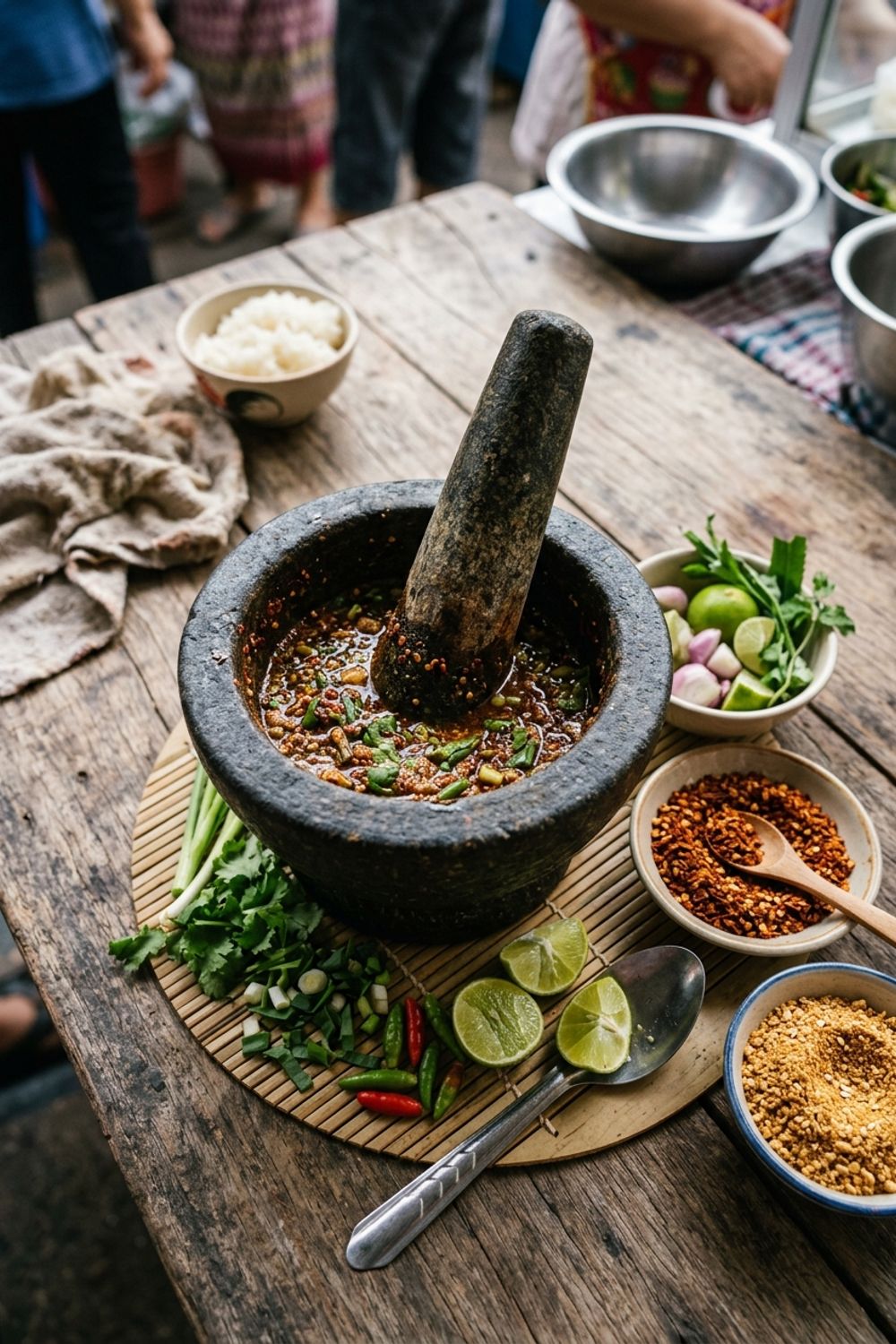
Add the Thai roasted chili flakes, sliced shallots, sliced scallions, chopped cilantro, and chopped mint to the wet mixture. Stir to combine. The sauce should look rustic and chunky with visible herbs and shallot slices throughout.
Finish with Rice Powder
Sprinkle the toasted rice powder over the sauce and stir to incorporate. The rice powder will slightly thicken the sauce and add a wonderfully nutty, toasty flavor that is the signature of authentic nam jim jaew. Let the sauce rest for 5 minutes before serving to allow the flavors to meld.
Serve
Transfer to a small serving bowl and place alongside grilled meats, sticky rice, and fresh vegetables. Nam jim jaew is traditionally served as part of an Isaan-style meal with grilled chicken (gai yang), grilled pork neck, or crying tiger beef. It also makes an incredible dipping sauce for spring rolls and raw vegetables.
Nutrition Information
Per serving (serves 4). Values are approximate.
| Calories | 45 calories |
| Total Fat | 0.5g |
| Saturated Fat | 0g |
| Carbohydrates | 9g |
| Sugar | 4g |
| Protein | 2g |
| Sodium | 820mg |
| Fiber | 1g |
* Percent Daily Values are based on a 2,000 calorie diet. Your daily values may be higher or lower depending on your calorie needs. Nutritional information is an estimate and may vary.
Never Miss a Recipe
Join 5,000+ home cooks and get new recipes straight to your inbox.
Frequently Asked Questions
What are Thai roasted chili flakes (prik pon)?
Prik pon are dried Thai chilies that have been dry-roasted until darkened and then roughly crushed into flakes. They have a smoky, complex heat that is different from raw chili flakes. You can make them at home by toasting whole dried Thai chilies in a dry pan until fragrant and slightly darkened, then crushing them with a mortar and pestle. Korean gochugaru is a decent substitute.
Can I make this sauce without fish sauce?
For a vegetarian version, replace the fish sauce with soy sauce mixed with a small amount of seaweed-based umami seasoning or mushroom sauce. The flavor will be slightly different but still delicious. Some Thai vegetarian cooks use fermented soybean paste as a substitute.
How long does nam jim jaew keep?
The sauce is best consumed within 2-3 hours of making it while the herbs are still fresh and bright. You can prepare the liquid base up to 24 hours in advance and refrigerate, then add the fresh herbs, shallots, and rice powder just before serving.
What is toasted rice powder and why is it important?
Toasted rice powder (khao khua) is a staple seasoning in Isaan Thai cuisine. It adds a unique nutty, toasted flavor and a slight grittiness that gives the sauce body and texture. Without it, nam jim jaew tastes flat and one-dimensional. There is no true substitute, but it is incredibly easy to make at home.

Hi, I'm Lisa!
I create simple, tested recipes from around the world that anyone can make at home.
Learn More →Reader Reviews
Based on 579 reviews