World Cuisine
Tuna Carpaccio Recipe: Italian Elegance in Every Slice
Discover how to make authentic tuna carpaccio at home. This elegant Italian appetizer features paper-thin raw tuna slices with simple, fresh ingredients.

What Is Tuna Carpaccio and Why I’m Obsessed
When I first encountered tuna carpaccio during a trip to the Italian coast, I was immediately struck by its elegance and simplicity. Carpaccio is a traditional Italian dish featuring thinly sliced raw meat or fish, typically served cold with a light dressing. The term comes from the Venetian painter Vittore Carpaccio, and the dish was named in his honor by a famous Venetian restaurant. The red and white colors of the original beef carpaccio reminded diners of his paintings. What fascinates me most is how a dish with so few ingredients can be so impressive and delicious. Tuna carpaccio represents everything I love about world cuisine: respect for quality ingredients, minimal manipulation, and maximum flavor. The beauty lies in the fact that each component—the tuna, the olive oil, the lemon—must be absolutely perfect because there’s nowhere to hide. This is restaurant-quality cooking that’s surprisingly achievable at home.
The Magic of Sushi-Grade Tuna
Understanding your ingredient is half the battle when making tuna carpaccio. Sushi-grade tuna is specifically frozen at minus 4 degrees Fahrenheit for seven days or minus 31 degrees Fahrenheit for 15 hours to eliminate parasites and ensure food safety. This process, called blast freezing, actually preserves the quality of the tuna better than you might expect. When you’re at your fishmonger, look for ahi tuna—it’s the most commonly used variety for carpaccio because of its firm texture and rich flavor. The color should be a deep, bright pink or red, and it should smell clean and fresh, like the ocean. I always buy from reputable sources because this dish requires absolute trust in your ingredient’s safety and quality. A good fishmonger becomes your partner in creating this dish successfully, so don’t hesitate to ask questions about sourcing, handling, and storage.
Technique Matters: The Art of Slicing
I cannot overstate how important proper slicing technique is for tuna carpaccio. The knife work directly affects the dish’s final texture and presentation. You’ll need a very sharp knife—I recommend a long-bladed chef’s knife or Japanese sashimi knife. A dull knife will compress and damage the delicate tuna flesh, resulting in a mushy texture and loss of color. I keep my knife sharp using a honing steel regularly and sharpening it professionally every few months. Before slicing, I freeze my knife and cutting board because the cold helps create cleaner, more delicate slices. When cutting, use smooth, single strokes from the heel to the tip of the blade rather than sawing motions. Each slice should be about 1/8 inch thick—translucent enough to see light through it. This thickness is perfect for carpaccio because it showcases the tuna’s beautiful color while maintaining enough structure to handle without tearing.
Building Layers of Flavor
What I adore about tuna carpaccio is how the simple dressing elevates the tuna without competing with it. The combination of extra virgin olive oil, lemon juice, and white wine vinegar creates a balanced flavor profile. The olive oil must be high-quality—extra virgin is essential—because its fruity, complex notes will be front and center in this minimal preparation. Lemon juice provides brightness and acidity that prevents the dish from feeling heavy. The white wine vinegar adds subtle complexity and helps the flavors meld. Each component plays a specific role, and together they create something greater than their parts. This is the essence of Italian cooking philosophy: respect your ingredients, keep it simple, let quality shine through. I often taste the dressing on a small piece of tuna before dressing the entire plate to ensure the seasoning is perfect. This final-moment adjustment ensures the dish is precisely balanced for your palate.
Presentation: Making It Restaurant-Worthy
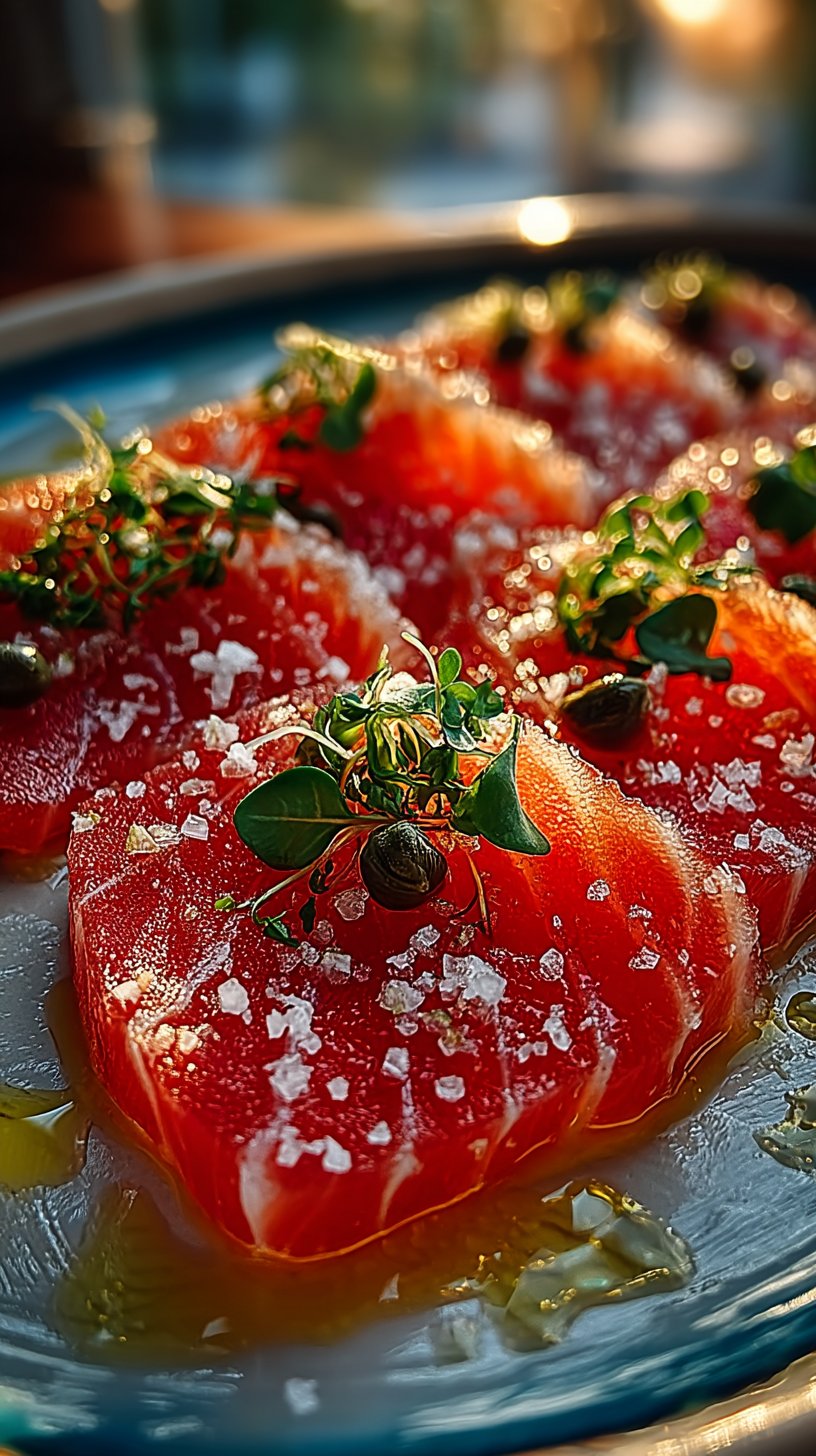
Presentation matters significantly with carpaccio because you’re showcasing the beautiful pink color of the tuna. I arrange the slices in a slightly overlapping circular pattern, starting from the center of the plate and working outward. Some people prefer a scattered, more casual arrangement—both are elegant. Using chilled white plates makes the tuna’s color pop beautifully. The garnishes should be distributed thoughtfully, not randomly scattered. Fresh herbs, capers, and microgreens should be placed with intention. I typically create a small mound of garnishes in the center or to the side, then let them cascade slightly across the tuna. The red onion slices and Parmesan shavings add visual interest and texture. Remember that we eat with our eyes first, so take a moment to arrange your plate beautifully. This attention to detail is what transforms a simple dish into an impressive first course.
Serving and Storage Tips
Tuna carpaccio must be served immediately after assembly—this is non-negotiable. The acid in the dressing will begin to ‘cook’ the raw tuna if left sitting, changing its color from deep pink to pale and altering its delicate texture. I always prepare and chill my plates while I’m slicing the tuna, so everything is ready for quick assembly. If you’re serving multiple courses, prepare the carpaccio just as guests are finishing their pre-dinner drinks. For storage, you can keep your sliced tuna covered in the refrigerator for up to 4 hours. I prefer to slice it no more than 2 hours before serving. The dressing can be made several hours ahead and kept at room temperature. Garnishes can be prepped ahead and stored separately. This strategic planning allows you to minimize last-minute stress while ensuring your carpaccio is perfectly fresh.
Ingredients
Main Ingredients
Garnish & Finishing
Instructions
Select and Prepare Your Tuna
This is where everything begins, and honestly, it's the most crucial step. I always visit my local fishmonger and specifically ask for sushi-grade ahi tuna. The quality here is non-negotiable because we're eating this raw. Pat your tuna loin completely dry with paper towels—this prevents any excess moisture that could affect the texture. I like to place it on a clean cutting board and let it sit for a few minutes. If your tuna has been frozen, make sure it's thoroughly thawed in the refrigerator, not at room temperature.
Chill Your Workspace
Before slicing, place your cutting board and knife in the freezer for about 10 minutes. I learned this trick during my culinary explorations through Italy, and it makes such a difference! A cold knife glides through the tuna more smoothly, creating those beautiful, paper-thin slices without crushing the delicate flesh. Also, chill your serving plates—you want everything to stay fresh and preserve that beautiful pink color of the tuna.
Slice the Tuna with Precision
Using your chilled knife, slice the tuna as thinly as possible—about 1/8 inch (3mm) thick. I use a sharp, long-bladed knife and make smooth, single strokes rather than sawing motions. This keeps the tuna intact without damaging its delicate structure. Start from one end of the loin and work your way through, rinsing your knife between slices if needed to keep it clean. Each slice should be nearly translucent. Arrange the slices on your chilled plates, slightly overlapping them in a beautiful circular pattern or scattered arrangement, depending on your presentation preference.
Create the Perfect Dressing
In a small bowl, whisk together the extra virgin olive oil, fresh lemon juice, and white wine vinegar. This is where I take a moment to appreciate the simplicity of Italian cooking—just quality ingredients, nothing more. Season this dressing with a generous pinch of sea salt and freshly ground black pepper. The ratio should feel balanced on your palate: bright and lemony but also rich from the olive oil. I typically taste it on a small piece of tuna to ensure it's perfectly seasoned before dressing the whole plate.
Dress and Season the Tuna
Drizzle your carefully prepared dressing over the tuna slices just before serving. I'm generous but controlled with the amount—about 1-2 teaspoons per serving. Sprinkle the minced garlic evenly across each plate, followed by a light dusting of sea salt and black pepper. This is the moment where restraint is key; you want to enhance the tuna's natural flavors, not overpower them. The beauty of carpaccio lies in its simplicity and the quality of its ingredients shining through.
Add Fresh Garnishes
Now for the finishing touches that make this dish truly special! Scatter the capers across the top—their briny, tart flavor provides a wonderful contrast to the delicate tuna. Add a light handful of fresh microgreens or peppery arugula to the side of the plate. Using a vegetable peeler, create thin shavings of Parmesan cheese and let them fall gracefully over the tuna. Finally, add thin slices of red onion for color and a subtle sharp bite. A tiny pinch of red pepper flakes adds an unexpected depth if you enjoy a hint of heat.
Serve Immediately
This is absolutely essential—tuna carpaccio must be served immediately after assembly. Don't let it sit, even for a few minutes, as the acid in the dressing will begin to cook the delicate raw tuna. Serve as an elegant first course with chilled white wine, crusty bread, or crostini on the side. I love pairing it with a crisp Pinot Grigio or Vermentino. Your guests will be impressed by how restaurant-quality this looks and tastes, and you'll have the satisfaction of knowing you created it at home.
Nutrition Information
Per serving (serves 4). Values are approximate.
| Calories | 180 calories |
| Total Fat | 12g |
| Saturated Fat | 2g |
| Carbohydrates | 2g |
| Sugar | 0g |
| Protein | 20g |
| Sodium | 480mg |
| Fiber | 0g |
* Percent Daily Values are based on a 2,000 calorie diet. Your daily values may be higher or lower depending on your calorie needs. Nutritional information is an estimate and may vary.
Never Miss a Recipe
Join 5,000+ home cooks and get new recipes straight to your inbox.
Frequently Asked Questions
Can I use regular grocery store tuna for carpaccio?
I really wouldn't recommend it. Sushi-grade tuna has been frozen at specific temperatures to kill parasites and is handled with much stricter food safety standards. Regular grocery store tuna isn't processed the same way, so it's not safe to eat raw. Always ask your fishmonger for 'sushi-grade' or 'sashimi-grade' ahi tuna—your health and the dish's quality depend on it.
How do I know if my tuna is truly sushi-grade?
The best indicator is asking your fishmonger directly. Reputable fish counters will clearly label sushi-grade tuna, and the fishmonger should be able to tell you where it's from and how it's been handled. The tuna should smell clean and oceanic, not fishy. It should have a bright pink or deep red color, and the flesh should be firm. Building a relationship with a trusted fishmonger is one of my favorite food discoveries.
Can I make tuna carpaccio ahead of time?
You can prepare most components ahead—slice the tuna and store it covered in the refrigerator for up to 4 hours, and make your dressing several hours in advance. However, the final assembly should always happen just before serving. The acid in the dressing will begin to 'cook' the raw tuna if left sitting, changing its texture. Keep everything cold until the last moment.
What wine pairs best with tuna carpaccio?
I'm a big fan of crisp, mineral-driven white wines with this dish. Pinot Grigio is my go-to, but I also love Vermentino, Sauvignon Blanc, or even a light Albariño. The acidity in these wines complements the lemony dressing perfectly, and they won't overpower the delicate tuna. A chilled dry champagne or prosecco is also elegant for special occasions.
Can I add other ingredients to my carpaccio?
Absolutely! Carpaccio is quite versatile. I've made versions with thin-sliced jalapeños for heat, toasted pine nuts for texture, or fresh herbs like dill and tarragon. Some people add pomegranate seeds or thinly sliced beets for color. The key is maintaining balance—don't let additions overwhelm the beautiful simplicity of the tuna itself. Start with the classic version, then get creative once you master it.

Hi, I'm Lisa!
I create simple, tested recipes from around the world that anyone can make at home.
Learn More →Reader Reviews
Based on 429 reviews
Leave a Review
You Might Also Like
World Cuisine
Yellow Curry Meatballs with Peanut Shallot Crispies
World Cuisine
I Can't Stop Eating This Lemony Greek Chickpea and Feta Cheese Salad
World Cuisine
High-Protein Mediterranean Meatball Bowls
World Cuisine