
What if Polish comfort food could fit seamlessly into your weeknight dinner rotation? Cabbage dumplings deliver exactly that – tender pillows filled with savory caramelized cabbage, crispy edges from pan-frying, and that soul-warming satisfaction only dumplings provide. In 45 minutes, you’ll master this traditional recipe that’s surging 110 percent on Pinterest. These aren’t just dumplings. They’re the reason your kitchen smells like grandma’s house and your family asks for seconds.
Whether you’re exploring Polish cuisine, meal-prepping for the week, or impressing dinner guests, these cabbage dumplings prove that simple ingredients create extraordinary results. The sweet caramelized cabbage paired with savory onions creates addictive flavor, while the tender dough wraps it all in comforting perfection. No fancy equipment required – just a skillet, some patience, and an appetite for deliciousness.
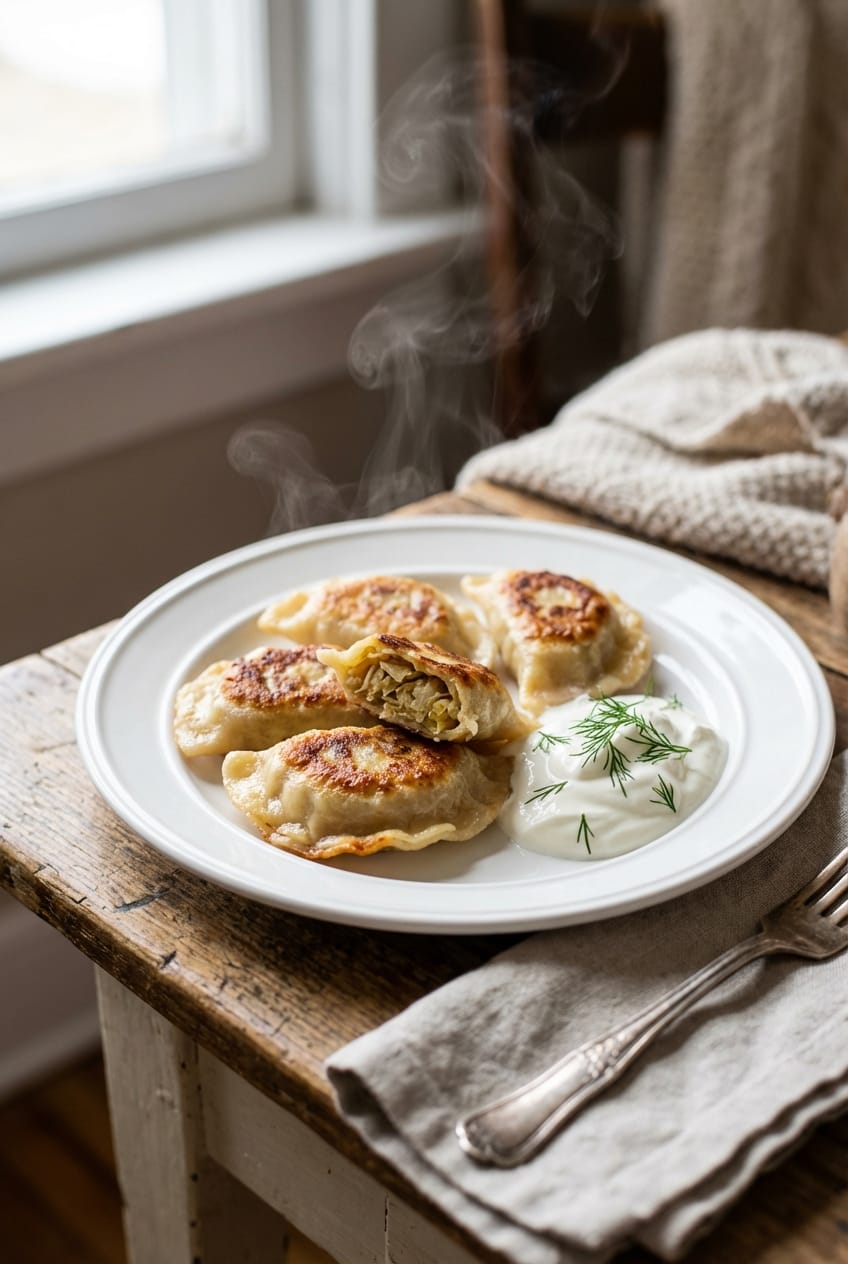
Ingredients
Fresh cabbage is essential – avoid pre-shredded bags that dry out. The long cooking time caramelizes the natural sugars, creating deep, sweet flavor that makes these dumplings irresistible.
For the Dough
- 300g (2½ cups) all-purpose flour
- 180ml (¾ cup) warm water
- 2 tablespoons vegetable oil
- ½ teaspoon salt
For the Cabbage Filling
- 600g (1 small head) green cabbage, finely shredded
- 2 large onions, finely diced
- 3 tablespoons butter
- 1 teaspoon salt
- ½ teaspoon black pepper
- ½ teaspoon caraway seeds (optional, traditional)
For Serving
- Sour cream
- Fresh dill, chopped
- Caramelized onions (optional)
- Black pepper
Smart Substitutions
No Fresh Cabbage: Use sauerkraut (drained well) for tangier flavor. Vegan: Replace butter with olive oil, serve with cashew cream. Gluten-Free: Use 1:1 gluten-free flour blend. Time-Saver: Use store-bought dumpling wrappers (wonton or gyoza size).
Timing
- Prep: 20 minutes
- Cook: 25 minutes (filling + dumplings)
- Total: 45 minutes
- Serves: 4 (about 20 dumplings)
Instructions
Step 1: Make the Dough
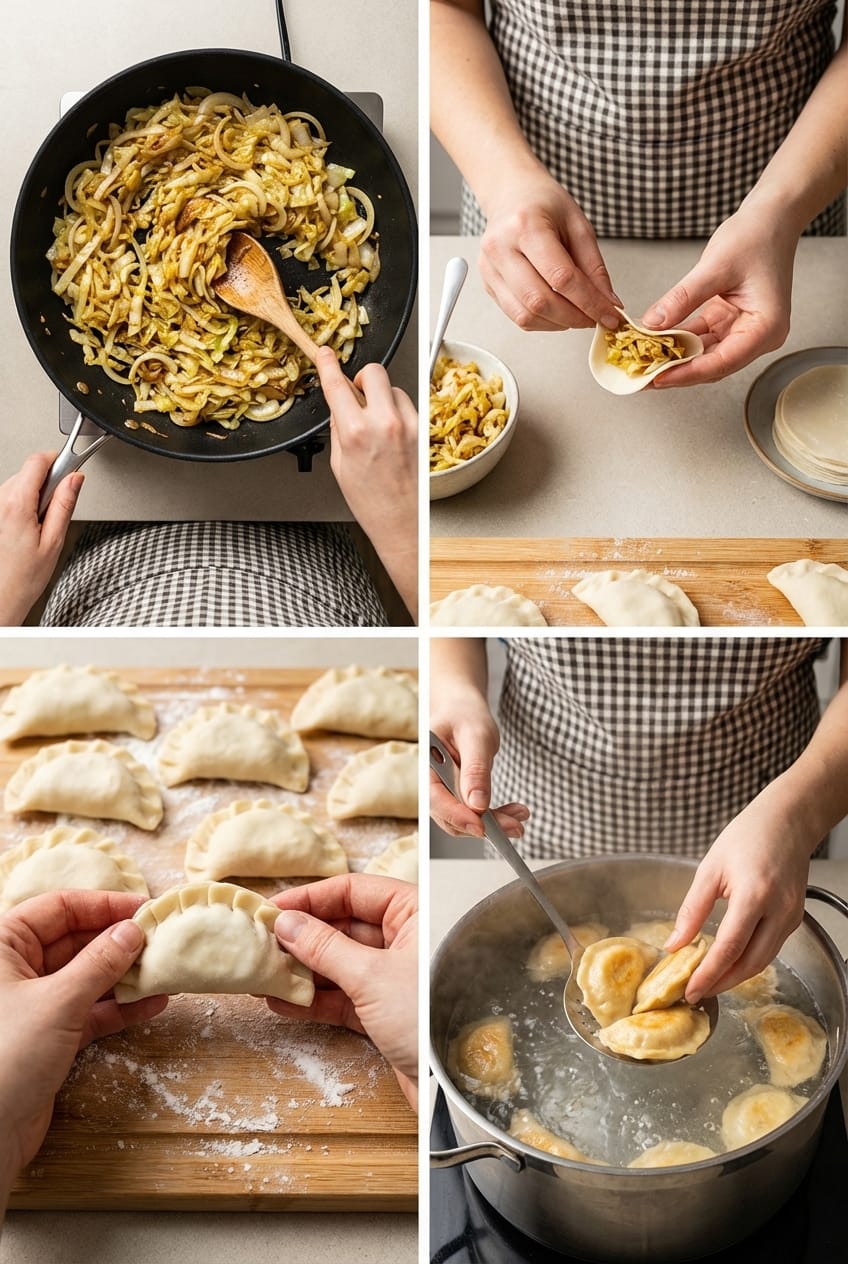
In a large bowl, combine flour and salt. Make a well in the center and pour in warm water and oil. Stir with a fork until shaggy dough forms. Turn onto a lightly floured surface and knead for 5-7 minutes until smooth and elastic – the dough should bounce back when pressed. If too sticky, add flour one tablespoon at a time. If too dry, add water by the teaspoon. Cover with a damp towel and let rest for 20 minutes while you make the filling. This rest time relaxes the gluten, making rolling easier and preventing shrinkage. The dough should feel soft and pliable, not tough. Proper kneading develops gluten structure that holds the filling without tearing.
Step 2: Cook and Caramelize Cabbage Filling
Heat butter in a large skillet over medium heat. Add diced onions and cook for 5 minutes until softened and translucent, stirring occasionally. Add shredded cabbage, salt, pepper, and caraway seeds if using. Stir to coat everything in butter. Cook for 15-20 minutes, stirring every 3-4 minutes, until cabbage is deeply golden brown and sweet-smelling. The cabbage should reduce by half and have caramelized edges. Don’t rush this step – the caramelization develops complex sweetness that makes the filling magical. If cabbage starts sticking, add a tablespoon of water and scrape the fond. Remove from heat and let cool for 10 minutes. Taste and adjust seasoning. The filling should taste slightly overseasoned because the dough is bland and will balance it out.
Step 3: Roll and Fill Dumplings
Divide rested dough into two pieces for easier handling. On a floured surface, roll one piece to about 2mm thick – thinner than you think, like pasta. Use a 3-inch round cutter or glass to cut circles. Place 1 tablespoon cooled filling in the center of each circle. Don’t overfill or they’ll burst. Fold dough over filling to create half-moon shape. Press edges firmly to seal, then crimp with a fork or your fingers to ensure no gaps. Place finished dumplings on a floured baking sheet, not touching. Cover with a towel while you work through remaining dough. Re-roll scraps once. You should get about 20 dumplings. Proper sealing is crucial – any gaps will leak filling during cooking. If edges won’t stick, dab with water.
Step 4: Boil and Pan-Fry Dumplings
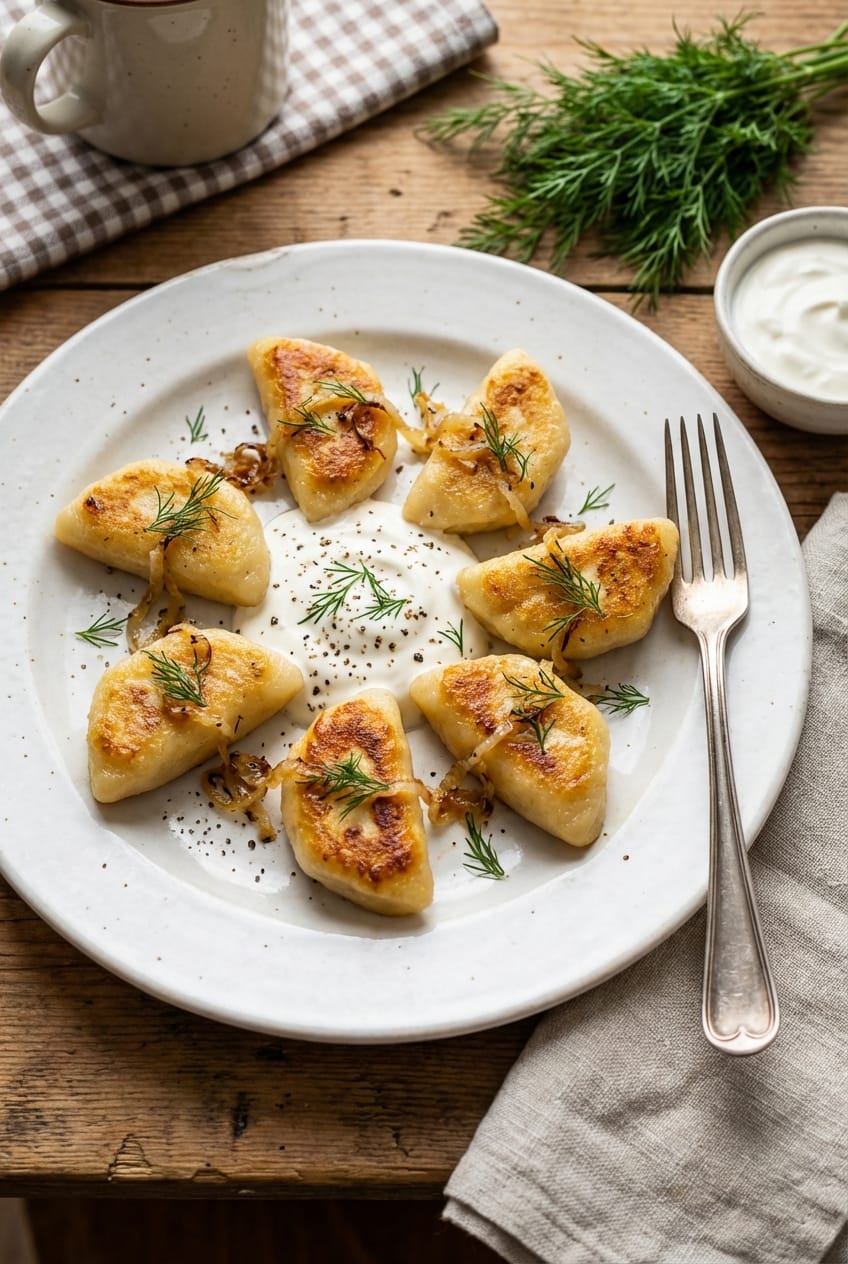
Bring a large pot of salted water to a boil. Working in batches of 6-8 to avoid crowding, gently drop dumplings into boiling water. They’ll sink initially – this is normal. Stir gently once to prevent sticking to the bottom. When dumplings float to the surface (about 3-4 minutes), cook for an additional 2 minutes. Remove with a slotted spoon and drain well. Optional but recommended: heat 2 tablespoons butter in a skillet over medium-high heat and pan-fry boiled dumplings for 2-3 minutes per side until golden and crispy. This adds texture contrast – tender inside, crispy outside. Serve immediately topped with sour cream, fresh dill, and black pepper. The combination of tender dumpling, sweet cabbage filling, and tangy sour cream is pure comfort.
Nutrition Per Serving
- Calories: 310
- Protein: 8g
- Carbs: 48g
- Fat: 10g
- Fiber: 4g
- Sugar: 6g
These dumplings provide fiber from cabbage and complex carbs from dough. The caramelized cabbage adds natural sweetness without added sugar.
Pro Tips for Success
- Rest the Dough: That 20-minute rest isn’t optional. It relaxes gluten, making rolling easier and preventing tough dumplings. Skip it and you’ll fight the dough.
- Caramelize Deeply: Don’t stop cooking the cabbage when it turns soft. Keep going until it’s golden brown and sweet. This takes 15-20 minutes. The caramelization is where flavor lives.
- Seal Properly: Press edges firmly and crimp well. Test one dumpling first – if it leaks, your seal needs more pressure. Water on edges helps if dough is dry.
- Don’t Overcrowd: Boil dumplings in small batches. Too many at once lowers water temperature and makes them stick together. Give them space to float freely.
- Cool Filling First: Hot filling makes dough soggy and hard to seal. Let it cool 10 minutes before assembly. Patience here prevents frustration later.
- Freeze for Later: Freeze uncooked dumplings on a baking sheet, then transfer to bags. Cook from frozen, adding 2 extra minutes to boiling time. Perfect meal prep.
Delicious Variations
- Mushroom Cabbage: Add 200g sautéed mushrooms to cabbage filling. Earthy and rich, perfect for vegetarians seeking heartier flavor.
- Sauerkraut Dumplings: Replace fresh cabbage with drained sauerkraut. Tangier, more traditional Polish flavor. Rinse sauerkraut if too sour.
- Meat-Filled: Mix cooked ground pork or beef with cabbage for protein boost. Season with paprika and garlic.
- Potato Cabbage: Add 1 cup mashed potato to filling for creamier texture. Stretches filling and adds comfort.
- Cheese Addition: Mix ½ cup grated cheese into cooled filling. Melts slightly, adding richness.
- Spicy Version: Add red pepper flakes or hot paprika to filling. Serve with spicy sour cream mixed with sriracha.
Common Mistakes to Avoid
Rolling Dough Too Thick: Thick dough creates heavy, doughy dumplings that overwhelm the filling. Solution: Roll to 2mm thick – you should almost see through it. Thin dough cooks tender and lets filling shine.
Undercooking the Cabbage: Stopping when cabbage is merely soft misses the caramelization that creates deep, sweet flavor. Solution: Cook 15-20 minutes until golden brown. The transformation happens in the last 5 minutes.
Overfilling Dumplings: Too much filling makes sealing impossible and causes bursting during cooking. Solution: Use 1 tablespoon filling max. Less is more – you want filling in every bite but not exploding out.
Skipping the Rest: Rolling dough immediately after kneading creates tough, elastic dough that springs back constantly. Solution: Always rest 20 minutes covered. This simple step makes rolling effortless.
Boiling Too Vigorously: Rapid boil batters dumplings around, potentially breaking seals. Solution: Maintain gentle boil – bubbles should be steady but not violent. Treat dumplings gently.
Storage and Make-Ahead
Refrigeration: Store cooked dumplings in airtight container for up to 3 days. Reheat in skillet with butter for best results, or microwave covered for 1-2 minutes.
Freezing: Freeze uncooked dumplings on baking sheet until solid, then transfer to freezer bags for up to 3 months. Cook from frozen, adding 2 minutes to boiling time. Best make-ahead method.
Reheating: Pan-fry in butter over medium heat for crispy exterior. Microwave works but creates softer texture. Oven at 350°F for 10 minutes also works well.
Make-Ahead: Make filling up to 2 days ahead and refrigerate. Assemble dumplings morning-of and refrigerate until cooking. Or freeze assembled dumplings for ultimate convenience.
Serving Suggestions
Classic Polish Style: Serve with generous dollop of sour cream, fresh dill, and caramelized onions. Add crispy bacon bits for extra indulgence. This traditional presentation never fails. Pair with our creamy spinach stuffed salmon for an elegant dinner party menu.
Soup Accompaniment: Float a few dumplings in clear broth or our golumpki soup for ultimate Polish comfort meal. The dumplings soak up broth beautifully.
Appetizer Presentation: Make mini 2-inch dumplings for parties. Serve with three dipping sauces: sour cream dill, spicy mayo, and sweet chili. Guests will devour them.
Complete Meal: Serve alongside simple cucumber salad and rye bread. The fresh cucumbers cut through rich dumplings, creating balanced meal. Light beer or chilled vodka for authentic Polish experience.
Why This Recipe Works
The magic lies in the contrast of textures and the depth of caramelized flavor. The dough’s elasticity comes from proper gluten development during kneading, creating tender yet sturdy wrappers that won’t tear. Long caramelization of cabbage drives off moisture while concentrating sugars through Maillard reaction, transforming bland vegetable into sweet, complex filling. The butter carries flavor throughout and adds richness. Boiling sets the dough structure while cooking the filling through, and optional pan-frying creates textural contrast – crispy outside, tender inside. The combination of sweet caramelized cabbage, tender dough, and tangy sour cream hits multiple flavor notes simultaneously. This isn’t random assembly – it’s Polish grandmother wisdom refined over generations, now trending because people crave comforting, substantial food that doesn’t require expensive ingredients.
Conclusion
These cabbage dumplings prove that trending recipes earn their popularity through genuine deliciousness. In 45 minutes, you’ve mastered a Polish classic that’s comforting, affordable, and impressive enough for guests. Whether you’re riding the Pinterest cabbage wave or simply craving soul-warming comfort food, these dumplings deliver on every level. Roll up your sleeves, caramelize that cabbage, and discover why dumplings are the ultimate comfort food across cultures. Your kitchen will smell amazing, your family will request these weekly, and you’ll understand why cabbage is having its moment.
FAQs
Can I use store-bought dumpling wrappers?
Yes. Wonton or gyoza wrappers work perfectly and save time. Use round wrappers if possible for easier folding. The texture differs slightly from homemade but still delicious.
Why is my cabbage filling watery?
Insufficient cooking time. Cabbage must cook 15-20 minutes until deeply golden. If still watery, drain excess liquid before filling dumplings. Also ensure cabbage is finely shredded for faster moisture evaporation.
Can I make these ahead for a party?
Absolutely. Freeze assembled uncooked dumplings up to 3 months. Cook from frozen the day of, adding 2 minutes to boiling time. Or cook fully and reheat in butter before serving.
Do I have to pan-fry after boiling?
No, it’s optional. Boiling alone creates tender dumplings. Pan-frying adds crispy texture that many prefer. Try both ways and decide your favorite. Traditional Polish style is boiled only.
My dough keeps shrinking when I roll it – why?
Not enough rest time. Dough needs 20 minutes for gluten to relax. If you skipped this, let it rest now. Also avoid adding too much flour during kneading.
Can I bake these instead of boiling?
Not recommended. Baking dries dumplings out. The boiling cooks the dough properly while keeping filling moist. Pan-frying after boiling gives you crispy exterior without sacrificing moisture.
What’s the best way to seal dumplings?
Press edges firmly together, then crimp with fork or fingers. The key is firm pressure – don’t be gentle. If edges won’t stick, dab with water. Test one in boiling water before assembling all.
Can I use different cabbage varieties?
Yes. Savoy cabbage works beautifully and is more tender. Red cabbage creates purple dumplings (cool visually but less traditional). Napa cabbage cooks faster but is less sweet.
Why add caraway seeds?
Traditional Polish flavor that adds subtle earthy, slightly licorice note. Completely optional – many modern versions omit it. Try with and without to find your preference.