World Cuisine
Cabbage Dumplings Polish Style (Pierogi Ruskie)
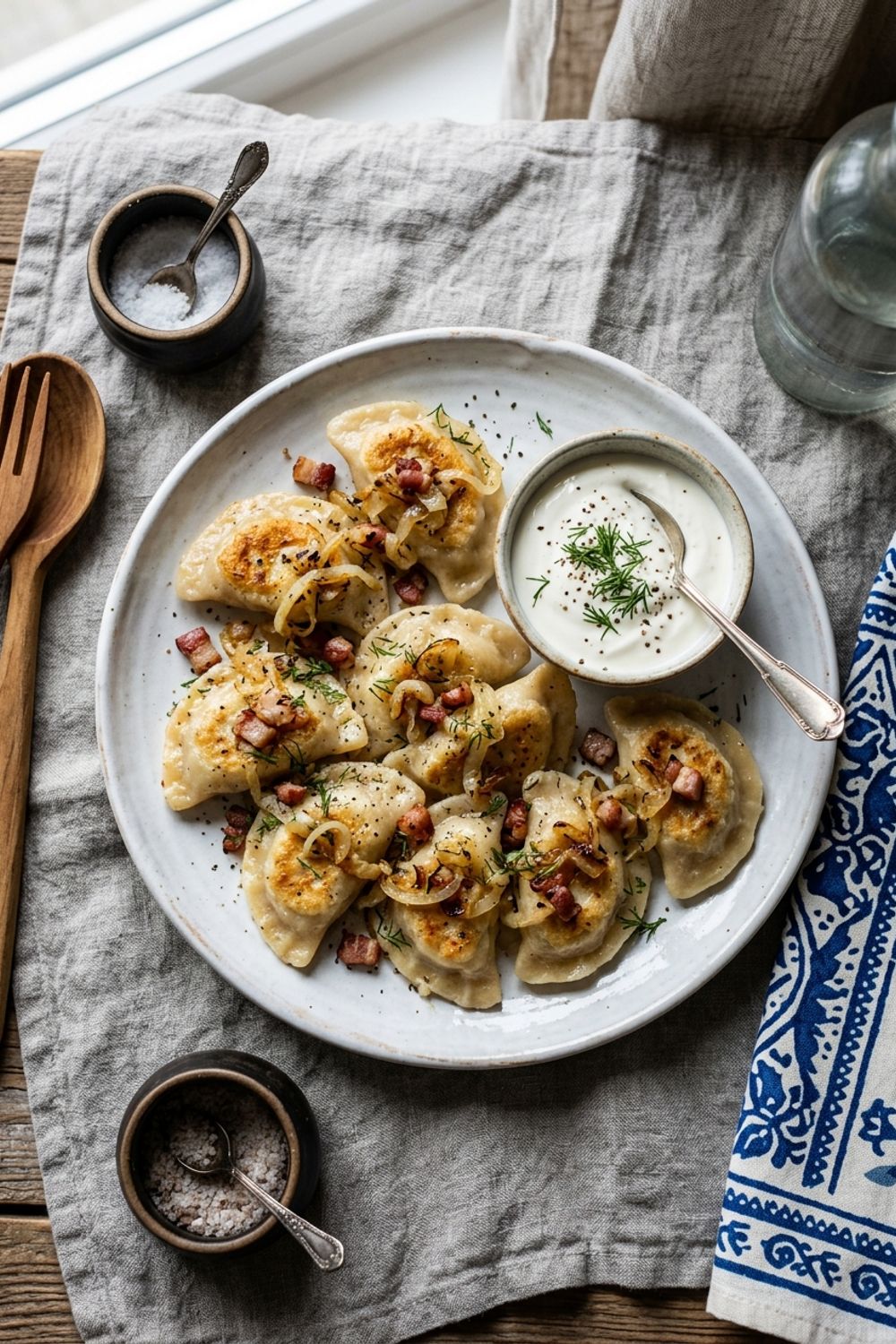
Authentic Polish cabbage dumplings (pierogi) with a buttery sauerkraut and mushroom filling, crispy pan-fried and served with sour cream and caramelized onions.

Why These Polish Cabbage Dumplings Hold a Special Place in My Heart
I discovered pierogi during a bitterly cold winter visit to Krakow, where a kind elderly woman at a market stall handed me a plate of golden, pan-fried dumplings glistening with butter. The crispy exterior gave way to soft, pillowy dough encasing the most beautifully tangy sauerkraut and mushroom filling. It was pure comfort food, and I knew I needed to learn how to make these at home.
What sets these apart from other dumpling traditions is the incredible depth of flavor. The sauerkraut and mushroom combination creates a savory, slightly acidic center balanced by mild, tender dough and rich butter for frying. Unlike lighter Asian dumplings, pierogi are heartier — the kind of food that warms you from the inside out.
I have refined this recipe over years, incorporating advice from three Polish grandmothers who shared their family secrets. The dough includes sour cream for beautiful tenderness, and the filling gets complexity from caraway seeds — a distinctly Eastern European character that elevates humble sauerkraut. Making pierogi is one of my favorite kitchen activities, and I often invite friends over for pierogi-making parties with wine and an assembly line.
Mastering the Perfect Pierogi Dough
Unlike pasta dough, pierogi dough should be incredibly soft, smooth, and pliable. The secret is the sour cream — it tenderizes gluten strands, resulting in dough that holds filling but melts in your mouth. I have tested with and without, and the difference is dramatic.
Use warm water (100-110 degrees) because it helps gluten develop more easily and produces smoother dough with less kneading. Cold water dough requires more effort and springs back aggressively when rolling.
The 30-minute rest is non-negotiable. It allows gluten to relax completely. Without it, the dough fights you — shrinking when rolled, tearing when sealed, and producing tough dumplings.
The Secret to an Outstanding Sauerkraut Filling
The biggest mistake is using sauerkraut straight from the jar. Raw sauerkraut is too wet and too aggressively sour. Squeeze it as dry as possible using a clean towel, then sauté slowly to caramelize natural sugars and mellow the acidity.
Cook onions and mushrooms first — the onions should be truly soft and the mushrooms golden after releasing all their moisture. Only then add the squeezed sauerkraut and cook until the mixture holds its shape on a spoon without dripping.
Caraway seeds are my not-so-secret weapon. Lightly crush them with a knife to release essential oils. Their warm, slightly anise-like flavor is quintessentially Polish and pairs beautifully with sauerkraut.
Tips for Perfect Pierogi
Roll evenly and thinly. Aim for 1/8 inch thickness. Too thick is doughy; too thin tears during filling. Keep the surface lightly floured.
Cool the filling completely. Warm filling softens dough and creates steam that causes blowouts during boiling. Refrigerate for 15 minutes before assembling.
Seal with extreme prejudice. Moisten the edge with a wet finger, fold over, press firmly, and crimp with a fork. Any filling residue on the edges prevents sealing.
Do not overcrowd the pot. Boil 8-10 at a time. They need room to float freely. Stir gently after adding to prevent sticking.
Caramelize onions properly. True caramelization takes 15-20 minutes over medium-low heat. Do not rush it — you will get burnt, bitter onions instead of sweet, golden ones.
Variations to Try
Potato and Cheese Pierogi. Mashed potatoes mixed with farmer’s cheese, seasoned with salt, pepper, and sautéed onions. This creamy filling is the gateway pierogi for newcomers.
Sweet Blueberry Pierogi. Fresh or frozen blueberries with a tablespoon of sugar and a teaspoon of cornstarch. Boil, toss with melted butter, and dust with powdered sugar.
Meat Pierogi. Finely minced cooked beef or pork with sautéed onions, breadcrumbs, and seasoning. Traditionally served with mushroom gravy.
Spinach and Feta Pierogi. Sautéed spinach squeezed very dry with crumbled feta, garlic, and nutmeg — a Mediterranean twist on the classic.
How to Store
Pierogi freeze beautifully. Arrange uncooked in a single layer on a parchment-lined sheet, freeze for 2 hours until solid, then transfer to freezer bags. Keep up to 3 months. Cook directly from frozen — do not thaw — adding 1-2 extra minutes to boiling time.
Cooked pierogi store refrigerated for up to 3 days, tossed with a light coating of oil. Pan-fry in butter to reheat — many argue day-old pan-fried pierogi are even better than fresh.
Troubleshooting
Dough keeps tearing. It is likely too dry — wet your hands and knead another minute. Or it needs more resting time under plastic wrap.
Pierogi opening during boiling. Edges were not sealed well enough. Press out all air pockets and use the fork-crimping method. Check for filling residue on the sealing edges.
Filling is too wet. The sauerkraut was not squeezed dry enough. Wring it in a towel as tightly as possible, and cook the filling longer to evaporate moisture.
These Polish cabbage dumplings reward your efforts tenfold. For a Japanese take on dumplings, try my Cabbage Dumplings Gyoza. For more European comfort food, my Traditional Greek Moussaka is another crowd-pleaser.
Ingredients
Dough
Filling
Topping
Instructions
Make the Dough
In a large mixing bowl, combine the flour and salt. Create a well in the center and add the egg, warm water, sour cream, and vegetable oil. Mix with a fork until a shaggy dough forms, then turn out onto a lightly floured surface and knead for 8-10 minutes until smooth and elastic. The dough should be soft but not sticky. Wrap tightly in plastic wrap and rest at room temperature for 30 minutes.
Prepare the Filling
Heat the butter and vegetable oil in a large skillet over medium heat. Add the diced onion and cook, stirring occasionally, for 5-6 minutes until softened and translucent. Add the diced mushrooms and cook for another 4-5 minutes until they release their moisture and turn golden. Add the squeezed sauerkraut, black pepper, and caraway seeds. Cook, stirring frequently, for 8-10 minutes until the mixture is dry and lightly caramelized. Transfer to a bowl and let cool completely.
Roll and Cut the Dough
Divide the rested dough in half. On a lightly floured surface, roll one half to about 1/8-inch (3mm) thickness. Using a 3-inch (7.5cm) round cutter or the rim of a glass, cut out circles. Gather the scraps, re-roll, and cut more circles. Repeat with the second half of dough. You should get approximately 30-35 circles.
Fill and Seal the Pierogi
Place about 1 tablespoon of the cooled filling in the center of each dough circle. Fold the dough in half over the filling to create a half-moon shape. Press the edges firmly to seal, starting from one corner and working to the other while pushing out any air pockets. Crimp the edges with a fork for a decorative seal that also ensures they stay closed during cooking.
Boil the Pierogi
Bring a large pot of generously salted water to a rolling boil. Working in batches of 8-10, carefully drop the pierogi into the water. Stir gently to prevent sticking. The pierogi will sink to the bottom and then float to the surface after 2-3 minutes. Once they float, cook for an additional 1-2 minutes. Remove with a slotted spoon and transfer to a plate lightly brushed with oil.
Pan-Fry and Serve
Melt 2 tablespoons of butter in a large non-stick skillet over medium-high heat. Add the boiled pierogi in a single layer and cook for 2-3 minutes per side until golden and crispy. Meanwhile, in a separate pan, caramelize the sliced onions in the remaining 2 tablespoons of butter over medium-low heat for 15-20 minutes, stirring occasionally, until deep golden brown. Serve the pierogi topped with caramelized onions, a dollop of sour cream, and a sprinkle of fresh dill.
Nutrition Information
Per serving (serves 4). Values are approximate.
| Calories | 420 calories |
| Total Fat | 20g |
| Saturated Fat | 10g |
| Carbohydrates | 50g |
| Sugar | 4g |
| Protein | 12g |
| Sodium | 680mg |
| Fiber | 4g |
* Percent Daily Values are based on a 2,000 calorie diet. Your daily values may be higher or lower depending on your calorie needs. Nutritional information is an estimate and may vary.
Never Miss a Recipe
Join 5,000+ home cooks and get new recipes straight to your inbox.
Frequently Asked Questions
Can I freeze uncooked pierogi?
Absolutely! Arrange the filled, uncooked pierogi in a single layer on a parchment-lined baking sheet and freeze until solid (about 2 hours). Transfer to freezer bags and store for up to 3 months. Cook directly from frozen — just add 1-2 extra minutes to the boiling time.
Why is my pierogi dough too sticky?
If your dough is sticky, add flour one tablespoon at a time while kneading until it becomes smooth and pliable. The sour cream and egg can add varying amounts of moisture, so you may need to adjust. The dough should feel like soft playdough — smooth and slightly tacky but not clinging to your hands.
Can I use fresh cabbage instead of sauerkraut?
Yes, you can shred half a head of green cabbage and sauté it with a pinch of salt until very soft and lightly golden, about 15-20 minutes. The flavor will be milder and sweeter than sauerkraut. Add a tablespoon of white vinegar at the end for a subtle tang.
What is the best way to reheat leftover pierogi?
Pan-frying in butter is the best reheating method. Heat a tablespoon of butter in a skillet over medium heat and cook the pierogi for 2-3 minutes per side until heated through and crispy. Avoid microwaving, as it makes the dough rubbery.

Hi, I'm Lisa!
I create simple, tested recipes from around the world that anyone can make at home.
Learn More →Reader Reviews
Based on 359 reviews