
Have you noticed cabbage taking over your Pinterest feed? There’s a reason. Cabbage dumplings are the breakout star of 2026, proving that this humble vegetable deserves a place at the center of your plate—not just as a side. These gyoza-style dumplings wrap savory pork filling in tender cabbage leaves instead of traditional wrappers, creating a lighter, more flavorful bite that’s become the hottest food trend of the year. Whether you’re looking to jump on the viral bandwagon or simply want a delicious new way to enjoy dumplings, these cabbage gyoza deliver crispy, juicy perfection every time.
Unlike traditional dumplings that require delicate dough-making skills, cabbage dumplings use blanched napa cabbage leaves as the wrapper—making them naturally gluten-free, lower in carbs, and surprisingly easy to fold. The result? Crispy golden bottoms, tender cabbage tops, and a savory filling that rivals any dumpling house. If you love creamy spinach stuffed salmon, you’ll appreciate how this recipe combines fresh vegetables with bold Asian flavors in an equally impressive presentation.
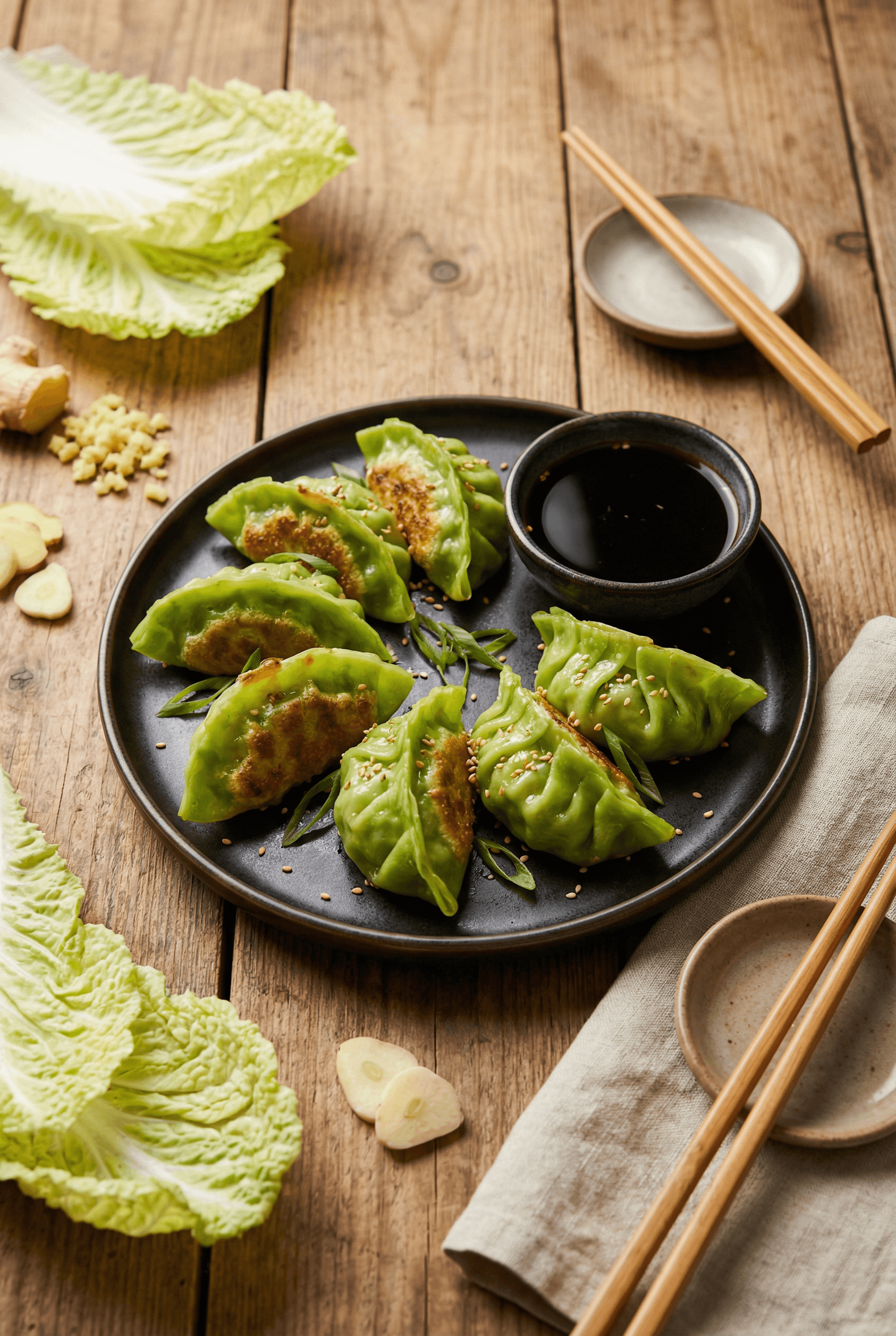
Ingredients
Fresh ingredients make all the difference in cabbage dumplings. The cabbage acts as both wrapper and flavor component, so quality matters.
For the Dumplings
- 1 medium head napa cabbage (about 800g)
- 450g (1 lb) ground pork
- 2 tablespoons fresh ginger, finely minced
- 4 cloves garlic, minced
- 3 green onions, finely chopped
- 2 tablespoons soy sauce
- 1 tablespoon sesame oil
- 1 tablespoon rice vinegar
- 1 teaspoon sugar
- 1/2 teaspoon white pepper
- 1/4 teaspoon salt
- 2 tablespoons vegetable oil (for cooking)
For the Dipping Sauce
- 3 tablespoons soy sauce
- 2 tablespoons rice vinegar
- 1 teaspoon sesame oil
- 1 teaspoon chili oil (optional)
- 1 green onion, thinly sliced
- 1 teaspoon toasted sesame seeds
Smart Substitutions
Vegetarian: Replace pork with finely chopped shiitake mushrooms, tofu, and extra cabbage. Different Protein: Ground chicken, turkey, or shrimp work beautifully. Cabbage Alternatives: Savoy cabbage or large chard leaves can substitute if napa isn’t available.
Timing
- Prep: 25 minutes
- Cook: 15 minutes (per batch)
- Total: 40 minutes
- Makes: 20-24 dumplings (4-6 servings)
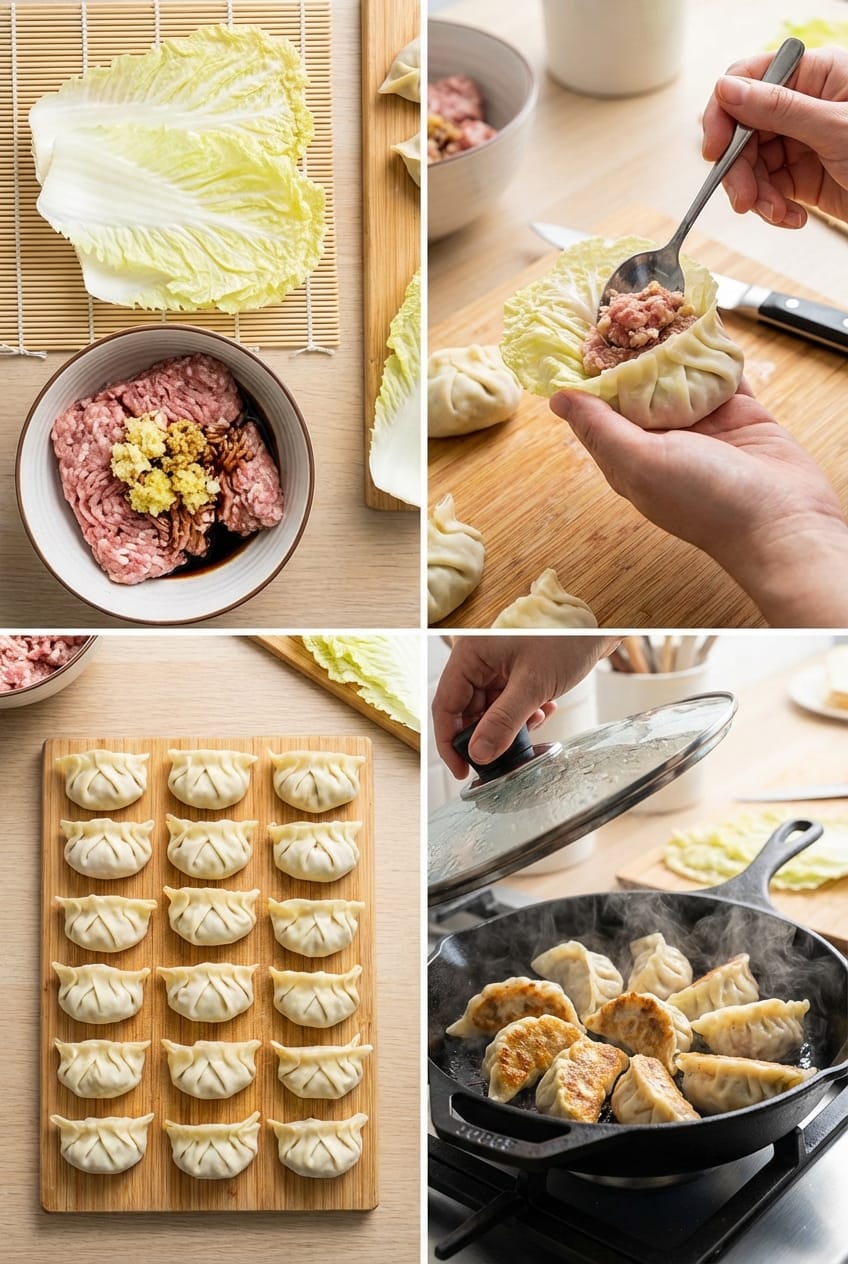
Instructions
Step 1: Prepare the Cabbage
Bring a large pot of water to boil. Carefully peel off 20-24 outer leaves from the napa cabbage, keeping them whole. Blanch leaves in boiling water for 45-60 seconds until pliable but not mushy—they should bend without breaking. Transfer immediately to ice water to stop cooking and preserve the vibrant green color. Pat leaves completely dry with paper towels. Trim any thick white rib portions to make folding easier, being careful not to create holes. The blanching softens the cabbage just enough to fold while maintaining structure—underblanching means they’ll tear when folding, overblanching makes them too soft to hold filling.
Step 2: Make the Filling
In a large bowl, combine ground pork, minced ginger, garlic, and green onions. Add soy sauce, sesame oil, rice vinegar, sugar, white pepper, and salt. Mix vigorously in one direction for 2-3 minutes until the mixture becomes sticky and cohesive—this develops the protein structure that gives dumplings their characteristic bouncy texture. The filling should hold together when squeezed. Finely chop 2-3 inner cabbage leaves and squeeze out excess moisture, then fold into the filling for extra texture and flavor. Let mixture rest in refrigerator for 15 minutes to firm up and allow flavors to meld.
Step 3: Fold the Dumplings
Lay one cabbage leaf flat on your work surface, stem end toward you. Place 1-2 tablespoons of filling in the center (amount depends on leaf size). Fold the bottom edge up over the filling, then fold in both sides, overlapping slightly. Roll tightly from bottom to top, creating a compact cylinder. Place seam-side down on a plate. The key is tightness without tearing—too loose and they’ll open during cooking, too tight and the leaf splits. Practice makes perfect; your first few might be messy, but you’ll develop a rhythm quickly. The cabbage’s natural moisture helps seal the edges.
Step 4: Pan-Fry the Dumplings
Heat 1 tablespoon vegetable oil in a large non-stick skillet over medium-high heat. Arrange dumplings seam-side down in a single layer, leaving space between each. Cook undisturbed for 3-4 minutes until bottoms are golden brown and crispy. Add 1/3 cup water to the pan and immediately cover with a tight-fitting lid. Reduce heat to medium and steam for 6-8 minutes until filling is cooked through and cabbage is tender. The water creates steam that cooks the filling while the bottom stays crispy—this technique is key to perfect texture contrast.
Step 5: Crisp and Finish
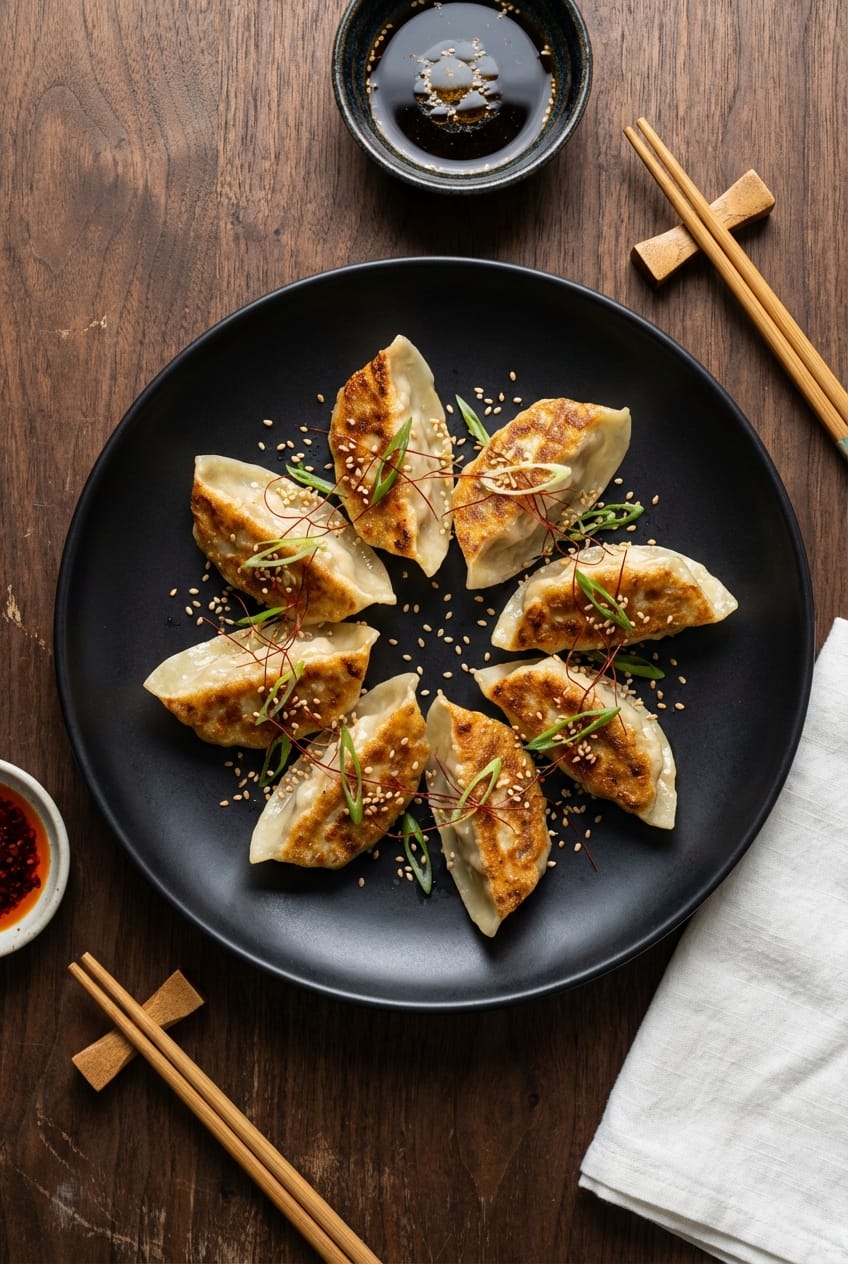
Remove lid and increase heat to medium-high. Cook for 1-2 minutes more to evaporate remaining water and re-crisp the bottoms. You’ll hear a sizzling sound when the water is gone. Tilt the pan to check that bottoms are deeply golden and crispy. Transfer dumplings to a serving plate, crispy side up. The final crisping step transforms good dumplings into great ones—don’t skip this. The contrast between crispy bottom and tender cabbage top is what makes these dumplings special.
Step 6: Make Dipping Sauce and Serve
While dumplings cook, whisk together soy sauce, rice vinegar, sesame oil, and chili oil in a small bowl. Add sliced green onions and sesame seeds. Serve dumplings immediately while hot and crispy, with dipping sauce alongside. Garnish the dumpling platter with extra sesame seeds and green onions if desired. These are best enjoyed fresh from the pan when the textural contrast is at its peak.
Nutrition Per Serving (5 dumplings)
- Calories: 285
- Protein: 22g
- Carbs: 12g
- Fat: 16g
- Fiber: 3g
- Sodium: 680mg
Napa cabbage provides vitamins C and K, folate, and fiber. The pork filling delivers high-quality protein and B vitamins. Using cabbage instead of wheat wrappers significantly reduces carbs while adding nutrients—making these dumplings a more balanced choice than traditional versions.
Pro Tips for Success
- Blanch cabbage perfectly: 45-60 seconds only—too long makes them mushy and hard to handle
- Dry leaves thoroughly: Excess water prevents browning and makes dumplings soggy
- Mix filling vigorously: This develops texture—don’t just stir, really work it for 2-3 minutes
- Don’t overfill: Less is more—overfilled dumplings burst open during cooking
- Keep dumplings covered: Before cooking, cover with damp towel to prevent drying
- Use non-stick pan: Essential for crispy bottoms without sticking—cast iron works too if well-seasoned
- Cook in batches: Overcrowding lowers pan temperature and creates steam instead of crisp
Delicious Variations
- Spicy Pork: Add 1-2 tablespoons gochugaru (Korean chili flakes) to the filling
- Shrimp & Pork: Replace half the pork with finely chopped raw shrimp for bouncy texture
- Vegetarian Mushroom: Use shiitake, wood ear mushrooms, tofu, and extra cabbage
- Kimchi Filling: Mix 1/2 cup finely chopped kimchi into pork filling for tangy kick
- Chicken & Ginger: Ground chicken with extra ginger and cilantro instead of pork
- Thai-Inspired: Add lemongrass, Thai basil, and serve with Thai-style grilled chicken dipping sauce
Common Mistakes to Avoid
Overblanching the Cabbage: Mushy leaves tear when folding and don’t provide structure. Solution: Blanch for exactly 45-60 seconds, no more. Test one leaf first to get timing right for your stove.
Wet Cabbage Leaves: Water prevents browning and makes dumplings steam instead of crisp. Solution: Pat leaves bone-dry with paper towels before filling. This step is not optional.
Not Mixing Filling Enough: Loose filling doesn’t bind and falls apart. Solution: Mix vigorously in one direction for 2-3 minutes until sticky and cohesive. Your arm should be tired.
Adding Water Too Early: Water before browning creates soggy bottoms. Solution: Brown first undisturbed for 3-4 minutes, then add water. Never add water before you see golden crispy bottoms.
Skipping Final Crisping: Wet bottoms after steaming aren’t appetizing. Solution: After steaming, remove lid and cook 1-2 minutes more to evaporate water and restore crispness. You should hear aggressive sizzling.
Storage and Make-Ahead
Make-Ahead Uncooked: Fold dumplings and arrange on parchment-lined tray. Cover with plastic wrap and refrigerate up to 8 hours. Cook directly from cold, adding 1-2 minutes to steam time.
Freezing Uncooked: Freeze folded dumplings on tray until solid, then transfer to freezer bags. Store up to 2 months. Cook from frozen, adding 3-4 minutes to steam time. Don’t thaw first or they’ll become waterlogged.
Refrigerating Cooked: Store cooked dumplings in airtight container up to 2 days. Texture won’t be as crispy, but flavor remains good.
Reheating: Pan-fry in a dry non-stick skillet over medium heat for 2-3 minutes per side to restore crispness. Microwave makes them soggy—avoid if possible.
Serving Suggestions
Classic Presentation: Serve on a large platter with dipping sauce in the center. Garnish with sesame seeds, sliced green onions, and chili threads for color.
Complete Meal: Pair with cucumber salad, edamame, and steamed rice for a balanced Asian-inspired dinner.
Appetizer Spread: Serve alongside spring rolls, lettuce wraps, and potstickers for a dumpling party.
Soup Addition: Add cooked dumplings to miso soup or ramen for a hearty one-bowl meal.
Beverage Pairing: Serve with cold Japanese beer, sake, or jasmine tea to complement the savory flavors.
Why This Recipe Works
The cabbage wrapper innovation solves multiple problems at once. Napa cabbage’s natural pliability when blanched creates a sturdy yet tender wrapper that’s easier to work with than traditional dough. The high water content in cabbage creates steam during cooking, keeping the filling moist while the exterior crisps. Using cabbage reduces prep time significantly—no dough to rest or roll—and makes these naturally gluten-free. The two-stage cooking method (brown, steam, re-crisp) ensures cooked filling, tender cabbage, and that crucial crispy bottom texture. Mixing the filling vigorously develops protein structure, creating the characteristic bouncy texture of quality dumplings. The small amount of sugar in the filling balances the savory elements and aids in browning. This technique represents the best of modern recipe development—traditional flavors with contemporary ease and dietary flexibility.
Conclusion
These cabbage dumplings prove why cabbage is having its moment in 2026. The crispy-tender contrast, savory filling, and surprisingly easy technique make them a recipe you’ll return to again and again. Whether you’re riding the Pinterest trend wave or simply looking for a lighter take on traditional dumplings, this cabbage gyoza delivers all the satisfaction with none of the fuss. The best part? Once you master the basic technique, you can customize fillings endlessly to suit your taste.
Ready to join the cabbage revolution? Gather your ingredients and discover why this humble vegetable is taking over kitchens everywhere. Share your dumpling creations and flavor variations—we love seeing how you make this recipe your own!
Essential Equipment
Large Pot: For blanching cabbage leaves. Must be big enough to submerge whole leaves without crowding—crowding lowers water temperature and creates uneven blanching.
Non-Stick Skillet with Lid: Essential for the brown-steam-crisp technique. Cast iron works if well-seasoned. The lid must fit tightly to trap steam effectively during the cooking phase.
Sharp Knife: For trimming thick cabbage ribs and mincing aromatics. A dull knife tears cabbage leaves instead of cutting cleanly, creating weak spots that tear when folding.
Large Mixing Bowl: For vigorously mixing the filling. The bowl should be big enough to mix without splashing—proper mixing requires aggressive motion.
Ice Bath: Large bowl of ice water to shock blanched cabbage. This stops cooking immediately and preserves the bright green color. Skip this and leaves continue cooking, becoming mushy.
Paper Towels or Clean Kitchen Towels: For thoroughly drying cabbage leaves. Excess water is the enemy of crispy bottoms—invest in getting leaves bone-dry.
The Cabbage Revolution of 2026
Why is cabbage suddenly everywhere? The Pinterest trend didn’t happen by accident. In late 2025, food creators began experimenting with cabbage as a wrapper alternative, driven by rising wheat prices and growing interest in gluten-free options. What started as a practical substitution quickly became a creative movement. Cabbage offers incredible versatility—it can be fermented, grilled, blanched, or eaten raw. Its mild flavor adapts to any cuisine, from Asian dumplings to Italian rolls to Mexican tacos.
Food historians note that cabbage has always been a culinary workhorse across cultures—from German sauerkraut to Korean kimchi to Japanese okonomiyaki. The 2026 trend simply brings this humble vegetable back to center stage, celebrating its nutritional density, affordability, and sustainability. Unlike trendy exotic ingredients, cabbage grows abundantly in most climates, stores well, and costs little. In an era of food insecurity and climate concerns, cabbage represents delicious practicality.
This recipe specifically honors Asian dumpling traditions while embracing the modern cabbage wrapper innovation. Traditional gyoza use wheat wrappers—delicious but time-consuming to make and tricky to master. Cabbage leaves offer instant accessibility. The technique draws from both Chinese jiaozi and Japanese gyoza traditions, adapted for home cooks who want authentic flavor without specialized skills or ingredients.
Troubleshooting Guide
Dumplings stick to pan: Your pan isn’t non-stick enough or you didn’t use enough oil. Solution: Add 1/2 tablespoon more oil or use a better quality non-stick pan. Cast iron must be perfectly seasoned.
Filling is dry: Ground pork was too lean or you didn’t add enough liquid ingredients. Solution: Use pork with 15-20% fat content. If too lean, add 1-2 tablespoons chicken broth to filling.
Cabbage tears when folding: Leaves weren’t blanched long enough or you’re using inner leaves that are too small. Solution: Blanch 15 seconds longer. Use only outer leaves that are 15-20cm wide.
Dumplings taste bland: Not enough seasoning or filling wasn’t mixed properly to distribute seasonings. Solution: Taste raw filling (it’s safe—just a tiny bit) and adjust salt/soy sauce before folding.
Bottoms burn before filling cooks: Heat too high or not enough water added for steaming. Solution: Use medium heat, not high. Add full 1/3 cup water and cover immediately.
Too much water remains after steaming: Lid wasn’t tight or you added too much water. Solution: Use tight-fitting lid. Measure water carefully—more isn’t better.
FAQs
Can I use regular green cabbage instead of napa?
Napa cabbage works best due to its tender, pliable leaves. Regular green cabbage is tougher and harder to fold without breaking. If using green, blanch 90 seconds instead of 60 and choose the most tender outer leaves.
Do I have to blanch the cabbage first?
Yes, blanching is essential. Raw cabbage is too stiff to fold and won’t cook properly. Blanching also removes the raw cabbage bite while maintaining structure.
Can I make these without pork?
Absolutely. Ground chicken, turkey, or a mushroom-tofu mixture work excellently. Adjust seasoning as needed since different proteins have different flavor profiles.
Why are my dumplings falling apart during cooking?
Either the cabbage was overblanched (too soft) or you overfilled them. Use less filling and ensure cabbage is blanched just until pliable, not mushy.
Can I steam these instead of pan-frying?
Yes, but you’ll lose the signature crispy bottom. Steam for 10-12 minutes in a bamboo steamer if you prefer. The flavor remains good but texture is different.
How do I know when the filling is cooked through?
After the 6-8 minute steam, cut one dumpling open to check. Pork should have no pink remaining and reach 71°C (160°F) internal temperature.
What’s the best way to reheat frozen cooked dumplings?
Pan-fry from frozen in a dry non-stick skillet. Don’t thaw first. Add a splash of water midway and cover to steam through, then crisp the bottoms.
Can I make these ahead for a party?
Yes, fold all dumplings in advance and refrigerate up to 8 hours or freeze up to 2 months. Cook just before serving for best texture.
Why is my dipping sauce too salty?
Different soy sauce brands vary in saltiness. Start with 2 tablespoons soy sauce and add more to taste. The vinegar and sesame oil should balance the salt.