Soups & Comfort Food
How to Make a Cartouche (French Parchment Lid)
Master the French cartouche technique — a parchment paper lid that controls evaporation and keeps braises, poached fruits, and sauces perfectly moist.
Why Every Home Cook Should Know the Cartouche
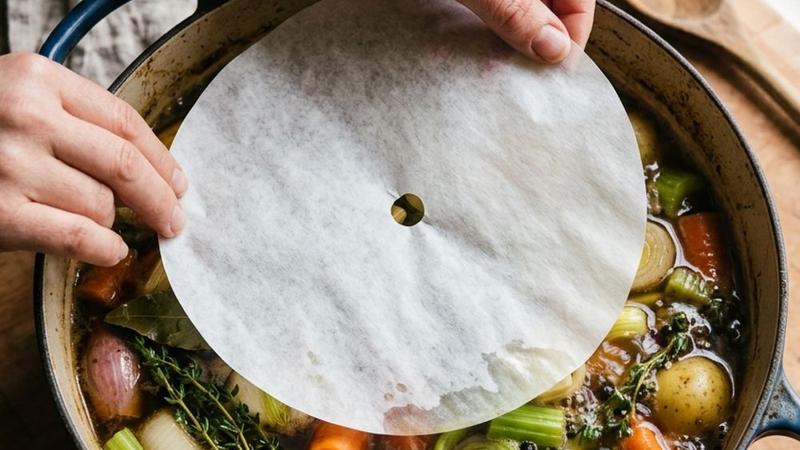
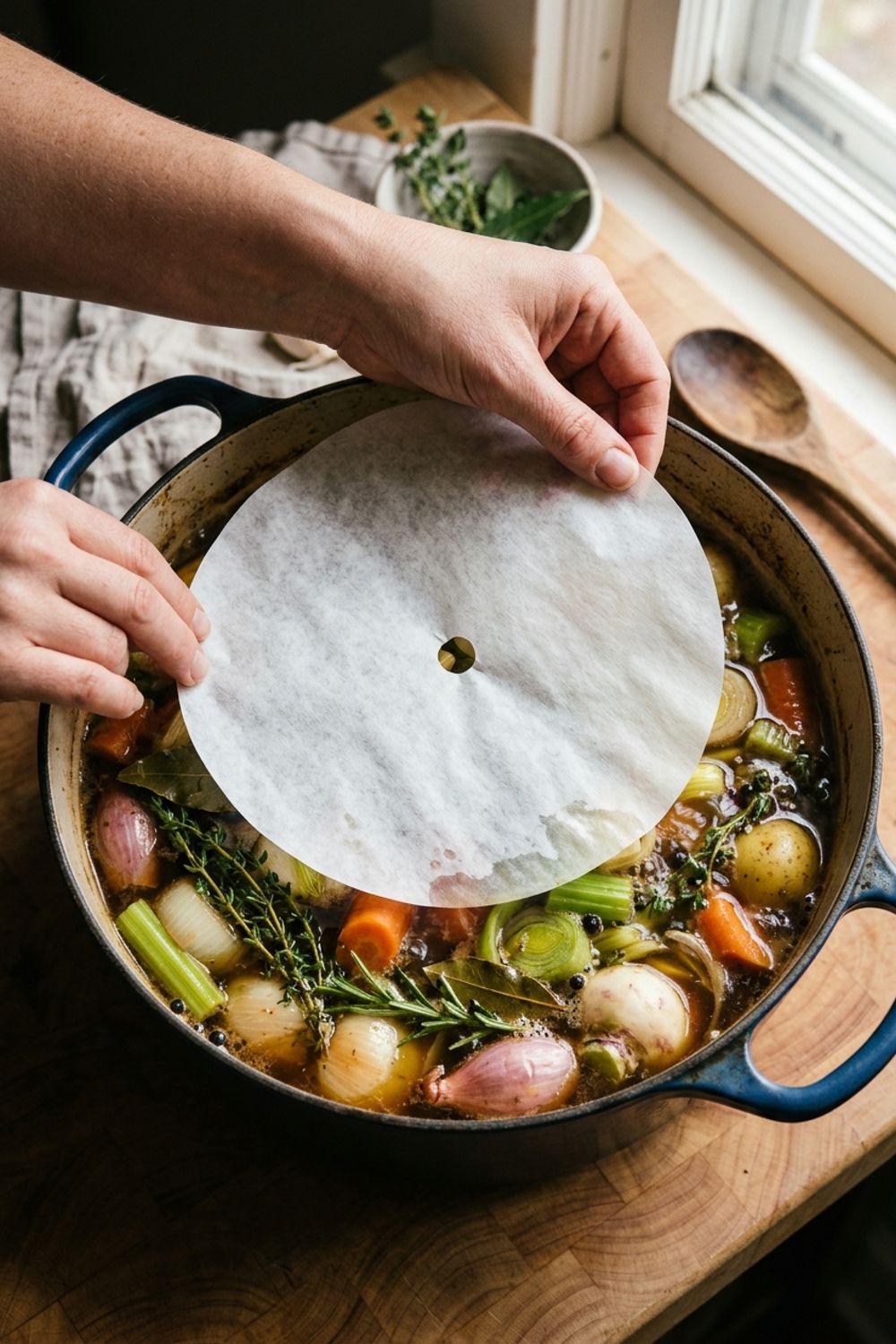
The cartouche — pronounced “car-TOOSH” — is one of the simplest, most elegant French cooking techniques, and it uses nothing more than a piece of parchment paper. You cut a circle to fit inside your pot, place it directly on the surface of your food, and let it work its magic. No special equipment, no fancy ingredients required. Yet this humble piece of paper does something no pot lid can: it creates a micro-environment that controls moisture, prevents skin formation, and promotes the most gentle, even cooking imaginable.
It took me several botched braises to understand the difference between a cartouche and a regular lid. A pot lid traps all the steam and prevents evaporation, leaving you with thin, watery sauces. Cooking with no lid allows too much evaporation, drying out the food on top. The cartouche sits between these extremes. Because it rests directly on the food and liquid, it keeps ingredients submerged while allowing slow, controlled evaporation through the steam vent and around the edges. The liquid reduces gradually, concentrating flavors, while the food stays bathed in moisture.
The Folding Technique Step by Step
Making a cartouche takes less than thirty seconds once you know the pattern. Start with a sheet of parchment at least two inches larger than your pot. Fold it in half to form a rectangle, then in half again to create a square. Fold diagonally to create a triangle.
Hold the sharp point over the center of your pot and cut the wide end in a gentle curve where it meets the inside edge, about half an inch inside the rim. Before unfolding, snip a small piece off the tip to create a steam vent. Unfold, press gently onto the surface of your simmering liquid, and admire how perfectly it fits.
When to Use a Cartouche
I use a cartouche in four primary situations. The first and most classic is for braises. The sauce concentrates while meat stays bathed in liquid — essential for coq au vin, boeuf bourguignon, and braised short ribs.
The second is poaching fruit. A cartouche keeps pears or stone fruit submerged so they cook evenly on all sides and absorb the poaching liquid uniformly.
The third is sauces that need to reduce without forming a skin. Béchamel, custards, and cream-based sauces develop a thick skin when exposed to air. A cartouche prevents this while still allowing gentle evaporation.
The fourth is stock and consommé. The gentle barrier keeps ingredients submerged and prevents the surface from roiling, which can make stock cloudy.
Tips for Mastering the Cartouche
Use real parchment paper, not wax paper. Wax paper melts at low temperatures and can leach into food. Parchment is silicone-treated and heat-resistant to over 400 degrees.
Size matters more than shape. An irregular circle works just as well as a perfect one, as long as it covers the food with edges curving down inside the pot.
Press out the air bubbles. Use a spoon to press the cartouche into full contact with the liquid surface. Air pockets cause uneven cooking.
Replace if it tears. Parchment becomes fragile during long cooking. Keep a roll within arm’s reach.
Adjust the vent size. A larger vent (one inch) allows more evaporation for braises. A smaller vent (quarter inch) retains more moisture for poaching.
Recipe Application — Honey-Glazed Braised Carrots
To demonstrate the cartouche in action, here is a simple French side dish that showcases the technique perfectly. Peel one pound of carrots and cut into two-inch diagonal pieces. Melt two tablespoons of butter in a wide pan over medium heat. Sear the carrots for two minutes without stirring, then add honey, broth, salt, thyme, and pepper. The liquid should come halfway up the sides.
Bring to a simmer, place your cartouche on top, reduce to medium-low, and braise for 20-25 minutes until completely tender. Remove the cartouche and thyme, increase heat, and reduce the liquid for 3-4 minutes until it becomes a thick, syrupy glaze. Without the cartouche, the carrots dry out on top while swimming in liquid below, and the broth evaporates too quickly for even cooking.
Variations and Advanced Uses
Butter Cartouche. Rub softened butter onto the parchment before placing it food-side down. The melting butter bastes the surface continuously — traditional for poached fish.
Herb Cartouche. Press fresh herb leaves onto the buttered parchment. The herbs infuse flavor directly into the surface, lovely for poached chicken or braised fennel.
Double Cartouche. For very long braises (four hours or more), two layers of parchment provide extra durability.
The Cartouche-Lid Combo. Use a cartouche on the food surface and place the pot lid slightly ajar on top. This double barrier is ideal for delicate dishes like veal blanquette.
How to Store
Since a cartouche is simply parchment paper, storage is straightforward. You can pre-cut several for your most common pot sizes and store them flat in a kitchen drawer. Keep a full roll of parchment in your kitchen and you will always be ready.
Troubleshooting
The cartouche keeps floating up. The vent may be too small or missing. Also reduce the heat — a gentle simmer is all you need.
The cartouche disintegrated. Extended cooking or high temperatures break down parchment. Check periodically during long braises and replace as needed.
The food is still drying out. Your cartouche may be too small. Make a new one that covers the full surface with edges curving down to meet the liquid.
The sauce is not reducing. Your cartouche may be too large, acting as a lid. Trim it so there is a small gap between the edge and the pot wall, or enlarge the center vent.
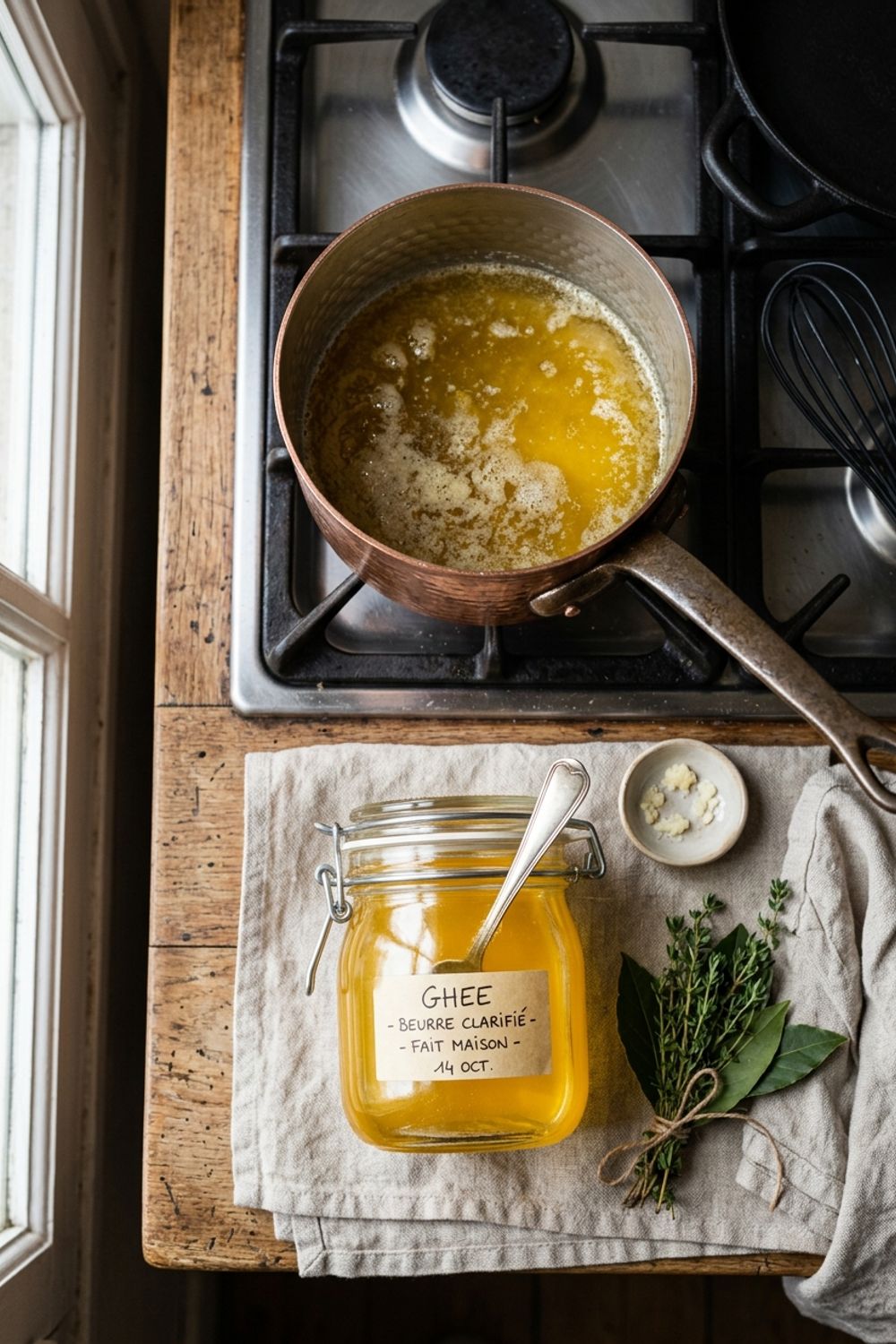
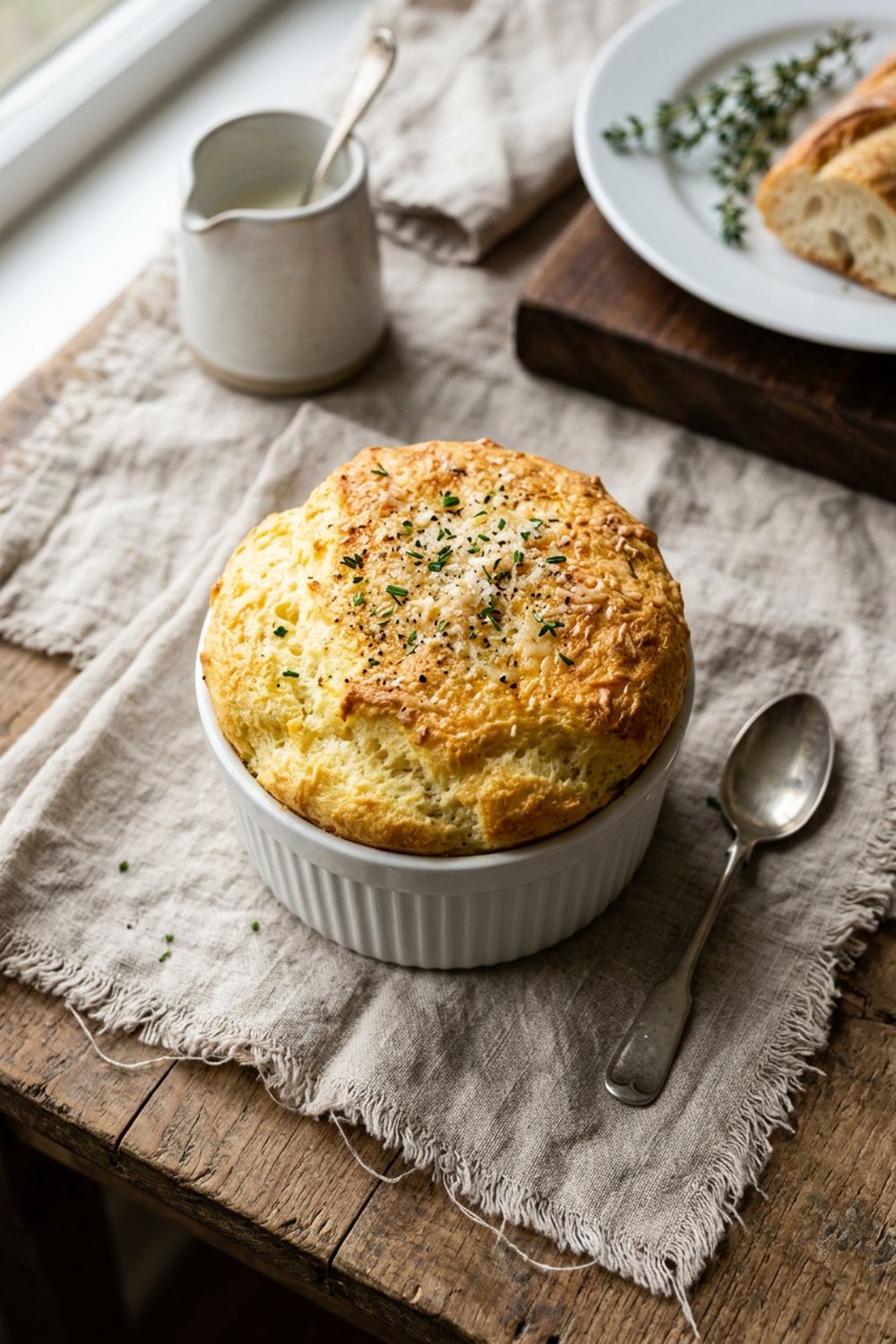
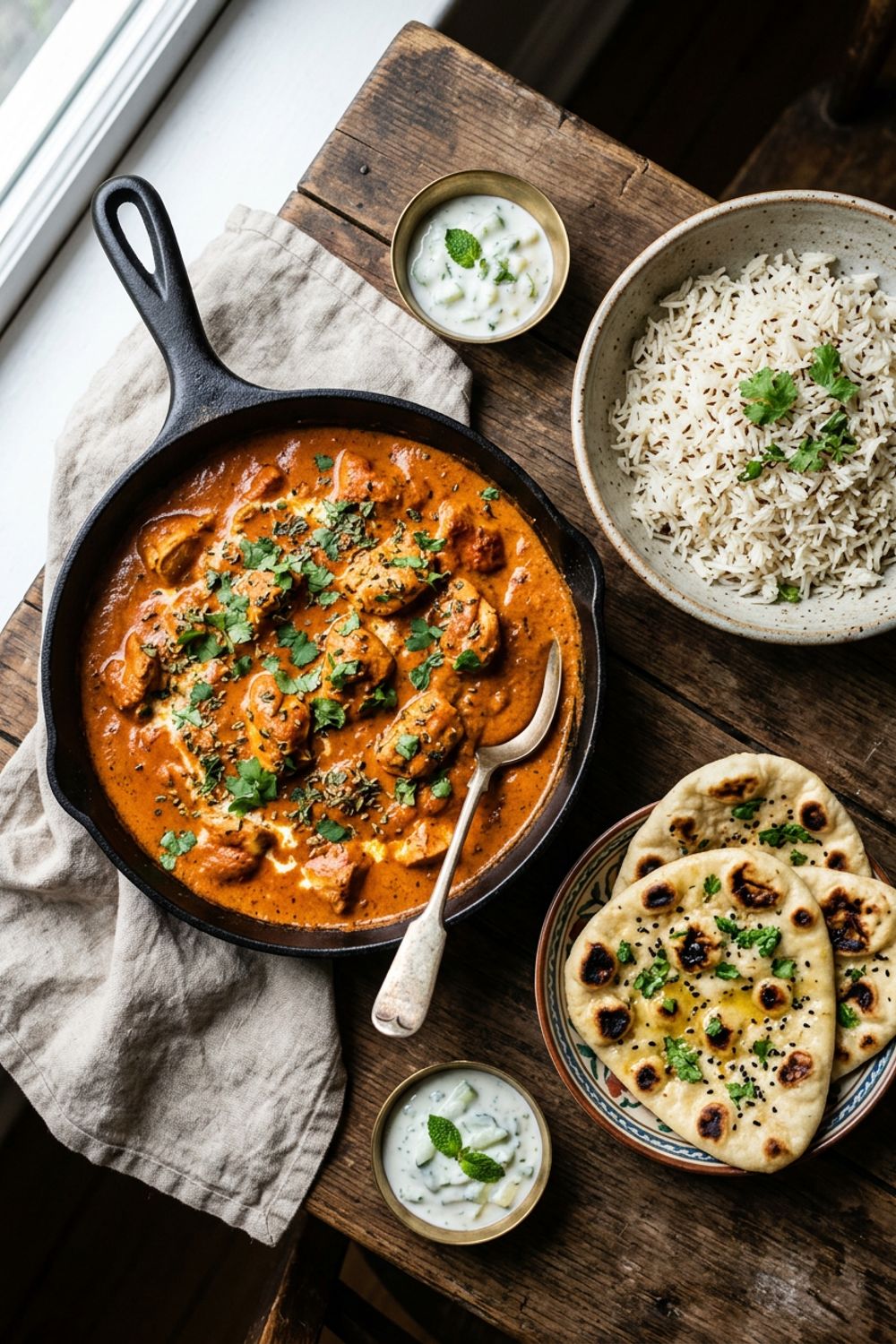
The cartouche is proof that the best cooking techniques are often the simplest. If you are exploring French fundamentals, my guide to clarified butter is another essential technique. For a classic that uses a béchamel foundation, try my cheese soufflé. And for slow, careful cooking from another tradition, my homemade butter chicken is a wonderful place to start.
Ingredients
Main
For the Demo Braised Carrots
Instructions
Cut a Square
Tear off a piece of parchment paper that is slightly larger than your pot or pan. Fold it in half to form a rectangle.
Fold into a Triangle
Fold the rectangle in half again to form a square, then fold the square diagonally to create a triangle. You now have a multi-layered triangle.
Find the Center Point
Hold the triangle with the point (which represents the center of the paper) facing away from you. Place the pointed tip over the center of your pot to estimate the radius.
Trim to Size
Using scissors, cut the wide end of the triangle in a curve at the point where it meets the edge of your pot. Cut about half an inch smaller than the pot diameter so the cartouche sits on top of the food, not against the pot walls.
Cut a Steam Vent
Snip a small hole (about 1/2 inch) at the pointed tip of the folded triangle. When unfolded, this creates a small vent in the center of the circle that allows just enough steam to escape.
Unfold and Place
Unfold the parchment to reveal a circle with a small hole in the center. Press it gently directly onto the surface of the food in the pot, tucking the edges down slightly. The cartouche should rest on the food itself, not on the rim of the pot.
Nutrition Information
Per serving (serves 1). Values are approximate.
| Calories | 0 calories |
| Total Fat | 0g |
| Saturated Fat | 0g |
| Carbohydrates | 0g |
| Sugar | 0g |
| Protein | 0g |
| Sodium | 0mg |
| Fiber | 0g |
* Percent Daily Values are based on a 2,000 calorie diet. Your daily values may be higher or lower depending on your calorie needs. Nutritional information is an estimate and may vary.
Never Miss a Recipe
Join 5,000+ home cooks and get new recipes straight to your inbox.
Frequently Asked Questions
What is a cartouche in cooking?
A cartouche is a circle of parchment paper placed directly on the surface of food while it simmers. It traps moisture, controls evaporation, and prevents a skin from forming on sauces. French chefs have used this technique for centuries in braises, poaching, and sauce-making.
Can I use aluminum foil instead of parchment paper?
You can, but parchment is preferred because it does not react with acidic foods like wine or tomatoes. Foil can also create too tight a seal, whereas parchment's slight flexibility allows the ideal amount of steam exchange.
When should I use a cartouche instead of a lid?
Use a cartouche when you want gentle, controlled evaporation — braises that need to reduce slightly, poached fruits that need to stay submerged, or sauces that should thicken slowly. A full lid traps all steam and prevents any reduction.
Can I reuse a cartouche?
If the parchment is not torn or heavily stained, you can reuse it once or twice. However, parchment paper is inexpensive and a fresh cartouche takes 30 seconds to make, so I usually make a new one each time.
Does the steam vent matter?
Yes. Without the vent, pressure can build under the parchment and cause it to puff up and float off the food. The small hole allows just enough steam to escape to keep the cartouche sitting flat on the surface.

Hi, I'm Lisa!
I create simple, tested recipes from around the world that anyone can make at home.
Learn More →Reader Reviews
Based on 345 reviews