
Imagine cutting into a perfectly golden salmon fillet to reveal a river of creamy, garlicky spinach filling. Creamy spinach stuffed salmon delivers that restaurant-worthy moment right in your own kitchen. This isn’t just another salmon recipe—it’s an elegant main course that looks impressive but comes together in under 40 minutes. Whether you’re hosting a dinner party or treating yourself to something special on a weeknight, this stuffed salmon proves that sophisticated doesn’t have to mean complicated.
The combination of tender, flaky salmon with rich cream cheese, parmesan, and fresh spinach creates layers of flavor and texture that make every bite memorable. Unlike our creamy garlic butter shrimp pasta, which celebrates seafood in a pasta form, this recipe showcases salmon as the star of the plate. Perfect for occasions when you want to impress without stress.
Ingredients
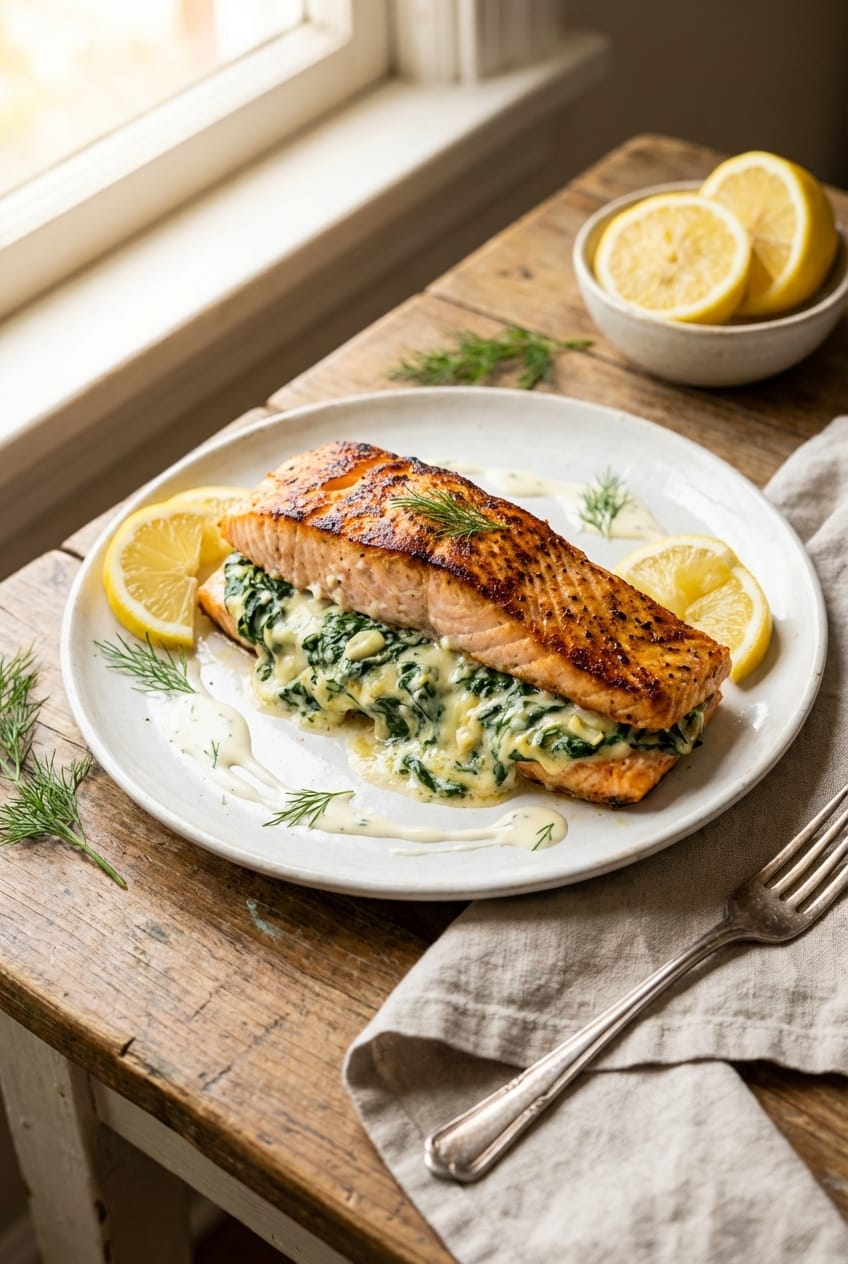
Quality ingredients transform creamy spinach stuffed salmon from good to unforgettable. Fresh salmon and real cream cheese make all the difference.
For the Salmon
- 4 salmon fillets (170-200g each), skin-on or skinless
- 2 tablespoons olive oil
- 1 teaspoon salt
- 1/2 teaspoon black pepper
- 1/2 teaspoon garlic powder
- 1/2 teaspoon paprika
For the Creamy Spinach Filling
- 200g (2 cups) fresh spinach, roughly chopped
- 110g (4 oz) cream cheese, softened
- 50g (1/2 cup) parmesan cheese, freshly grated
- 3 cloves garlic, minced
- 1/4 teaspoon nutmeg
- Zest of 1 lemon
- Salt and pepper to taste
For Serving
- Fresh lemon wedges
- Fresh dill or parsley for garnish
- Optional: cream sauce drizzle
Smart Substitutions
Dairy-Free: Use cashew cream cheese and nutritional yeast instead of dairy cheese. Lower Fat: Replace cream cheese with Greek yogurt mixed with a tablespoon of flour. Greens Swap: Use kale, Swiss chard, or arugula instead of spinach.
Timing
- Prep: 15 minutes
- Cook: 20 minutes
- Total: 35 minutes
- Serves: 4
Instructions
Step 1: Prepare the Spinach Filling
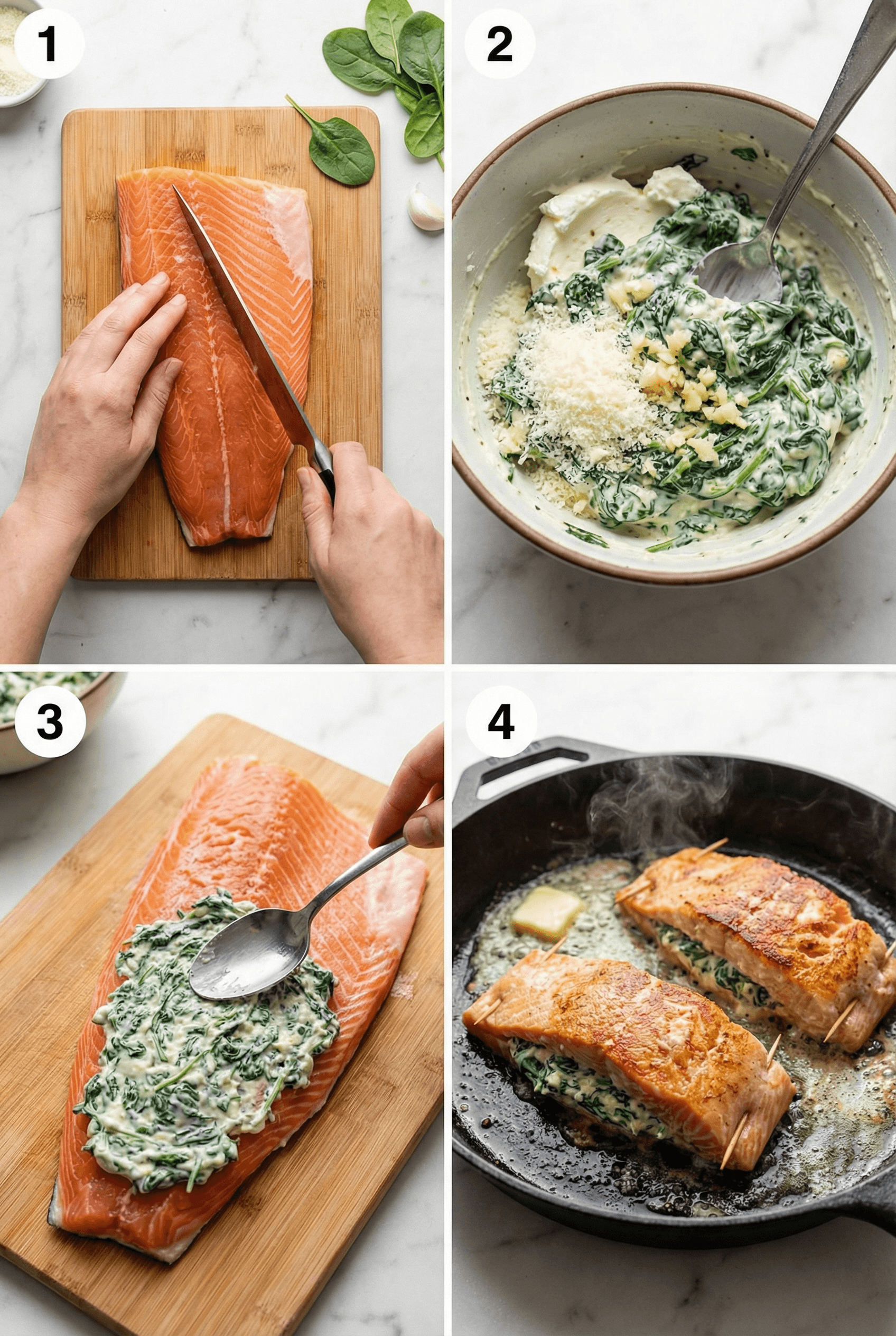
Heat 1 tablespoon olive oil in a large skillet over medium heat. Add minced garlic and sauté for 30 seconds until fragrant but not browned. Add chopped spinach and cook for 2-3 minutes until wilted and most moisture has evaporated. This step is crucial—excess water will make your filling runny and prevent proper sealing. Transfer spinach to a bowl and let cool for 5 minutes. Once cooled, mix in softened cream cheese, parmesan, nutmeg, lemon zest, salt, and pepper until thoroughly combined. The mixture should be thick and spreadable, not loose.
Step 2: Butterfly the Salmon
Pat salmon fillets completely dry with paper towels. Place each fillet on a cutting board and, using a sharp knife, make a horizontal cut through the middle of the fillet, cutting almost but not entirely through to the other side—like opening a book. This butterflying technique creates a pocket for the stuffing while keeping the salmon intact. If your fillets are particularly thick (over 3cm), you can cut slightly deeper. Season both the inside and outside of each fillet with salt, pepper, garlic powder, and paprika. The seasoning on the inside ensures flavor throughout.
Step 3: Stuff the Salmon
Open each butterflied salmon fillet and spread a quarter of the creamy spinach mixture evenly across one side. Don’t overfill—about 3-4 tablespoons per fillet is perfect. Overstuffing makes the salmon difficult to seal and cook evenly. Gently press the top half back down over the filling. The natural moisture and cooking process will help seal it, but you can also secure with toothpicks if needed. Press gently around the edges to help the filling spread to the borders without squeezing out.
Step 4: Sear the Salmon
Heat 2 tablespoons olive oil in a large oven-safe skillet over medium-high heat until shimmering but not smoking. Carefully place stuffed salmon fillets in the skillet, seam-side down first. This initial sear helps seal the pocket and prevents filling from leaking. Cook for 3-4 minutes until golden brown, then carefully flip using two spatulas. Cook the other side for 2 minutes. The high heat creates a flavorful crust while the inside stays moist. If salmon is sticking, it’s not ready to flip—give it another minute.
Step 5: Finish in the Oven
If your skillet is oven-safe, transfer it directly to a preheated 190°C (375°F) oven. If not, transfer salmon to a baking dish. Bake for 8-10 minutes until salmon reaches an internal temperature of 60°C (140°F) in the thickest part. The fish should be opaque and flake easily with a fork. Overcooking makes salmon dry, so start checking at 8 minutes. Thicker fillets may need an extra 2-3 minutes. The filling will be hot and creamy, the salmon tender and moist.
Step 6: Rest and Serve
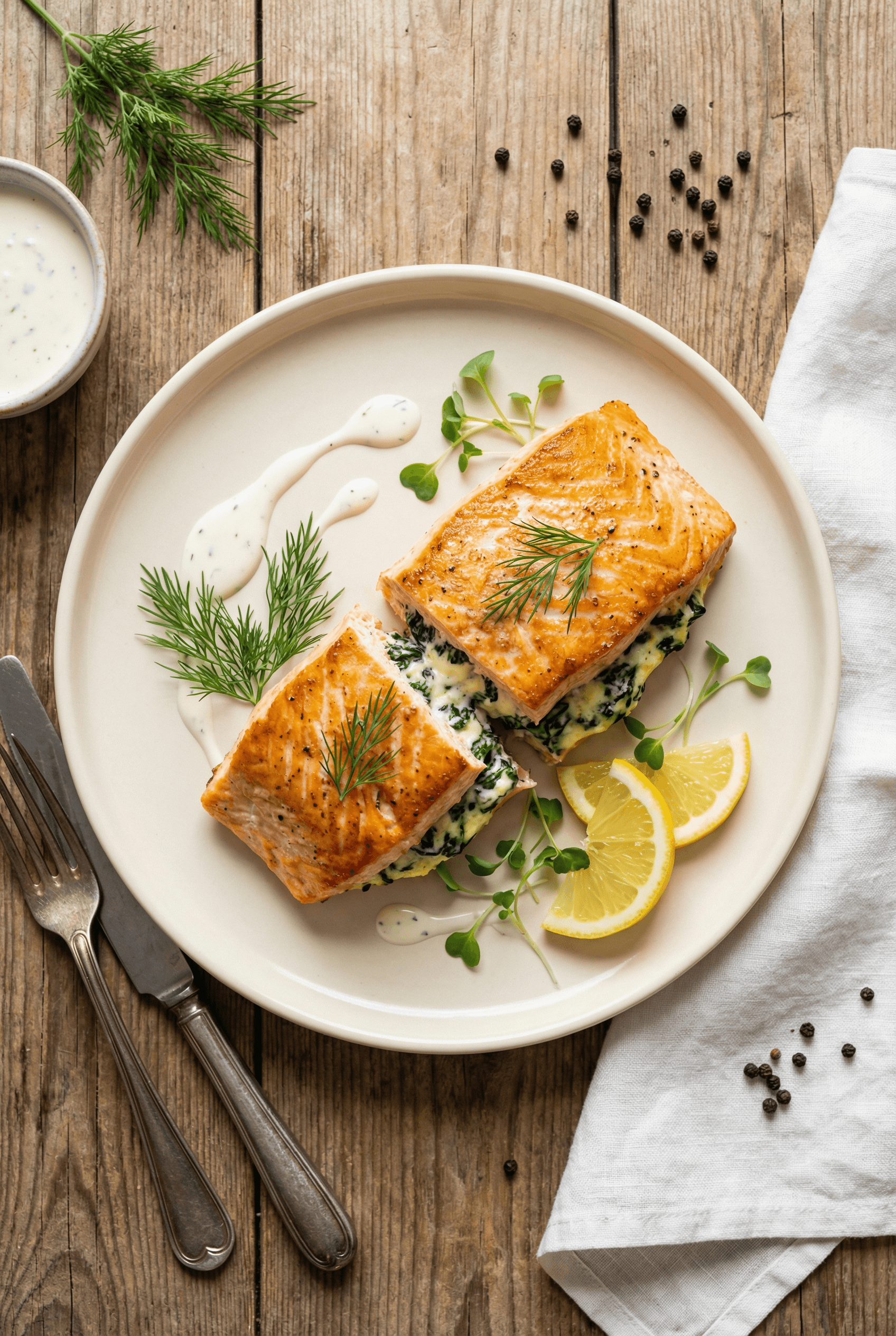
Remove salmon from the oven and let rest for 3-5 minutes before serving. This resting period allows juices to redistribute throughout the fish, ensuring every bite is moist. Transfer to serving plates using a wide spatula to keep the fillets intact. Garnish with fresh lemon wedges, dill or parsley, and a drizzle of cream sauce if desired. The lemon juice brightens the rich filling and cuts through the creaminess beautifully.
Nutrition Per Serving
- Calories: 385
- Protein: 38g
- Carbs: 5g
- Fat: 24g
- Fiber: 1g
- Sodium: 520mg
Salmon provides omega-3 fatty acids, vitamin D, and high-quality protein. Spinach adds iron, vitamins A and K, while keeping the carb count low. This is a nutrient-dense meal that supports heart health and keeps you satisfied.
Pro Tips for Success
- Pat salmon dry: Moisture prevents proper searing and creates steam instead of a golden crust
- Don’t overfill: Too much stuffing makes sealing difficult and causes leaking during cooking
- Room temperature cream cheese: Softened cheese mixes smoothly and spreads easily without tearing the spinach
- Sear seam-side first: This seals the pocket and prevents filling from escaping during cooking
- Use an instant-read thermometer: Salmon is perfectly cooked at 60°C (140°F)—overcooking makes it dry
- Wild vs farmed: Wild salmon has firmer texture and deeper flavor; farmed is more delicate and buttery
Delicious Variations
- Mediterranean Style: Add sun-dried tomatoes, feta cheese, and fresh basil to the filling
- Cajun Spiced: Season salmon with cajun spices and add diced bell peppers to the filling
- Mushroom & Herb: Replace spinach with sautéed mushrooms, thyme, and tarragon
- Crab-Stuffed: Mix lump crab meat into the spinach filling for an extra-luxurious version
- Pesto Twist: Swirl 2 tablespoons basil pesto into the cream cheese mixture
- Asian-Inspired: Add ginger, soy sauce, and sesame oil to the filling; garnish with green onions
Common Mistakes to Avoid
Not Drying the Salmon: Wet salmon won’t sear properly and steams instead of caramelizing. Solution: Pat fillets completely dry with paper towels before seasoning. Even blot again right before cooking if needed.
Overfilling the Pocket: Too much stuffing prevents proper sealing and oozes out during cooking. Solution: Use only 3-4 tablespoons per fillet. The filling expands slightly when heated, so less is more.
Watery Spinach Filling: Fresh spinach releases moisture that makes the filling runny. Solution: Cook spinach until very dry, squeezing out excess liquid before mixing with cheese. Let the mixture cool completely before stuffing.
Cooking at Too High Heat: Very high heat burns the outside before the inside cooks through. Solution: Use medium-high for searing (creating crust) then finish in a moderate oven to cook evenly.
Overcooking the Salmon: Salmon continues cooking after removal from heat, leading to dry, chalky texture. Solution: Remove from oven when internal temp reaches 60°C (140°F). It will climb to 63°C (145°F) during resting.
Storage and Make-Ahead
Make-Ahead Filling: Prepare spinach filling up to 2 days in advance. Store covered in refrigerator. Bring to room temperature before stuffing salmon for easier spreading.
Stuff in Advance: Butterfly and stuff salmon fillets up to 4 hours ahead. Wrap tightly in plastic and refrigerate. Bring to room temperature 15 minutes before cooking for even cooking.
Refrigerating Leftovers: Store cooked stuffed salmon in an airtight container for up to 2 days. The filling may separate slightly but flavor remains good.
Reheating: Reheat gently in a 160°C (325°F) oven for 8-10 minutes until warmed through. Avoid microwave as it makes salmon rubbery. Add a splash of water or cream to the baking dish to maintain moisture.
Freezing: Not recommended for stuffed salmon as the cream cheese filling separates upon thawing and salmon texture degrades.
Serving Suggestions
Classic Pairing: Serve alongside roasted asparagus or green beans with a squeeze of lemon. The bright vegetables complement the rich salmon beautifully.
Elegant Starch: Pair with buttery layered potato cake or creamy mashed potatoes to soak up the delicious juices and create a complete French-inspired meal.
Light & Fresh: Serve over a bed of mixed greens dressed with lemon vinaigrette for a lighter presentation that balances the richness.
Wine Pairing: A crisp Sauvignon Blanc or buttery Chardonnay complements the creamy filling without overpowering the delicate salmon.
Complete Dinner: Round out the meal with a simple salad and crusty bread to mop up any extra filling that escapes onto the plate.
Why This Recipe Works
The butterflying technique creates a natural pocket that holds the filling while maintaining the salmon’s structural integrity. Searing the seam-side first caramelizes the edges and creates a seal that keeps the creamy filling inside. The combination of cream cheese and parmesan provides richness and tang while the spinach adds freshness and prevents the filling from being too heavy. Cooking the spinach dry before mixing ensures the filling stays thick and creamy rather than watery. The two-stage cooking method—sear then oven—gives you the best of both worlds: a golden crust from high heat and even cooking through gentle oven heat. The nutmeg and lemon zest add aromatic depth that elevates the simple spinach-cheese combination into something restaurant-worthy.
Conclusion
This creamy spinach stuffed salmon proves that elegant, restaurant-quality dinners are absolutely achievable at home. The combination of tender salmon and rich, garlicky filling creates a dish that looks as impressive as it tastes. Whether you’re planning a special dinner for two, hosting friends, or simply elevating your weeknight routine, this stuffed salmon delivers sophistication without complexity. The butterflying technique might seem intimidating at first, but after making it once, you’ll realize how simple it truly is.
Ready to impress with this stunning main course? Gather your ingredients and discover how easy it is to create restaurant magic in your own kitchen. Share your results and creative variations in the comments—we love seeing your beautiful plated creations!
FAQs
Can I use frozen spinach instead of fresh?
Yes, but thaw completely and squeeze out ALL excess water first. Frozen spinach holds more moisture than fresh, so this step is critical. Use about 140g (5 oz) frozen spinach, thawed and squeezed dry.
What if my salmon fillets are too thin to butterfly?
If fillets are under 2cm thick, skip butterflying. Instead, place filling on top and fold the tail end over to partially cover, or serve filling alongside as a topping.
Can I make this with salmon steaks instead of fillets?
Salmon steaks are more difficult to butterfly due to the center bone. Stick with boneless, skinless fillets for easiest preparation and best results.
How do I know when the salmon is perfectly cooked?
Use an instant-read thermometer—salmon is perfect at 60°C (140°F) in the thickest part. It should be opaque and flake easily but still be moist. The FDA recommends 63°C (145°F), but most chefs prefer slightly lower for juicier texture.
Can I stuff the salmon the night before?
You can stuff up to 4 hours ahead, but not overnight. The acid from lemon and moisture from filling will start breaking down the salmon’s texture if left too long.
What other cheeses work in the filling?
Goat cheese, ricotta, or mascarpone all work beautifully. Feta adds a Mediterranean twist. Just maintain the same total cheese amount for proper texture.
My filling keeps leaking out during cooking. What am I doing wrong?
You’re likely overfilling or the spinach is too wet. Use less filling (3-4 tablespoons max) and ensure spinach is cooked completely dry. Searing seam-side first also helps seal the pocket.
Can I grill stuffed salmon instead of pan-searing and baking?
Yes, but it’s trickier. Use a grill basket or place on foil. Grill over medium heat (not direct high flame) for 10-12 minutes, flipping carefully once. Monitor closely to prevent filling from leaking.
Is skin-on or skinless salmon better for stuffing?
Both work, but skinless is easier for butterflying and eating. If using skin-on, butterfly from the flesh side and the skin will help hold everything together during cooking.
1 thought on “Creamy Spinach Stuffed Salmon – Elegant Dinner in 35 Minutes”