Pasta & Noodles
Quick Lemon Pasta: A Bright & Zesty 20-Minute Dinner
Why I Love Quick Lemon Pasta
You know that feeling when you come home exhausted and need dinner on the table in minutes, but you don’t want to sacrifice flavor or quality? That’s exactly where quick lemon pasta comes in. I discovered this recipe during a particularly hectic week while traveling through Italy, and it completely changed how I approach weeknight cooking.
What makes this dish so special is its simplicity. There are no complicated techniques, no long ingredient lists, and no need for heavy cream or complicated reductions. Instead, you’re working with the most basic, honest ingredients—lemon, garlic, olive oil, and pasta—to create something that tastes like you spent hours in the kitchen. It’s the kind of recipe that reminds me why I fell in love with cooking in the first place.
The beauty of lemon pasta is that it’s incredibly versatile. You can eat it as-is for a light, refreshing meal, or you can build on it with proteins, vegetables, or fresh herbs. I’ve made it with shrimp on busy weeknights, with roasted vegetables on lazy Sundays, and with nothing but Parmesan and fresh basil when I wanted to keep it pure and simple. Every version is delicious.
The Secret to Perfect Lemon Pasta
After making this recipe dozens of times, I’ve learned a few tricks that elevate it from good to absolutely incredible. First, the pasta water is non-negotiable. That starchy liquid is what transforms a simple mixture of oil and lemon juice into a silky, luxurious sauce that clings to every strand of pasta. Don’t skip this step or rinse your pasta—that starch is your secret weapon.
Second, use the best quality olive oil you can afford. Since there are so few ingredients, each one really matters. A fruity, high-quality extra virgin olive oil will make a noticeable difference in the final flavor. I like to use a Sicilian or Tuscan olive oil because they have beautiful citrus notes that complement the lemon beautifully.
Third, don’t be shy with the lemon. I use three large lemons for four servings, and I use both the zest and the juice. The zest adds aromatic complexity while the juice provides brightness and acidity. If you’re worried about it being too tart, remember that the pasta water and olive oil will balance the acidity beautifully.
Finally, timing is everything. This dish is best served immediately while the sauce is silky and the pasta is at its perfect temperature. Have your bowls ready, your toppings prepped, and your guests seated before you combine everything. It takes just a couple of minutes to come together, and you want to serve it at its peak.
Ingredient Quality Matters
I’ve learned through years of cooking that when you’re making a dish with just a handful of ingredients, the quality of those ingredients becomes paramount. You can’t hide behind complex flavors or heavy sauces—everything is on display.
For the pasta, I prefer bronze-cut (trafilata al bronzo) pasta because it has a rougher texture that helps the sauce cling better. Barilla, De Cecco, and Rustichella d’Abruzzo are all excellent brands that are widely available. The slight texture difference really does matter when you’re working with a light sauce like this.
The lemons should be bright yellow, firm, and fragrant. If possible, choose organic lemons since you’re using the zest. Before zesting, wash them thoroughly under warm water. I like to use a microplane zester because it gives you the finest, most aromatic zest without any of the bitter white pith.
For the garlic, fresh is absolutely essential. Pre-minced garlic from a jar simply won’t give you the same bright, fresh flavor. Take the extra 30 seconds to mince it yourself—your taste buds will thank you.
The Parmesan should be freshly grated from a block of Parmigiano-Reggiano if possible. Pre-grated Parmesan contains anti-caking agents that prevent it from melting and incorporating smoothly into the dish. The difference is subtle but noticeable.
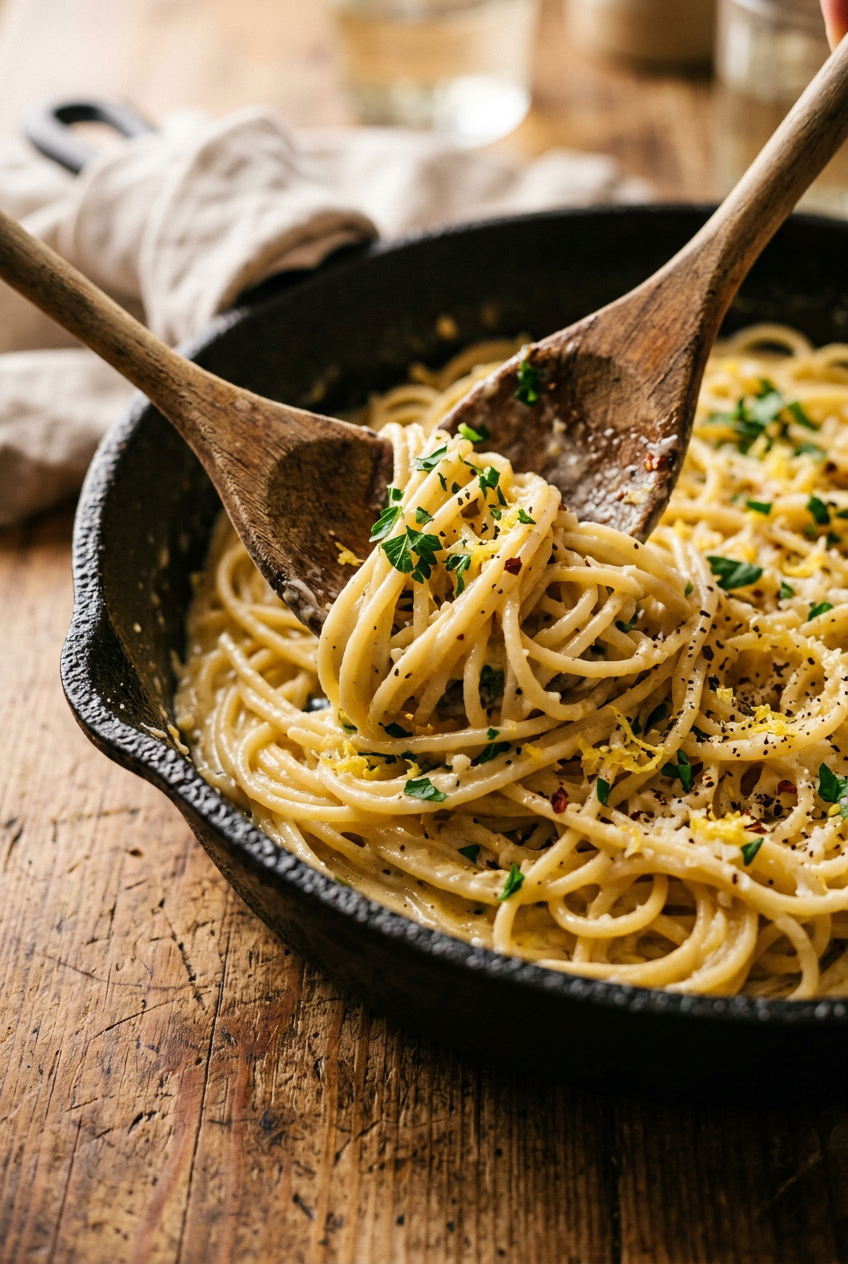
Variations and Add-Ins
While I adore the pure, simple version of this pasta, I also love experimenting with additions depending on what I have on hand or what I’m in the mood for.
For a protein boost, grilled shrimp is my go-to. I cook them separately in a hot skillet with a little olive oil and salt, then toss them in at the very end. They only need about 2-3 minutes per side, so your total cooking time stays under 30 minutes. Grilled chicken breast works beautifully too—just pound it thin so it cooks quickly.
If I’m making this vegetarian, I sometimes add roasted cherry tomatoes, sautéed spinach, or fresh peas. The sweetness of the peas or tomatoes plays beautifully against the brightness of the lemon. I also love adding crispy pancetta or prosciutto for a salty, savory element.
For extra freshness, I sometimes add a handful of arugula or fresh spinach at the very end, letting the heat of the pasta wilt it slightly. Fresh herbs are always welcome—basil, parsley, mint, and even dill work wonderfully.
If you want to make it slightly creamier without using actual cream, you can add a splash of white wine to the sauce, or even a tablespoon of butter at the end for richness. Some people add a beaten egg yolk to create a carbonara-style sauce, which is absolutely delicious if you’re comfortable with that technique.
Serving Suggestions and Pairings
Quick lemon pasta is light and refreshing, making it perfect for warm weather meals, but it’s also comforting enough for cooler months. I serve it as a main course with a simple green salad dressed with a light vinaigrette. The acidity of the salad complements the lemon pasta beautifully without overwhelming it.
For wine pairing, I reach for a crisp white wine—a Pinot Grigio, Sauvignon Blanc, or Vermentino works wonderfully. The acidity and citrus notes in these wines echo the lemon in the pasta, creating a harmonious meal.
If you’re serving this to guests, I like to have crusty bread on the table for soaking up any extra sauce. A simple garlic bread or even plain toasted bread is perfect. Some people like to drizzle a little extra olive oil on top of their finished bowl, and I always have extra lemon wedges available for those who want more brightness.
For a complete meal, I might start with a simple appetizer like burrata and heirloom tomatoes, serve the pasta as the main course, and finish with something light like lemon sorbet or fresh berries. The lemon theme ties everything together beautifully.
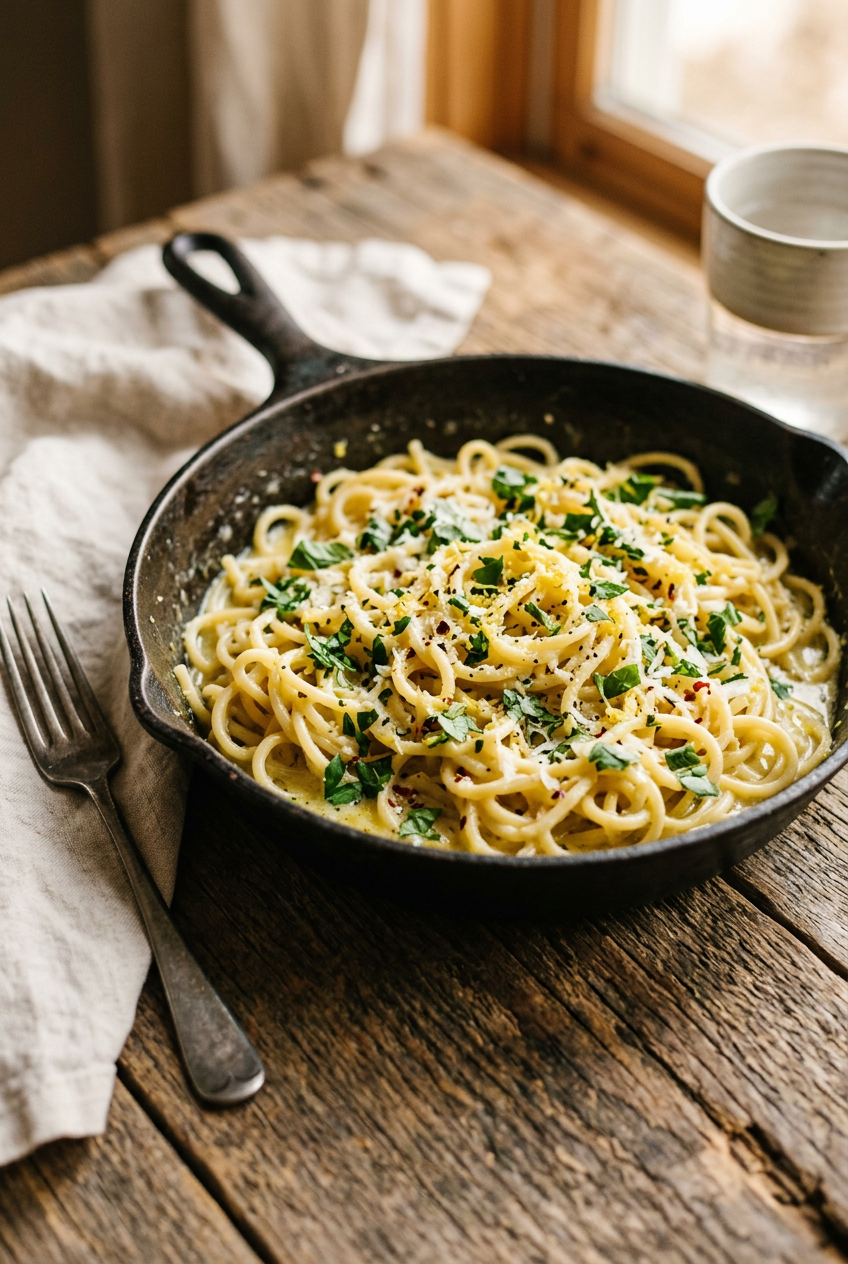
Ingredients
Pasta & Base
Sauce
Finishing Touches
Instructions
Bring Water to a Boil
Fill a large pot with 4 cups of water and add 2 teaspoons of kosher salt. Bring it to a rolling boil over high heat. I always taste the water—it should taste like the sea. This is your only opportunity to season the pasta itself, so don't skip this step! While waiting for the water to boil, I like to prep my other ingredients so everything moves quickly once the pasta hits the pot.
Cook the Pasta
Once the water is boiling, add your spaghetti or linguine and stir immediately to prevent sticking. Cook according to package directions, but aim for al dente—usually about 9-10 minutes. I always taste a strand about a minute before the package suggests it's done. You want it tender but with just a slight firmness when you bite it. This texture makes all the difference in the final dish.
Prepare the Lemon Sauce Base
While the pasta cooks, heat 4 tablespoons of extra virgin olive oil in a large skillet over medium heat. Once shimmering, add your minced garlic and red pepper flakes. Sauté for about 1-2 minutes, stirring constantly, until the garlic becomes fragrant and just begins to turn golden. Be careful not to burn it—burnt garlic tastes bitter and will ruin your beautiful sauce. I learned this the hard way years ago in a tiny Roman kitchen!
Add Lemon Zest and Juice
Remove the skillet from heat and immediately add your lemon zest and lemon juice. The heat will help release the aromatic oils from the zest, creating an incredibly fragrant base. Stir well to combine. This is where the magic happens—the brightness of the lemon combined with the warmth of the garlic creates this beautiful, complex flavor that's both simple and sophisticated. I always take a moment to smell this mixture because it's absolutely divine.
Reserve Pasta Water and Drain
Before draining your pasta, reserve about ¼ cup of the starchy pasta water in a small bowl or measuring cup. This liquid gold is essential for creating a silky sauce that clings beautifully to every strand. Drain the pasta in a colander, but don't rinse it—that starch is your friend here. The pasta water will help emulsify the oil and create a creamy texture without any cream.
Combine Pasta with Sauce
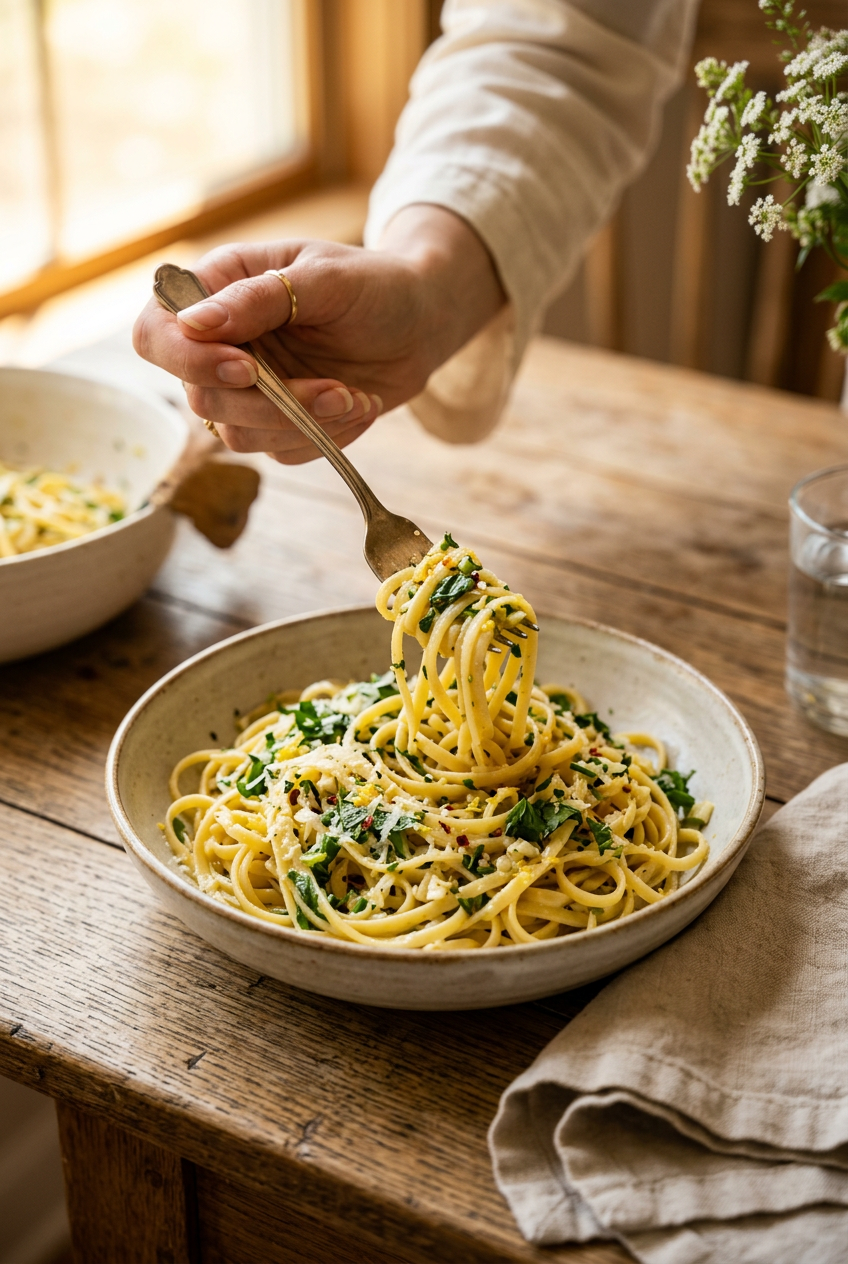
Add the hot drained pasta directly to your skillet with the lemon sauce. Toss gently but thoroughly, adding the reserved pasta water a little at a time as you toss. You want to create a silky, glossy sauce that coats each strand. This usually takes about 1-2 minutes of tossing. The heat from the pasta will warm the sauce through, and the starch from the pasta water will help everything come together in the most beautiful way.
Season and Finish
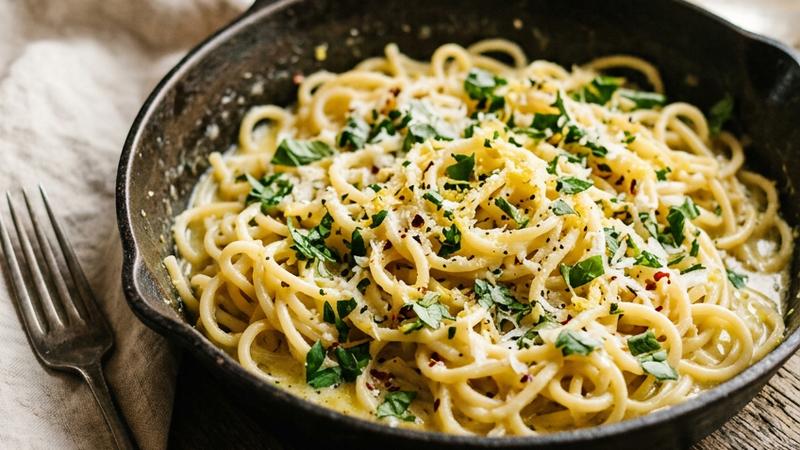
Taste your pasta and adjust the seasoning with salt and black pepper as needed. Remember, you already salted the pasta water, so taste before adding more salt. Divide the pasta among four bowls and top each serving with freshly grated Parmesan cheese, fresh parsley, and torn basil. If you're feeling fancy, add a few thin lemon slices on top for garnish and an extra pop of color.
Nutrition Information
Per serving (serves 4). Values are approximate.
| Calories | 385 calories |
| Total Fat | 18g |
| Saturated Fat | 4g |
| Carbohydrates | 48g |
| Sugar | 2g |
| Protein | 14g |
| Sodium | 480mg |
| Fiber | 2g |
* Percent Daily Values are based on a 2,000 calorie diet. Your daily values may be higher or lower depending on your calorie needs. Nutritional information is an estimate and may vary.
Never Miss a Recipe
Join 5,000+ home cooks and get new recipes straight to your inbox.
Frequently Asked Questions
Can I make quick lemon pasta ahead of time?
I don't recommend making this pasta ahead because it's best served immediately while the sauce is silky and the pasta is at its perfect temperature. However, you can prep all your ingredients in advance—zest and juice your lemons, mince your garlic, and measure everything out. Then you can have dinner on the table in just 20 minutes when you're ready to cook. That's the beauty of this recipe!
What type of pasta works best for lemon pasta?
I love using spaghetti or linguine because their long, thin strands allow the light lemon sauce to coat them beautifully. However, you can absolutely use fettuccine, pappardelle, or even short pasta like penne if that's what you have on hand. The key is using pasta that will hold the sauce well. Avoid very thick pasta shapes as they can make the dish feel heavy.
Can I add protein to this quick lemon pasta?
Absolutely! This is such a versatile base. I often add grilled chicken breast, sautéed shrimp, or even crispy pancetta. You can also toss in some white beans for a vegetarian protein boost. If adding shrimp, I cook them separately and add them at the end. For chicken, I like to pound it thin so it cooks quickly—about 5-6 minutes per side. This keeps your total cooking time under 30 minutes.
Is there a substitute for fresh lemon juice?
Fresh lemon juice is really the star here, so I'd encourage you to use it if possible. That said, if you're in a pinch, bottled lemon juice works, though the flavor won't be quite as bright and complex. I'd use about the same amount. Avoid lemon extract as it's too concentrated and will overpower the dish. If you truly can't find lemons, white wine vinegar can work in a pinch, but use only half the amount as it's more acidic.
Why is my sauce breaking or becoming greasy?
This usually happens if the pasta water isn't starchy enough or if you're not tossing the pasta with the sauce properly. Make sure you're using the reserved pasta water—it's crucial for emulsifying the oil. Also, keep the heat at medium or medium-low when combining everything. If your sauce does break, add a splash more pasta water and toss vigorously. The starch will help bring it back together. I've had this happen, and it's easily fixable!

Hi, I'm Lisa!
I create simple, tested recipes from around the world that anyone can make at home.
Learn More →Reader Reviews
Based on 247 reviews