
What if gut health could taste this good? Fermented cabbage kimchi bowl delivers probiotic-rich goodness in a vibrant, flavor-packed meal that’s surging 35 percent on Pinterest. In 30 minutes (plus optional fermentation time), you’ll create a bowl that’s equal parts nourishing and delicious – tangy kimchi, fluffy rice, fresh vegetables, and protein. This isn’t just trendy wellness food. It’s a Korean-inspired bowl that makes your taste buds and microbiome equally happy.
Whether you’re exploring gut health, meal-prepping for the week, or simply craving bold Korean flavors, this fermented cabbage kimchi bowl checks every box. The spicy, tangy kimchi provides probiotics that support digestion, while the customizable toppings create balanced nutrition. Use store-bought kimchi for quick assembly or make your own for maximum freshness. Either way, you’re 30 minutes from bowl perfection.
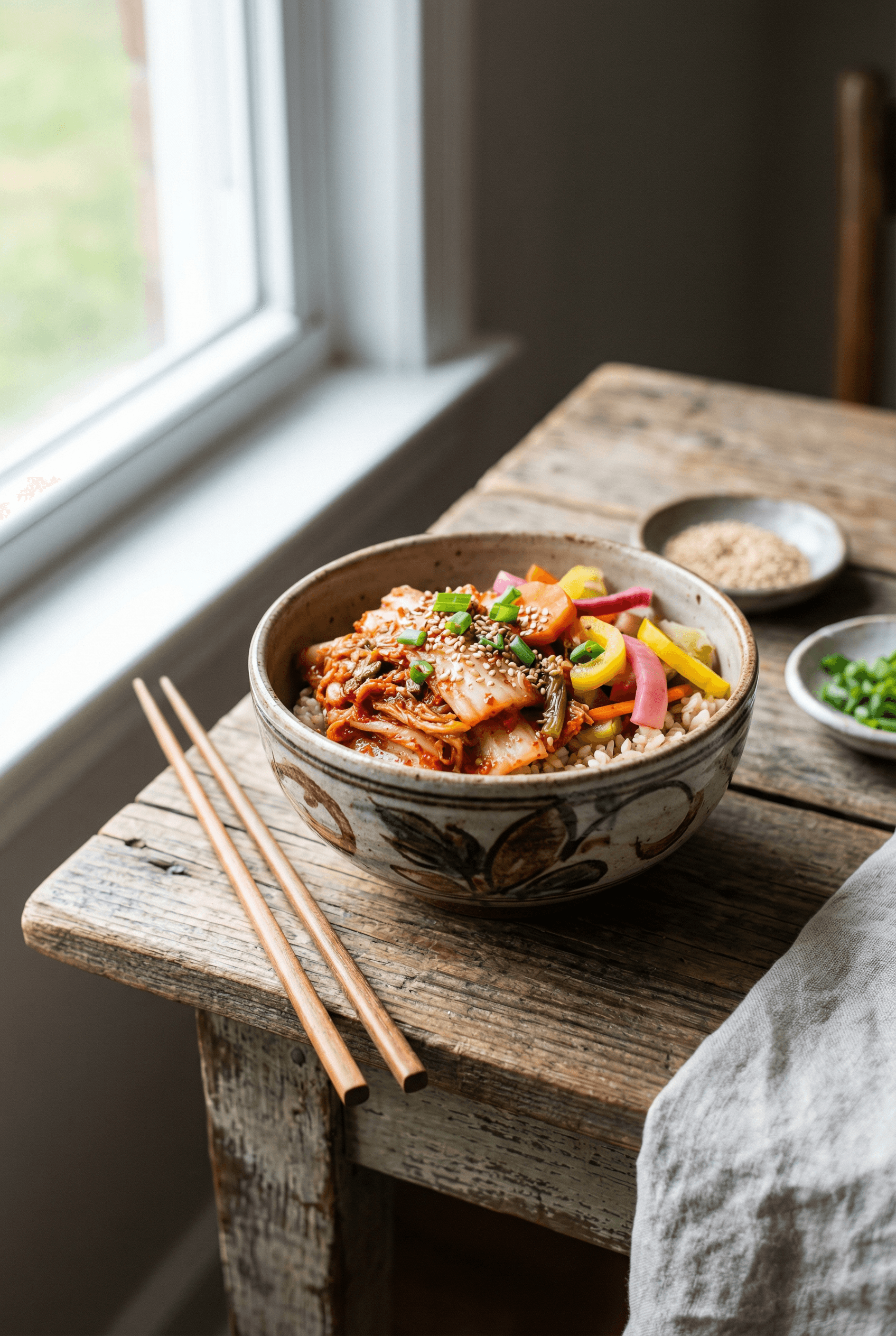
Ingredients
Quality kimchi makes all the difference. Look for refrigerated kimchi (not shelf-stable) for active probiotics. Traditional kimchi contains fish sauce, so check labels if vegetarian.
For the Bowl Base
- 300g (1½ cups) cooked white rice (or brown rice, cauliflower rice)
- 200g (2 cups) napa cabbage kimchi, chopped
- 2 tablespoons kimchi juice from jar
- 1 tablespoon sesame oil
For the Toppings
- 150g (1 cup) edamame, cooked and shelled
- 1 medium avocado, sliced
- 2 soft-boiled eggs or fried eggs
- 2 green onions, sliced
- 2 tablespoons toasted sesame seeds
- 1 sheet nori seaweed, cut into strips (optional)
- Gochujang sauce for drizzling (optional)
Optional Quick-Pickle Vegetables
- 1 medium carrot, julienned
- ½ cucumber, thinly sliced
- 2 tablespoons rice vinegar
- 1 teaspoon sugar
- Pinch of salt
Smart Substitutions
No Kimchi: Use sauerkraut for different probiotic profile (less spicy). Vegan: Skip eggs, add crispy tofu or tempeh. Low-Carb: Replace rice with cauliflower rice. Nut Allergy: Skip sesame, use olive oil.
Timing
- Prep: 15 minutes
- Cook: 15 minutes (rice + eggs)
- Total: 30 minutes
- Serves: 2 generous bowls
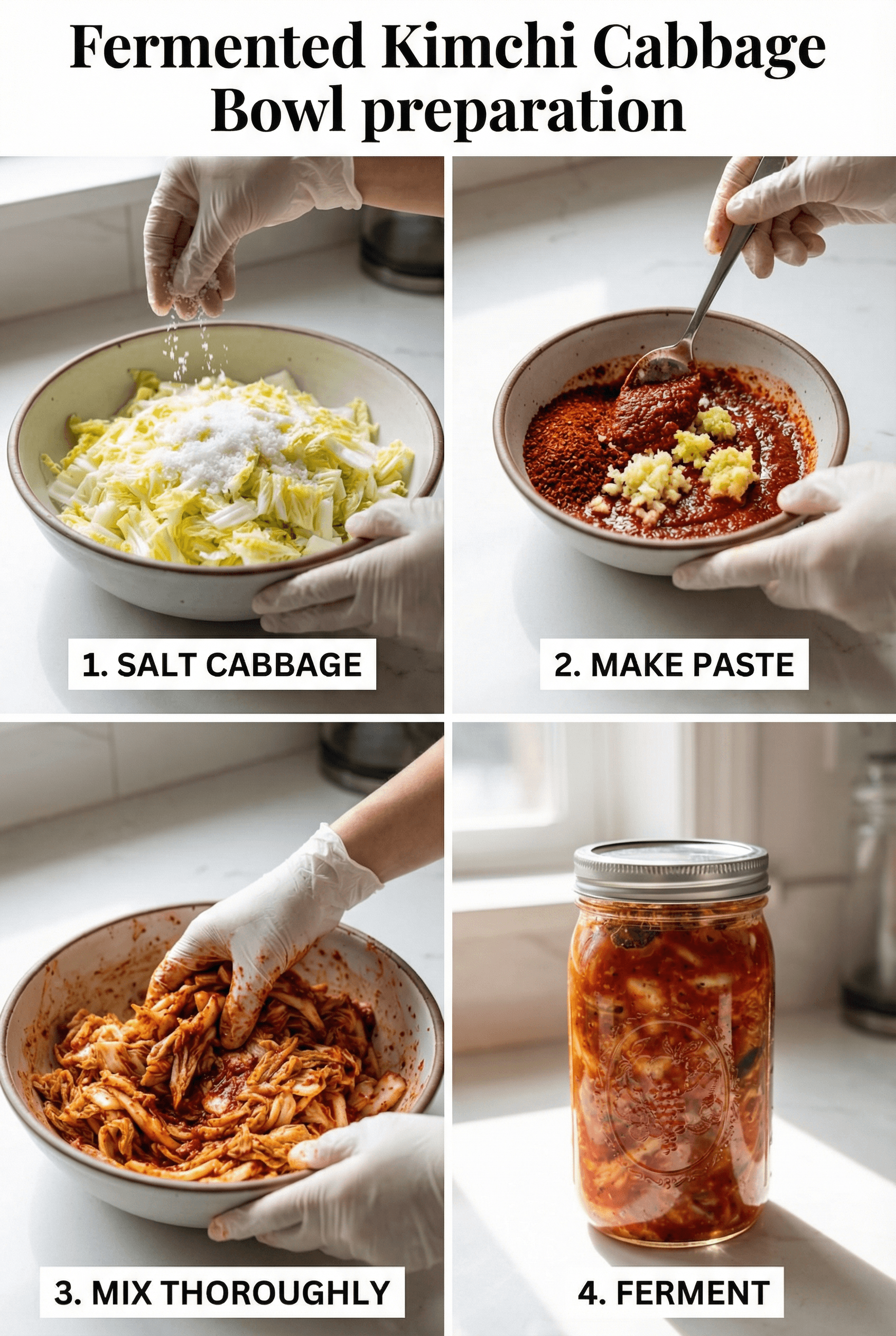
Instructions
Step 1: Prepare Rice and Quick-Pickle Vegetables
Cook rice according to package directions – fresh warm rice works best but leftover rice is fine. While rice cooks, prepare quick-pickled vegetables if using: combine julienned carrot and sliced cucumber in a bowl with rice vinegar, sugar, and salt. Toss to coat and let sit for 15 minutes at room temperature. The vegetables will soften slightly and develop tangy flavor that complements the spicy kimchi. If using leftover rice, reheat in microwave with a splash of water covered for 2 minutes, or pan-fry with sesame oil for crispy texture. The warm rice base helps other toppings release their flavors and creates comforting contrast to cold, crunchy vegetables.
Step 2: Prepare Protein and Kimchi
Bring a small pot of water to boil for eggs. Gently lower eggs into boiling water and cook for 6-7 minutes for soft-boiled with jammy yolks (or 8-9 minutes for fully cooked). Immediately transfer to ice water bath to stop cooking. While eggs cook, drain kimchi slightly but reserve the juice – those red juices contain concentrated flavor and probiotics. Roughly chop kimchi into bite-sized pieces if the pieces are large. Heat sesame oil in a skillet over medium heat and briefly sauté kimchi for 2-3 minutes until warmed and slightly caramelized at edges. This step is optional but intensifies flavor. Some prefer cold kimchi for maximum probiotic content. Both ways work beautifully depending on your preference and season.
Step 3: Cook Additional Vegetables
If using frozen edamame, cook according to package directions (usually 3-4 minutes in boiling water). Drain well and season lightly with salt. The edamame adds plant protein and beautiful green color that balances the vibrant red kimchi. Slice avocado just before assembly to prevent browning – the creamy richness cuts through spicy kimchi perfectly. Slice green onions on a bias for elegant presentation. Toast sesame seeds in a dry pan over medium heat for 1-2 minutes until fragrant and golden, shaking pan frequently to prevent burning. Toasted seeds add nutty crunch that elevates the entire bowl. These simple preparations create layers of texture and flavor that transform the bowl from simple to spectacular.
Step 4: Assemble Bowls
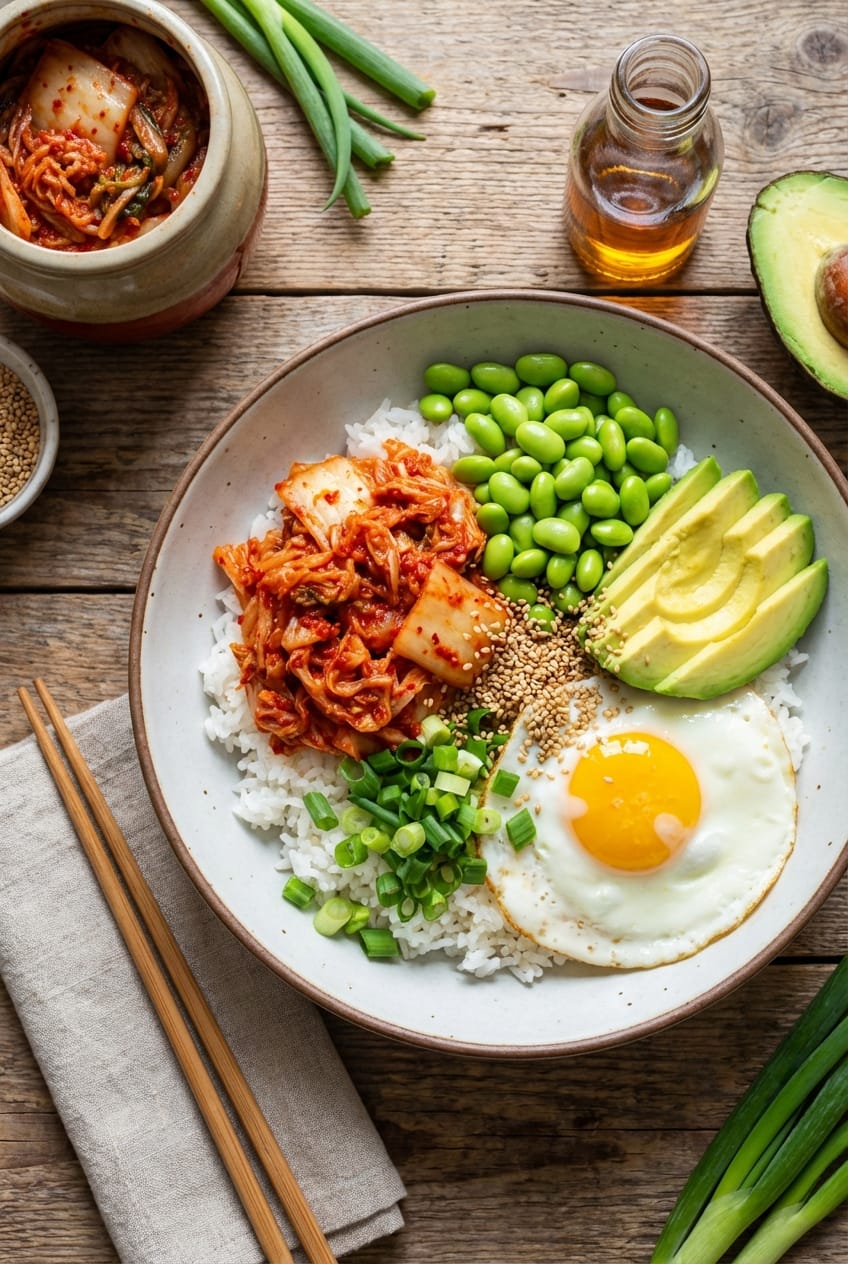
Divide warm rice between two bowls as the base. Arrange kimchi on one side of the bowl, edamame on another section, and quick-pickled vegetables (or fresh cucumber) on another. Place avocado slices fanned out in remaining space. Peel soft-boiled eggs, cut in half, and nestle into the center of each bowl – the jammy yolk will mix into the rice when broken. Drizzle kimchi juice over everything, then drizzle with additional sesame oil. Scatter green onions and toasted sesame seeds over the top. Add torn nori strips if using. Drizzle gochujang sauce in a decorative pattern for extra heat and visual appeal. Serve immediately while rice is warm and eggs are at perfect temperature. Mix everything together before eating to distribute flavors, or eat section by section for varied taste experience.
Nutrition Per Serving
- Calories: 485
- Protein: 18g
- Carbs: 58g
- Fat: 20g
- Fiber: 8g
- Probiotics: Live cultures (varies by kimchi)
This bowl provides balanced macros with gut-healthy probiotics from fermented kimchi. The fiber supports digestive health while protein keeps you satisfied.
Pro Tips for Success
- Buy Quality Kimchi: Refrigerated kimchi from Asian markets contains live probiotics. Shelf-stable versions are pasteurized and lack beneficial bacteria. Check for bubbles in jar – that’s active fermentation.
- Don’t Overheat Kimchi: If you want maximum probiotics, keep kimchi cold or barely warm. High heat kills beneficial bacteria. Brief sautéing is fine but don’t boil.
- Save the Juice: That red liquid gold contains concentrated flavor and probiotics. Use it as dressing, add to soups, or drink it straight for gut health shot.
- Meal Prep Smart: Prep all components separately and store in containers. Assemble fresh each day. Rice keeps 5 days, eggs 3 days, kimchi several weeks.
- Balance the Heat: Kimchi spice varies by brand. Start with less and add more. Creamy avocado and egg yolk temper the heat beautifully.
- Room Temperature Rice: Cold rice works but warm rice enhances the eating experience, especially when mixed with egg yolk and kimchi juice.
Delicious Variations
- Protein Swap: Add grilled chicken, seared salmon, crispy tofu, or ground beef cooked with gochujang. Makes bowl more substantial for dinner.
- Spicy Mayo Drizzle: Mix mayo with sriracha or gochujang for creamy, spicy topping. Instagram-worthy and delicious.
- Winter Version: Sauté kimchi with pork belly or bacon. Serve over hot rice as warming comfort meal instead of cold bowl.
- Breakfast Bowl: Top with runny fried egg instead of soft-boiled. Break yolk and mix into rice for luxurious breakfast.
- Grain Bowl Swap: Use quinoa, farro, or bulgur wheat instead of rice. Different textures and nutrition profiles.
- Extra Veggies: Add roasted sweet potato, sautéed mushrooms, blanched spinach, or shredded purple cabbage for more color and nutrition.
Common Mistakes to Avoid
Using Pasteurized Kimchi: Shelf-stable, pasteurized kimchi lacks the live probiotics that make this bowl gut-healthy. Solution: Always buy refrigerated kimchi from the cold section. Check for “unpasteurized” or “raw” on label.
Overcooking Eggs: Hard-boiled eggs with chalky yolks don’t create the creamy sauce that makes this bowl special. Solution: 6-7 minutes for soft-boiled perfection. Ice bath stops cooking immediately.
Skipping the Kimchi Juice: Discarding that red liquid means losing concentrated flavor and probiotics. Solution: Pour it over the bowl as dressing or save for other dishes. It’s flavor gold.
Not Balancing Flavors: All kimchi without creamy elements creates one-dimensional spicy bowl. Solution: Avocado and egg yolk provide richness that balances acidity and heat perfectly.
Cold Everything: While healthy, a bowl of entirely cold ingredients can feel less satisfying. Solution: Keep rice warm, briefly warm kimchi if desired. Temperature contrast adds dimension.
Storage and Make-Ahead
Refrigeration: Store components separately in airtight containers. Rice keeps 5 days, kimchi several weeks, eggs 3 days in shell. Assemble fresh bowls daily for best texture and temperature.
Meal Prep: Cook rice and eggs for the week on Sunday. Portion into containers with kimchi, edamame, and other toppings separated. Assemble and add fresh avocado and green onions when ready to eat.
Freezing: Rice freezes well for 3 months. Kimchi doesn’t freeze well. Eggs shouldn’t be frozen. Freeze rice only, prepare other components fresh.
Leftovers: Assembled bowls don’t keep well – ingredients get soggy. Eat assembled bowls immediately. Individual components keep their specified times when stored separately.
Serving Suggestions
Lunch Meal Prep: Pack components in bento-style containers with compartments. Keep dressing separate until eating. Perfect grab-and-go lunch that stays fresh and looks beautiful. Pair with our high protein cucumber salad for complete probiotic meal.
Dinner Party: Set up a DIY bowl bar with warm rice base and various toppings. Guests customize their bowls. Include different proteins, vegetables, and spice levels. Interactive and fun.
Post-Workout: The combination of carbs from rice, protein from eggs and edamame, and healthy fats from avocado makes ideal post-gym meal. Add extra protein if needed.
Korean BBQ Side: Serve smaller portions as banchan (side dish) alongside our Asian bok choy stir fry and grilled meats for Korean feast.
Why This Recipe Works
The magic lies in the balance of flavors, textures, and functional nutrition. Fermented kimchi provides lactobacilli probiotics that support gut health and digestion. The fermentation process breaks down compounds in cabbage, making nutrients more bioavailable while creating complex umami flavor. Rice provides glucose for energy and acts as prebiotic fiber that feeds beneficial gut bacteria. Eggs deliver complete protein and choline. Avocado’s healthy fats help absorb fat-soluble vitamins while tempering kimchi’s heat. The combination of warm rice, cold crunchy vegetables, creamy avocado, and jammy egg creates textural variety that keeps every bite interesting. This isn’t random bowl assembly – it’s nutritional synergy where each component enhances the others both nutritionally and flavor-wise. The trending gut health movement recognizes what Korean culture has known for centuries: fermented foods support overall wellness while tasting incredible.
Conclusion
This fermented cabbage kimchi bowl proves that gut-healthy eating doesn’t mean sacrificing flavor or satisfaction. In 30 minutes, you’ve created a vibrant, balanced meal that’s trending for good reason – it delivers probiotics, balanced nutrition, and bold Korean flavors in one beautiful bowl. Whether you’re exploring fermented foods, meal-prepping for the week, or simply craving something deliciously different, this bowl checks every box. Grab your favorite kimchi, soft-boil those eggs, and discover why kimchi bowls are the intersection of wellness and deliciousness. Your gut will thank you, and your taste buds will be equally happy.
FAQs
Do I have to use homemade kimchi?
No. Store-bought kimchi works perfectly and saves time. Look for refrigerated, unpasteurized varieties from Asian markets for maximum probiotics and authentic flavor. Mother-in-Law’s, Mama O’s, and locally made brands are excellent.
Can I make this bowl ahead?
Yes, but store components separately. Prep rice, eggs, and vegetables on Sunday. Assemble fresh each day for best texture and temperature. Assembled bowls get soggy within hours.
Is this bowl actually good for gut health?
Yes, if using unpasteurized kimchi. The lactobacilli probiotics support digestive health and immune function. Pasteurized kimchi lacks live cultures. Also, heating kimchi above 115°F kills probiotics, so keep it cool or barely warm.
Can I make this vegan?
Absolutely. Skip eggs and add crispy tofu, tempeh, or extra edamame. Check kimchi label – some contain fish sauce or shrimp paste. Vegan kimchi brands exist or make your own.
What if kimchi is too spicy for me?
Rinse kimchi under cold water to remove some spice. Add more cooling elements like extra avocado, cucumber, or dollop of sour cream. Mix with more rice to dilute heat.
Can I use brown rice instead of white?
Yes. Brown rice adds fiber and nutrients. Cook time is longer (40-45 minutes) but nutrition payoff is worth it. Quinoa and farro also work beautifully.
How long does kimchi last?
Opened kimchi keeps several months refrigerated. It continues fermenting and becomes more sour over time. Some prefer young mild kimchi, others love aged funky kimchi. Both are safe and delicious.
Do I need to warm the kimchi?
No. Cold kimchi preserves maximum probiotics. Warming enhances flavor and creates comfort-food vibe but kills some beneficial bacteria. Choose based on preference and season.
What’s the white film on my kimchi?
That’s kahm yeast, harmless but undesirable. Skim it off before using. It appears when kimchi is exposed to air too long. Store kimchi in jar with minimal headspace and keep submerged in brine.