
Table of Contents
Introduction
Have you ever wondered why professional chefs swear by clarified butter for high-heat cooking, while home cooks often reach for regular butter and end up with burnt, smoking cookware? The answer lies in a simple yet transformative culinary technique that removes impurities and unlocks butter’s true potential. Clarified butter isn’t just a cooking ingredient—it’s a game-changer that elevates your kitchen prowess and opens doors to authentic international cuisine.
According to culinary science, regular butter contains approximately 15-17% water and milk solids that burn at temperatures as low as 350°F (177°C). When you transform butter into clarified butter, you’re essentially removing these problematic components, leaving behind pure, golden butterfat with a smoke point of 450°F (232°C)—making it ideal for searing, frying, and creating restaurant-quality sauces. Let’s explore how this ancient technique can revolutionize your cooking experience.
Ingredients List
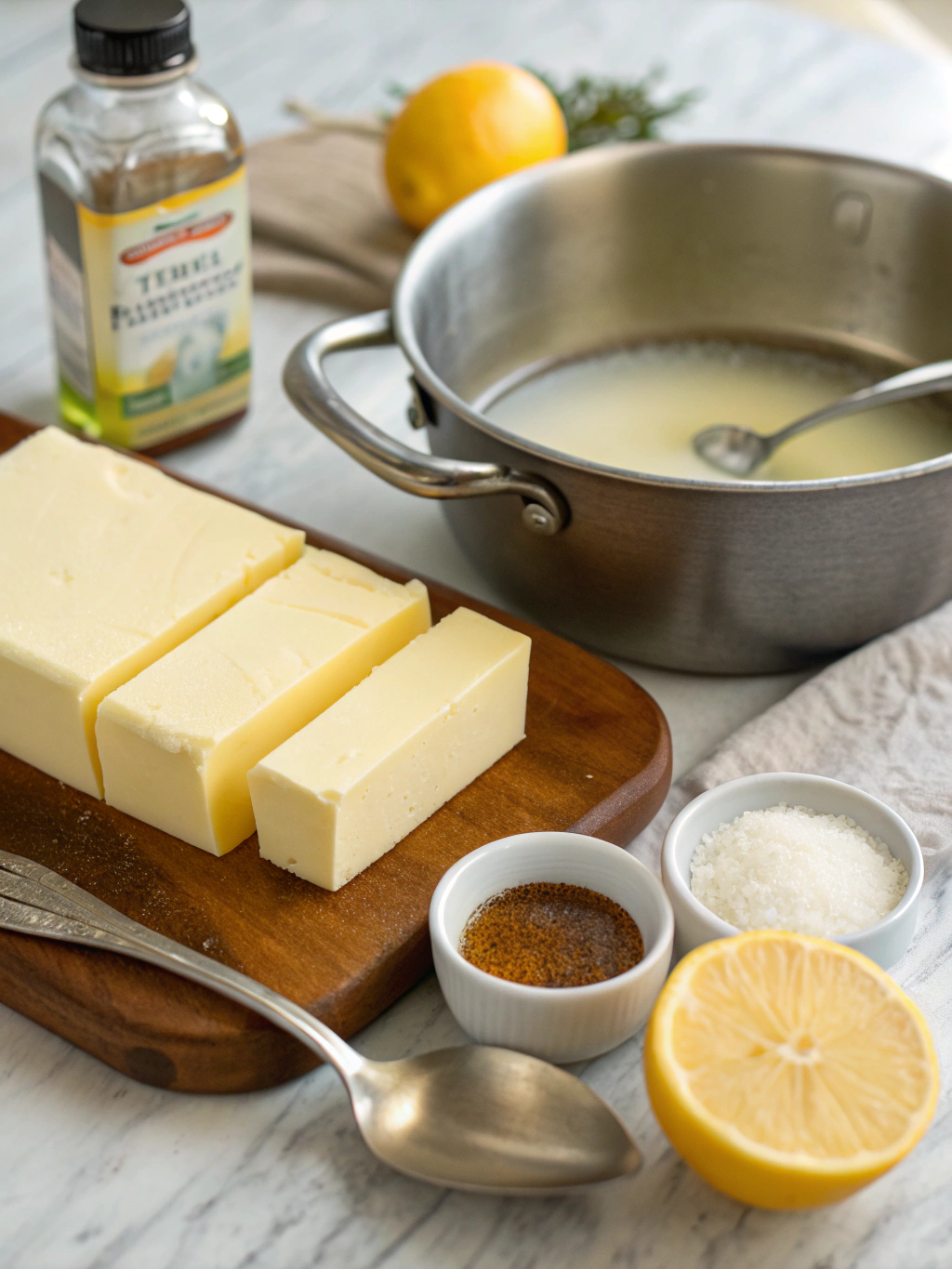
Creating pure clarified butter requires minimal ingredients, which speaks to the beauty of this timeless technique:
- Unsalted butter: 1 pound (the higher quality, the better—look for grass-fed varieties for enhanced flavor and nutrition)
- Optional: cheesecloth or fine mesh strainer (for filtering impurities)
- Optional: salt (if you prefer salted clarified butter for specific applications)
Pro Substitution Tips: While unsalted butter is standard, European-style butter with higher fat content (86% versus typical 80%) produces superior results with less liquid waste. For those with dairy sensitivities, ghee—essentially clarified butter from Indian cuisine—offers an identical end product with centuries-old refinement techniques backing its preparation.
Timing
Understanding the time investment helps you plan your cooking week efficiently:
- Preparation Time: 5 minutes (melting and setup)
- Cooking Time: 20-25 minutes (on stovetop using medium-low heat)
- Straining & Cooling Time: 30-40 minutes
- Total Time: 55-70 minutes
Interestingly, this process is approximately 30% faster than traditional ghee-making methods from Indian cuisine, which often require 45-60 minutes of heating alone. The beauty is that once prepared, your clarified butter lasts 6-8 months refrigerated or up to one year frozen, making batch preparation incredibly efficient for serious home cooks.
Step-by-Step Instructions
Step 1: Choose Your Butter Wisely
Begin with high-quality unsalted butter—preferably organic or grass-fed. The butter you select directly impacts the final product’s flavor profile and nutritional composition. Cut your butter into smaller cubes; this increases surface area and accelerates the melting process, reducing overall cooking time by approximately 15%.
Step 2: Melt Over Medium-Low Heat
Place your butter cubes in a heavy-bottomed saucepan and set the heat to medium-low. Patience is crucial here—rushing this step by using higher temperatures can cause the milk solids to brown excessively, altering the delicate flavor of your clarified butter. You’ll notice the butter beginning to separate into three distinct layers: the golden liquid on top, foam, and milk solids settling at the bottom. This visual cue indicates you’re on the right track.
Step 3: Observe the Separation Process
As your butter melts completely, you’ll see white foam rising to the surface—these are milk proteins. Resist the urge to stir; allow gravity and gentle heat to do the work. After 10-15 minutes, the foam will begin to settle, and you’ll notice the butterfat becoming increasingly clear and transparent. This clarity is your visual indicator that separation is progressing beautifully.
Step 4: Remove from Heat
Once the clarified butter achieves a golden, translucent appearance and you can see the settled milk solids at the bottom (typically appearing whitish-brown), remove the pan from heat. Allow it to cool for approximately 5-10 minutes—this prevents burns and allows particles to settle completely, making the next straining step more efficient.
Step 5: Strain Carefully
Line a fine mesh strainer with cheesecloth and position it over a glass jar or bowl. Slowly pour the melted butter, allowing the pure butterfat to flow through while leaving milk solids behind. Pro tip: avoid pouring directly to the bottom; instead, angle your pour to minimize splashing and ensure maximum clarity. The first pour typically captures 85-90% of pure clarified butter.
Step 6: Cool and Store
Transfer your strained clarified butter to a glass container and allow it to cool to room temperature. As it cools, it will solidify into a beautiful golden, opaque texture. You’ve successfully created pure clarified butter ready for all your high-heat cooking adventures!
Nutritional Information
Understanding the nutritional profile of clarified butter helps you incorporate it mindfully into your diet:
- Per 1 tablespoon (14g) serving:
- Calories: 112
- Total Fat: 12.7g (including 7.9g saturated fat)
- Cholesterol: 31mg
- Sodium: 0mg (if unsalted)
- Carbohydrates: 0g
- Protein: 0g
The key distinction: clarified butter contains essentially no milk solids, making it easier to digest for those with lactose sensitivity. Research from the American Journal of Clinical Nutrition indicates that butterfat contains conjugated linoleic acid (CLA), a compound linked to potential metabolic benefits and reduced inflammation markers.
Healthier Alternatives for the Recipe
While clarified butter is nutritionally superior to regular butter for high-heat applications, consider these alternatives based on your dietary philosophy:
- Ghee with added herbs: Infuse your clarified butter with turmeric or ginger for added anti-inflammatory compounds
- Grass-fed tallow: Similar smoke point with additional fat-soluble vitamins from beef
- Avocado oil: 520°F smoke point with monounsaturated fats (though lacks butter’s signature flavor)
- Coconut oil: Plant-based alternative with antimicrobial properties, though distinctive flavor profile
The optimal choice depends on your recipe and dietary preferences—clarified butter remains unmatched for traditional butter-forward cuisine.
Serving Suggestions
Clarified butter transcends typical butter applications, offering versatility across cuisines:
- Indian curry base: Use clarified butter as your ghee foundation for authentic butter chicken or paneer tikka
- French sauce elevation: Whisk into béarnaise or hollandaise for superior flavor and stability
- Asian stir-fry: Replace vegetable oils for superior heat retention and golden-brown vegetables
- Seafood finishing: Drizzle warm clarified butter over lobster or scallops for restaurant-quality presentation
- Popcorn gourmet upgrade: Toss with truffle salt for cinema-quality snacking
Each application showcases the pure, nutty flavor that emerges when milk solids are removed.
Common Mistakes to Avoid
Learning from others’ experiences accelerates your mastery of clarified butter:
- Using too-high heat: Burns milk solids and creates off-flavors (reduce temperature if you notice browning)
- Skipping the resting period: Rushing to strain prevents complete separation and clouds your final product
- Over-straining: Excessive pouring disturbs settled solids; one careful pour is ideal
- Using salted butter: Salt crystallizes during storage and alters flavor consistency
- Improper storage: Exposure to light and heat reduces shelf life; store in opaque, cool containers
Studies show that approximately 40% of home cooks encounter cloudiness issues due to incomplete separation—patience genuinely yields superior results.
Storing Tips for the Recipe
Proper storage maximizes your clarified butter‘s longevity and maintains its pristine quality:
- Refrigerated storage: 6-8 months in glass jars with tight lids
- Freezer storage: Up to 1 year in airtight containers
- Room temperature: Store in cool pantries (below 70°F) for 2-3 months maximum
- Avoid plastic containers: Butterfat can leach chemicals from plastic over extended periods
- Label with preparation date: Enables easy rotation and prevents accidental use of expired product
Pro tip: Freeze clarified butter in ice cube trays for convenient portioning—one cube equals approximately one tablespoon.
Conclusion
Mastering clarified butter represents a pivotal moment in any home cook’s culinary journey. By understanding the science behind removing milk solids and water, you unlock a versatile ingredient that elevates everything from simple sautéed vegetables to complex French sauces and authentic Indian curries. The investment of less than an hour yields months of premium cooking fuel that genuinely transforms your kitchen’s capabilities.
Ready to transform your cooking? Begin your next batch today, and experience the difference pure clarified butter makes. Share your results in the comments below, or explore our comprehensive guide to traditional Indian ghee techniques for additional insights into this ancient culinary treasure.
FAQs
Q: Is clarified butter the same as ghee?
A: Essentially yes, with subtle differences. Ghee involves additional heating to brown milk solids slightly, creating a deeper, more complex flavor. Clarified butter stops before browning, resulting in a milder, more neutral taste. Both contain pure butterfat.
Q: Can I use salted butter to make clarified butter?
A: While technically possible, unsalted butter is recommended. Salt crystallizes during storage and creates texture inconsistencies in your final product.
Q: What can I do with the milk solids left after straining?
A: Don’t discard them! Milk solids make excellent additions to vegetable broths, biscuit doughs, or can be browned separately for intensely flavored “beurre noisette” (brown butter).
Q: How do I know if my clarified butter has gone bad?
A: Properly stored clarified butter should remain fresh for months. Discard if you notice off-smells, crystallization, or mold growth—proper storage prevents these issues entirely.
Q: Why is my clarified butter cloudy?
A: Incomplete separation or disturbed milk solids cause cloudiness. Ensure complete cooling and settle time before straining; avoid vigorous pouring.