
Scroll through TikTok or Pinterest for five minutes and you’ll see it everywhere: vibrant green pasta with golden chicken pieces, all coated in the most luxurious cream sauce. Creamy pesto chicken pasta has taken over social media for good reason—it combines the herbaceous punch of fresh basil pesto with rich cream and perfectly cooked chicken in a dish so satisfying it’s become the unofficial comfort food of 2026. Whether you’re jumping on the viral trend or simply craving the ultimate weeknight dinner, this pesto chicken pasta delivers restaurant-quality results in just 30 minutes with minimal cleanup.
What makes this recipe irresistible? The pesto-cream combination creates a sauce that’s both bright and indulgent, coating every piece of pasta while the golden-seared chicken adds protein and texture. Unlike our creamy garlic butter shrimp pasta that celebrates seafood, this pasta showcases how chicken can be just as elegant when paired with bold Italian flavors. One pan, maximum flavor, zero stress.
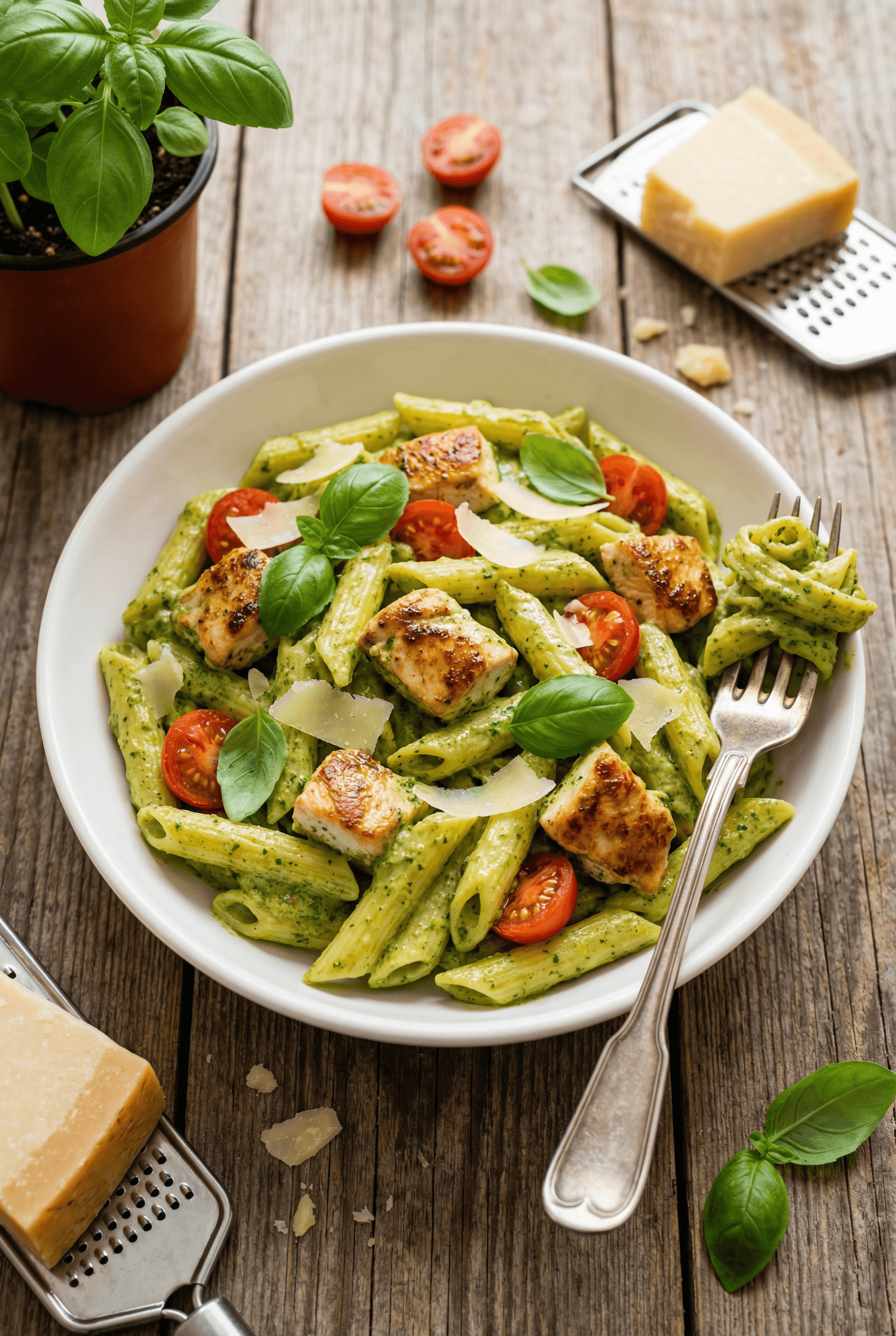
Ingredients
Quality pesto makes all the difference in creamy pesto chicken pasta. Fresh basil pesto beats jarred every time, but good jarred pesto works perfectly when time is tight.
For the Chicken
- 450g (1 lb) chicken breast, cut into bite-sized pieces
- 1 teaspoon Italian seasoning
- 1/2 teaspoon garlic powder
- 1/2 teaspoon salt
- 1/4 teaspoon black pepper
- 2 tablespoons olive oil
For the Pasta
- 400g (14 oz) penne or fusilli pasta
- 130g (1/2 cup) basil pesto (homemade or quality jarred)
- 240ml (1 cup) heavy cream
- 60ml (1/4 cup) pasta cooking water (reserved)
- 50g (1/2 cup) parmesan cheese, freshly grated
- 200g (1 cup) cherry tomatoes, halved
- 3 cloves garlic, minced
- Fresh basil leaves for garnish
- Salt and pepper to taste
- Red pepper flakes (optional)
Smart Substitutions
Lighter Version: Use half-and-half instead of heavy cream. Protein Swap: Shrimp or Italian sausage work beautifully. Gluten-Free: Use your favorite GF pasta—cooking time may vary. Dairy-Free: Coconut cream plus nutritional yeast creates a surprisingly good alternative.
Timing
- Prep: 10 minutes
- Cook: 20 minutes
- Total: 30 minutes
- Serves: 4-6
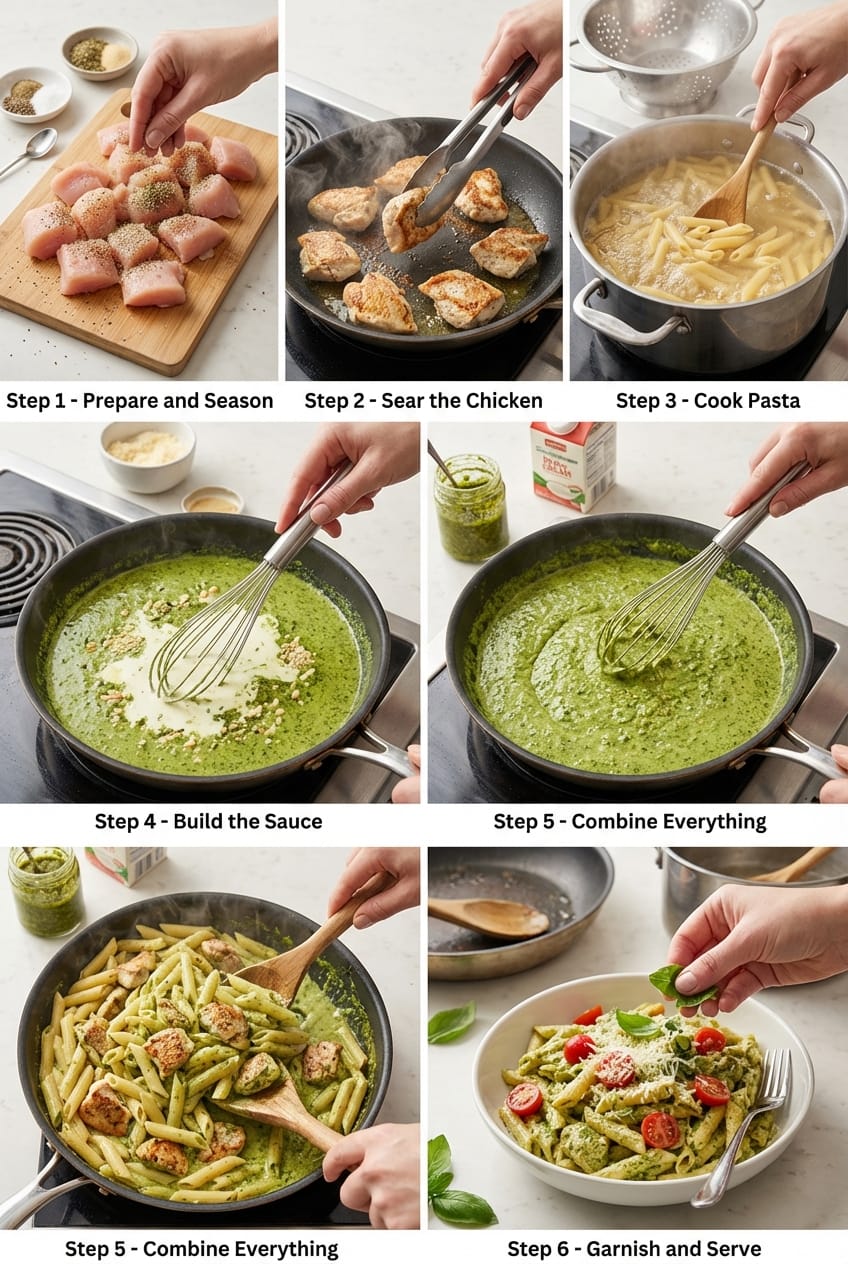
Instructions
Step 1: Prepare and Season Chicken
Pat chicken pieces completely dry with paper towels—moisture prevents proper browning. Cut into uniform 2-3cm pieces so they cook evenly. In a bowl, toss chicken with Italian seasoning, garlic powder, salt, and black pepper until every piece is coated. The key to juicy chicken is high heat and quick cooking—overdone chicken ruins even the best sauce. Let seasoned chicken sit at room temperature while you heat the pan, allowing seasoning to penetrate and taking the chill off for even cooking.
Step 2: Sear the Chicken
Heat olive oil in a large deep skillet or Dutch oven over medium-high heat until shimmering. Add chicken in a single layer without overcrowding—work in batches if needed. Cook undisturbed for 3-4 minutes until golden brown on bottom, then flip and cook 2-3 minutes more until cooked through but still juicy. Internal temperature should reach 74°C (165°F). Transfer chicken to a plate and set aside. Don’t worry if it’s slightly undercooked—it finishes cooking in the sauce later. The golden bits left in the pan (fond) add incredible flavor to the sauce.
Step 3: Cook Pasta
While chicken rests, bring a large pot of heavily salted water to boil. The water should taste like the sea—this is your only chance to season the pasta itself. Add pasta and cook until al dente, about 1-2 minutes less than package directions. Before draining, scoop out 1 cup of starchy pasta cooking water—this liquid gold helps create silky sauce. Drain pasta but don’t rinse—the surface starch helps sauce cling. Timing is everything here; you want pasta ready right when the sauce comes together.
Step 4: Build the Sauce
Return the same skillet to medium heat (don’t wipe it out—that fond is flavor). Add minced garlic and cook 30 seconds until fragrant but not browned. Pour in heavy cream and bring to a gentle simmer, scraping up the browned bits from cooking chicken. Once simmering, reduce heat to medium-low and whisk in pesto until fully incorporated. The sauce should turn vibrant green and start to thicken. Add parmesan cheese and whisk until melted. If sauce seems thick, add pasta water 2 tablespoons at a time until you reach perfect coating consistency—it should flow but not be watery.
Step 5: Combine Everything
Add drained pasta to the sauce along with cooked chicken pieces and halved cherry tomatoes. Toss everything together using tongs or two wooden spoons, ensuring every piece of pasta gets coated in that luscious green sauce. Cook for 1-2 minutes, tossing frequently, until pasta absorbs some sauce and chicken warms through. The tomatoes will soften slightly from residual heat, releasing their juices into the sauce. Taste and adjust seasoning with salt, pepper, or more parmesan as needed. If pasta seems dry, add more reserved pasta water.
Step 6: Garnish and Serve
Remove from heat and tear fresh basil leaves over the top—torn basil releases more aroma than chopped. Add a final drizzle of good olive oil and sprinkle with extra parmesan and red pepper flakes if desired. Serve immediately while hot and creamy. The sauce thickens as it sits, so don’t delay. For restaurant presentation, twirl individual portions into nests using tongs and top each serving with a chicken piece and basil sprig.
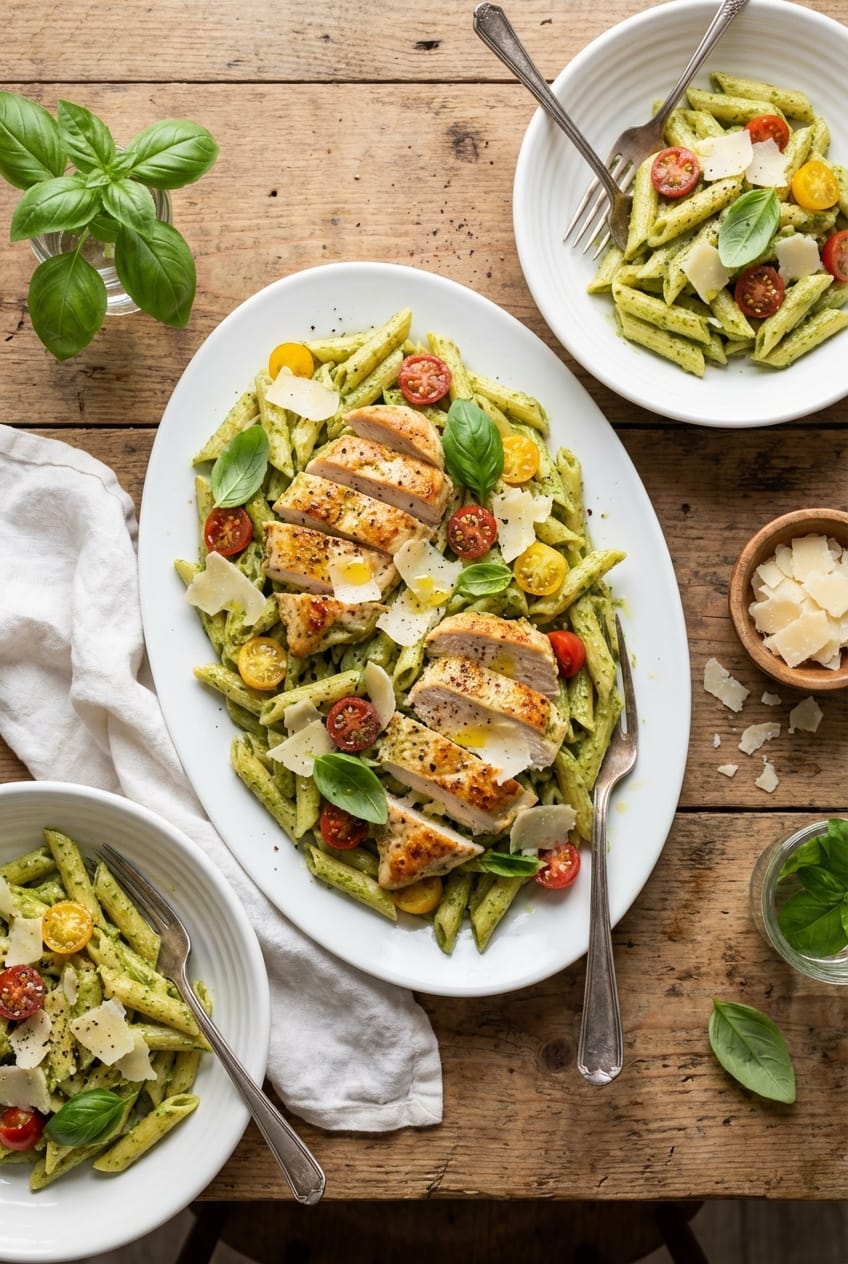
Nutrition Per Serving
- Calories: 620
- Protein: 35g
- Carbs: 58g
- Fat: 28g
- Fiber: 4g
- Sodium: 580mg
Basil pesto provides healthy fats and antioxidants from olive oil and fresh herbs. Chicken delivers lean protein while pasta provides energy. Cherry tomatoes add vitamin C and lycopene. A balanced, satisfying meal that doesn’t feel heavy despite the cream.
Pro Tips for Success
- Dry chicken thoroughly: Wet chicken steams instead of sears, missing that golden crust
- Don’t overcook chicken: It continues cooking in the sauce—slightly pink when you remove it is perfect
- Use quality pesto: Cheap pesto tastes artificial; splurge on good basil pesto or make your own
- Reserve pasta water: Non-negotiable—this starchy water makes sauce silky and helps it cling
- Fresh parmesan only: Pre-grated doesn’t melt properly and contains anti-caking agents
- Serve immediately: Cream sauces thicken significantly as they cool and don’t reheat perfectly
- Use deep skillet: Shallow pans make tossing pasta messy; you need high sides for proper mixing
Delicious Variations
- Sun-Dried Tomato: Add chopped sun-dried tomatoes with garlic for tangy sweet bursts
- Spinach Addition: Toss in 2 cups fresh spinach with pasta—it wilts into the sauce
- Spicy Version: Add 1-2 teaspoons red pepper flakes and use spicy Italian sausage instead of chicken
- Shrimp Pesto Pasta: Replace chicken with 450g large shrimp—cook 2 minutes per side
- Mushroom Twist: Sauté sliced mushrooms after chicken for earthy depth
- Lighter Style: Use half cream/half chicken broth and reduce parmesan slightly
Common Mistakes to Avoid
Overcooking the Chicken: Dry chicken ruins this dish. Solution: Cook to 74°C (165°F) then remove—it finishes in the sauce. Slightly undercooked is better than overdone.
Forgetting Pasta Water: Without starchy water, sauce won’t emulsify properly and stays greasy. Solution: Always reserve 1 cup before draining. Add gradually until sauce reaches perfect consistency.
Adding Pesto to Boiling Cream: High heat makes pesto bitter and destroys fresh basil flavor. Solution: Reduce to gentle simmer before adding pesto, whisk quickly, keep heat medium-low.
Rinsing the Pasta: This washes away the surface starch that helps sauce cling. Solution: Drain but never rinse hot pasta. Transfer directly to sauce while steaming.
Waiting Too Long to Serve: Cream sauce thickens dramatically as it cools. Solution: Have everything ready before you start combining. Serve within 5 minutes of finishing for best texture.
Storage and Make-Ahead
Make-Ahead Chicken: Season and sear chicken up to 4 hours ahead. Refrigerate and add cold to hot sauce—it warms through quickly.
Prep Work: Cut chicken, halve tomatoes, measure ingredients up to 1 day ahead. Store separately and combine when cooking.
Refrigerating Leftovers: Store in airtight container up to 2 days. Sauce thickens significantly when cold. Add splash of cream or milk when reheating.
Reheating: Warm gently in skillet over low heat with 2-3 tablespoons cream or pasta water to restore consistency. Microwave works but makes chicken rubbery—stove is better.
Freezing: Not ideal—cream sauces separate when frozen and pasta texture degrades. If necessary, freeze sauce separately from pasta and chicken, then recombine fresh pasta when serving.
Serving Suggestions
Classic Italian: Serve with crusty garlic bread and simple arugula salad dressed with lemon vinaigrette.
Complete Meal: Pair with roasted vegetables like broccoli or asparagus for color and nutrition balance. For an elegant multi-course meal, start with our creamy spinach stuffed salmon as an appetizer.
Dinner Party Style: Serve family-style on a large platter, garnished abundantly with basil and parmesan. Let guests serve themselves.
Wine Pairing: Light Italian white like Pinot Grigio or Vermentino complements the basil and cream without overpowering.
Extra Touch: Drizzle with basil-infused olive oil and add toasted pine nuts for elegant restaurant finish.
Why This Recipe Works
The magic lies in the pesto-cream emulsion. Pesto’s oil and herbs want to separate from aqueous cream, but pasta water’s starch acts as an emulsifier, binding everything into smooth sauce. Searing chicken first develops the Maillard reaction—those browned bits aren’t just color, they’re concentrated flavor compounds that dissolve into the cream. Using the same pan for sauce means all that flavor comes along. The timing matters: al dente pasta has enough structure to absorb sauce without becoming mushy, while slightly undercooked chicken finishes gently in warm sauce, staying juicy. Cherry tomatoes provide acid that balances the rich cream while adding pops of freshness. Parmesan not only adds savory depth but its proteins help thicken and stabilize the sauce. This recipe succeeds because it respects Italian technique while embracing modern ease—authentic flavor without pretension.
Essential Equipment
Large Deep Skillet or Dutch Oven: Must fit all pasta with room to toss. 12-inch minimum diameter with 3-inch sides prevents spills during mixing.
Large Pot for Pasta: Pasta needs room to move. 4-6 quart minimum. Crowded pasta cooks unevenly and clumps.
Tongs or Pasta Fork: For tossing pasta in sauce. Two wooden spoons work too but tongs give better control.
Instant-Read Thermometer: Takes guesswork out of chicken doneness. Worth the investment for perfectly cooked meat every time.
Liquid Measuring Cup: For accurately reserving pasta water. Eyeballing leads to too much or too little.
Why This Recipe Went Viral
The creamy pesto chicken pasta trend exploded in late 2025 when food creators realized they could combine two beloved concepts: creamy pasta and pesto chicken. TikTok user @cookingwithemma posted a version that garnered 15 million views in a week, sparking countless recreations. What made it spread? Visual appeal—that vibrant green sauce photographs beautifully. Simplicity—one pan, minimal ingredients. Comfort—cream sauce satisfies like few things can. And timing—as people tired of complex recipes, this delivered restaurant quality with beginner-friendly technique.
The genius was the cream-pesto combination. Traditional pesto pasta is delicious but can feel sharp and oily. Cream mellows the basil while adding luxurious texture. The addition of golden chicken transformed it from side dish to complete meal. Food bloggers noticed that posts featuring this recipe drove massive engagement—everyone wanted to know how to make “that green pasta from TikTok.” By early 2026, it became the most-searched pasta recipe on Pinterest, overtaking classics like carbonara and Bolognese.
Conclusion
This creamy pesto chicken pasta proves why it took over social media—the combination of fresh basil pesto, rich cream, and perfectly cooked chicken creates something truly special. Whether you’re chasing the viral trend or simply craving an unforgettable weeknight dinner, this pesto chicken pasta delivers every time. The one-pan simplicity belies restaurant-quality results that will have everyone asking for seconds.
Ready to make the pasta everyone’s talking about? Grab your ingredients and discover why millions can’t stop making this recipe. Share your creations and tag us—we love seeing your versions of this viral sensation!
FAQs
Can I use store-bought pesto?
Absolutely. Choose quality refrigerated pesto from the deli section rather than shelf-stable jarred pesto for best flavor. Brands like Buitoni or Whole Foods 365 work well.
Can I make this ahead for meal prep?
Yes, but store components separately. Cook chicken and make sauce, refrigerate both. Cook fresh pasta when ready to serve, toss with reheated sauce and chicken for best texture.
My sauce is too thick, what went wrong?
You didn’t add enough pasta water or the sauce sat too long. Solution: Add pasta water or cream 1 tablespoon at a time while reheating until desired consistency returns.
Can I make this without cream?
Yes, but texture changes. Use full-fat coconut milk for dairy-free, or replace half the cream with chicken broth for lighter version. You’ll lose some richness.
What if I don’t have cherry tomatoes?
Skip them or use sun-dried tomatoes instead. Fresh tomatoes aren’t essential—they add color and fresh acidity but the dish works without them.
Can I use chicken thighs instead of breast?
Definitely. Thighs stay juicier and have more flavor. Cook 1-2 minutes longer than breast meat to account for higher fat content.
Why is my pesto sauce separating?
Heat too high or you added pesto to boiling liquid. Solution: Keep heat medium-low, add pesto off heat, whisk vigorously, and add pasta water to emulsify.
How do I store leftover pesto?
Cover surface with thin layer of olive oil to prevent oxidation. Refrigerate up to 5 days or freeze in ice cube trays for single servings.
Can I add vegetables?
Yes! Spinach, broccoli, zucchini, or bell peppers all work. Add hearty veg with garlic, leafy greens at the end to wilt.