
What if weeknight vegetables could taste like restaurant luxury? Maple balsamic roasted cauliflower transforms humble florets into caramelized, tangy perfection topped with crispy pecans. In 35 minutes, you’ll create a side dish that steals the spotlight – golden edges, sweet-savory glaze, and nutty crunch. This isn’t just roasted cauliflower. It’s the reason guests ask for the recipe before dessert arrives.
Whether you’re serving Thanksgiving dinner, hosting a dinner party, or elevating Tuesday night chicken, this maple balsamic roasted cauliflower delivers both elegance and ease. The maple syrup caramelizes beautifully while balsamic adds depth, creating that addictive sweet-tangy balance. No fancy techniques required – just smart ingredient pairing and high heat magic.
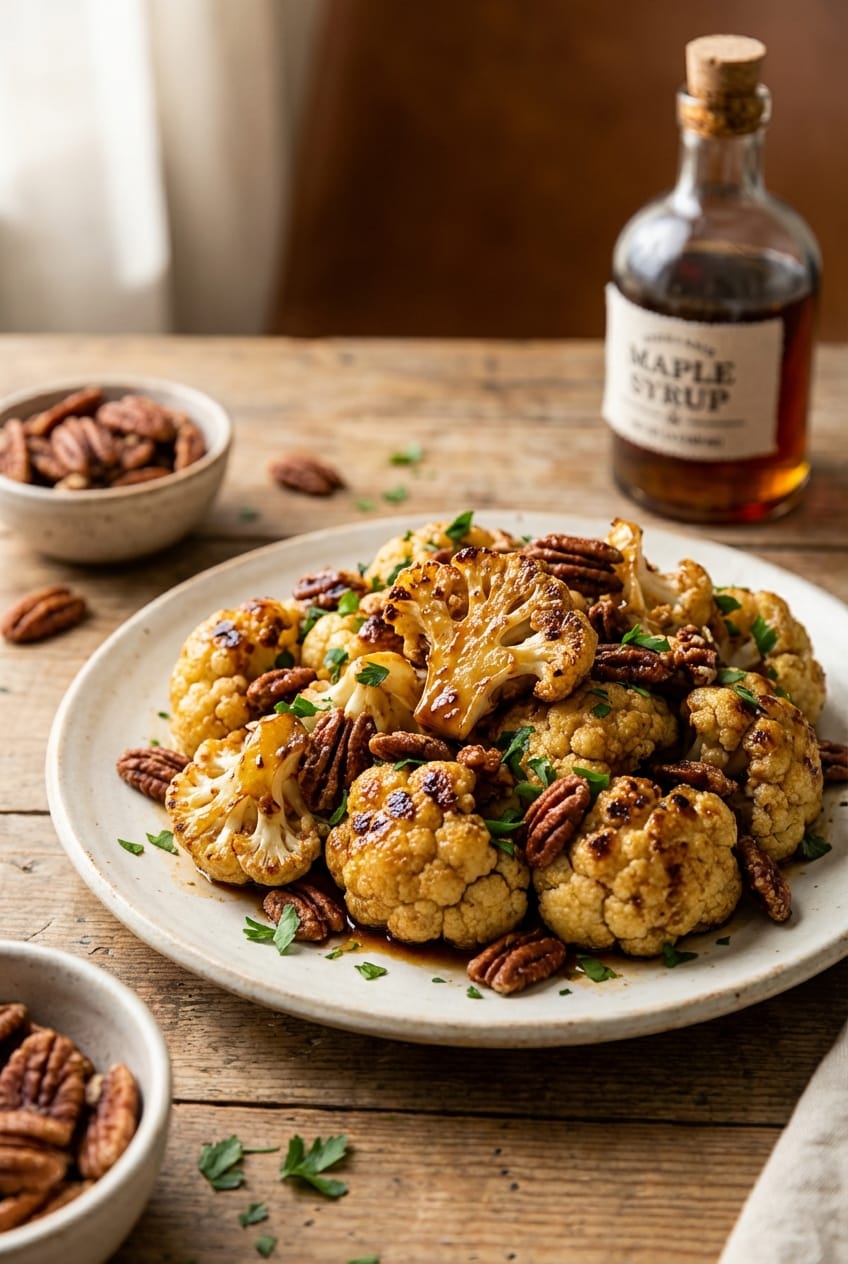
Ingredients
Quality balsamic vinegar makes a noticeable difference – avoid the super cheap versions. Pure maple syrup (not pancake syrup) provides authentic flavor without artificial notes.
For the Cauliflower
- 1 large head cauliflower (about 900g / 2 lbs), cut into florets
- 3 tablespoons olive oil
- 3 tablespoons pure maple syrup
- 2 tablespoons balsamic vinegar
- 1 teaspoon Dijon mustard
- 1 teaspoon garlic powder
- ¾ teaspoon salt
- ½ teaspoon black pepper
- ¼ teaspoon smoked paprika
For the Topping
- 100g (1 cup) pecan halves, roughly chopped
- 1 tablespoon maple syrup
- Pinch of salt
- 2 tablespoons fresh parsley, chopped (garnish)
- Optional: crumbled goat cheese or feta
Smart Substitutions
No Pecans: Use walnuts, almonds, or pumpkin seeds. No Balsamic: Red wine vinegar with a pinch of sugar works. Vegan: This recipe is already plant-based. Nut-Free: Skip nuts, add roasted chickpeas for crunch.
Timing
- Prep: 10 minutes
- Roast: 25-30 minutes
- Total: 35-40 minutes
- Serves: 4-6 as side dish
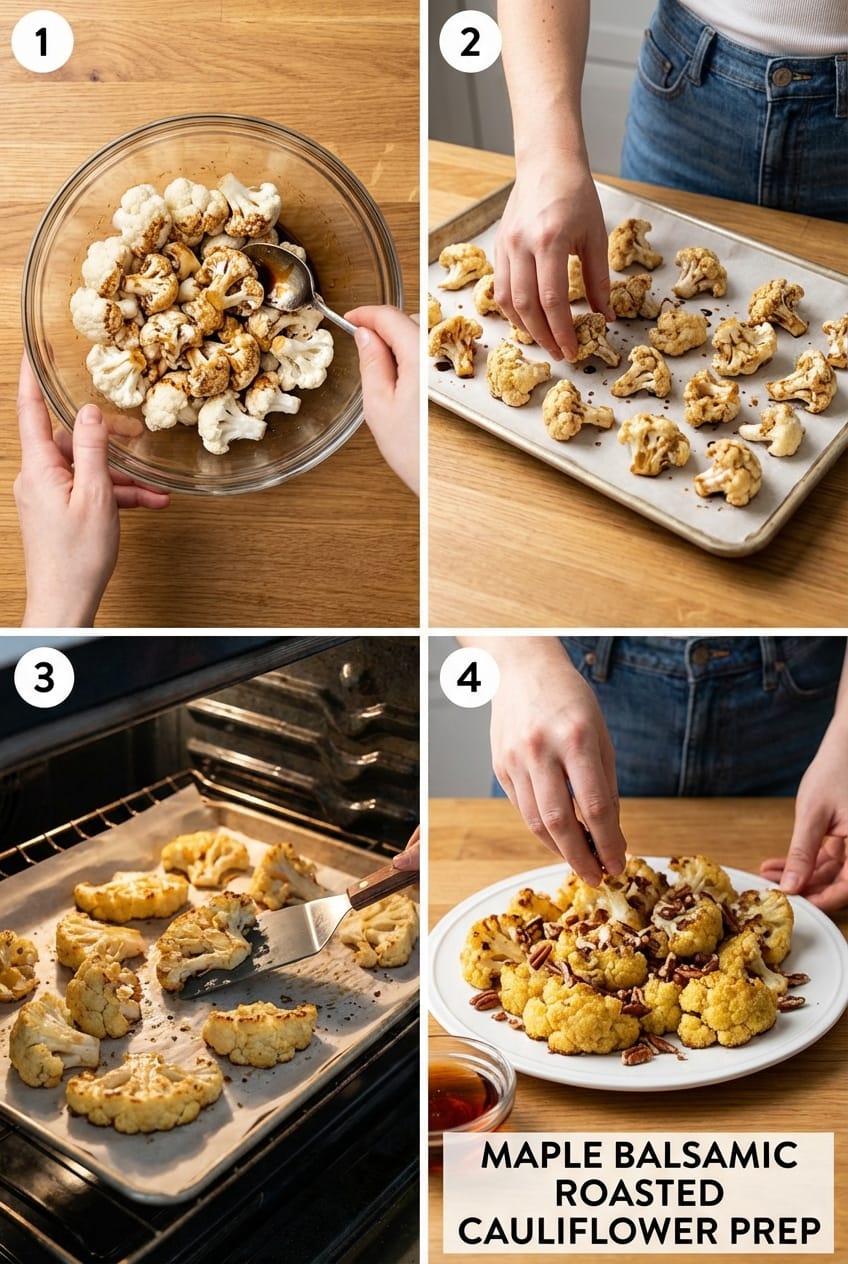
Instructions
Step 1: Prepare Cauliflower and Make Glaze
Preheat oven to 425°F (220°C) and line a large baking sheet with parchment paper. Cut cauliflower into bite-sized florets (about 1.5-inch pieces) – consistent size ensures even roasting. In a large bowl, whisk together olive oil, 3 tablespoons maple syrup, balsamic vinegar, Dijon mustard, garlic powder, salt, pepper, and smoked paprika until smooth and emulsified. This glaze is the magic – the maple caramelizes under high heat while balsamic adds tangy depth. The Dijon acts as an emulsifier, helping the glaze coat every floret evenly. Taste and adjust seasoning if needed – it should be balanced between sweet, tangy, and savory.
Step 2: Coat and Arrange Cauliflower
Add cauliflower florets to the bowl with the glaze and toss thoroughly with your hands or a large spoon until every piece is completely coated. Spread florets in a single layer on the prepared baking sheet with space between each piece – crowding creates steam instead of crispy edges. Arrange florets cut-side down when possible for maximum caramelization contact with the pan. Drizzle any remaining glaze from the bowl over the top. The single-layer arrangement is crucial: overlapping florets steam instead of roast, resulting in soft texture instead of those coveted golden, crispy edges. If your cauliflower doesn’t fit in one layer, use two baking sheets.
Step 3: Roast Until Golden and Caramelized
Roast cauliflower for 25-30 minutes, flipping halfway through (around the 15-minute mark) for even browning. The florets are done when edges are deeply golden brown, almost charred in spots, and a fork easily pierces the stems. The maple syrup will caramelize, creating sticky, sweet spots with slight char – this is exactly what you want. Don’t rush this step: proper caramelization develops complex flavor that separates mediocre roasted vegetables from restaurant-quality sides. If florets aren’t browning enough, increase oven temperature to 450°F for the last 5 minutes. The high heat drives off moisture while caramelizing natural sugars and the maple glaze simultaneously.
Step 4: Prepare and Add Crispy Pecans
While cauliflower roasts, prepare the pecans. In a small pan over medium heat, toast chopped pecans for 3-4 minutes until fragrant, stirring frequently to prevent burning. Add 1 tablespoon maple syrup and a pinch of salt, stirring constantly for 1-2 minutes until pecans are coated and syrup thickens slightly. Remove from heat immediately – pecans will continue cooking from residual heat. When cauliflower is done roasting, remove from oven and immediately sprinkle the candied pecans over the hot florets. The residual heat will set the pecans in place. Garnish with fresh chopped parsley and optional crumbled goat cheese or feta for tangy creaminess. Serve immediately while cauliflower is hot and pecans are crunchy.
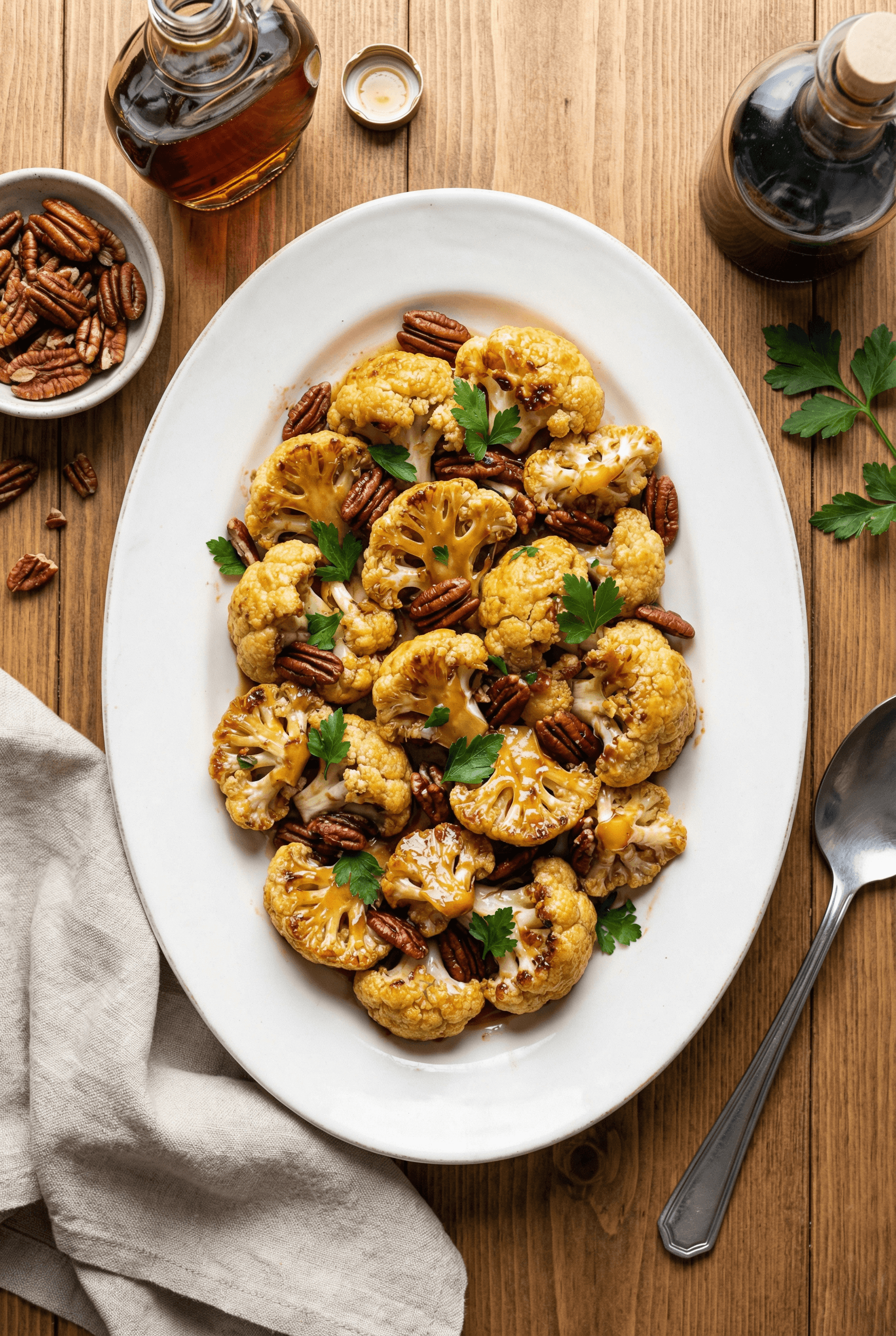
Nutrition Per Serving
- Calories: 245
- Protein: 5g
- Carbs: 28g
- Fat: 15g
- Fiber: 5g
- Sugar: 16g
This side dish provides fiber, vitamins C and K, and healthy fats from olive oil and pecans. The natural sugars come from maple syrup and cauliflower itself.
Pro Tips for Success
- High Heat is Essential: Don’t lower the temperature trying to prevent burning. 425°F creates the caramelization that makes this dish special. Trust the process.
- Don’t Crowd the Pan: Overlapping florets steam instead of roast. Use two pans if needed. Space = crispy edges.
- Cut Uniform Pieces: Consistency ensures even cooking. Large chunks stay raw inside while small pieces burn.
- Flip Halfway: Turning florets ensures both sides caramelize. Set a timer so you don’t forget.
- Taste the Glaze: Before coating cauliflower, taste and adjust. Sweet/tangy/salty should be balanced to your preference.
- Serve Immediately: Roasted cauliflower is best fresh from the oven. Reheated versions lose crispness but still taste good.
Delicious Variations
- Spicy Maple Cauliflower: Add ½ teaspoon cayenne or red pepper flakes to the glaze. Drizzle with hot honey before serving.
- Asian-Inspired: Replace balsamic with rice vinegar, add 1 tablespoon soy sauce, garnish with sesame seeds and green onions instead of parsley.
- Harvest Version: Add dried cranberries and use walnuts instead of pecans. Perfect for Thanksgiving.
- Cheesy Upgrade: Toss with freshly grated Parmesan during the last 5 minutes of roasting. Add crumbled blue cheese before serving.
- Herb-Loaded: Toss finished cauliflower with fresh thyme, rosemary, and sage. Rustic and aromatic.
- Mediterranean Twist: Use red wine vinegar instead of balsamic, add olives and sun-dried tomatoes, top with feta and pine nuts.
Common Mistakes to Avoid
Cutting Florets Too Large: Giant pieces don’t cook through before burning, leaving hard, raw centers. Solution: Cut into 1.5-inch florets maximum. Test a thick stem with a fork – it should pierce easily when done.
Overcrowding the Baking Sheet: Florets piled on top of each other create steam, resulting in soft, soggy cauliflower instead of crispy, caramelized edges. Solution: Use two baking sheets if necessary. Give each floret personal space.
Using Low-Quality Balsamic: Cheap balsamic is thin and overly acidic, creating harsh flavor instead of rich depth. Solution: Invest in mid-range balsamic (not necessarily aged, but not the $2 bottle). It makes a noticeable difference.
Not Flipping During Roasting: Only one side caramelizes, leaving pale, under-roasted surfaces. Solution: Set a timer for 15 minutes and flip every piece. Takes 2 minutes and doubles the deliciousness.
Adding Pecans Too Early: Nuts roasted for 30 minutes burn and turn bitter. Solution: Toast pecans separately and add only after cauliflower is done. They stay crunchy and perfectly golden.
Storage and Make-Ahead
Refrigeration: Store cooled cauliflower in an airtight container for up to 3 days. Pecans will soften but flavor remains excellent. Reheat in a 400°F oven for 8-10 minutes to restore some crispness.
Freezing: Not recommended. Roasted cauliflower becomes mushy when frozen and thawed. This dish is best enjoyed fresh.
Reheating: Oven at 400°F for 8-10 minutes restores warmth and some texture. Avoid microwave – it makes everything soggy. Air fryer at 375°F for 5 minutes works beautifully.
Make-Ahead: Cut cauliflower into florets and store in a sealed bag up to 1 day ahead. Prepare glaze and store separately. Combine and roast just before serving for best texture. Pecans can be candied 2 days ahead and stored in an airtight container.
Serving Suggestions
Holiday Centerpiece: This dish shines on Thanksgiving or Christmas tables alongside turkey, ham, or prime rib. The sweet-savory profile complements rich meats beautifully. Pair with our creamy spinach stuffed salmon for an elegant dinner party menu.
Weeknight Pairing: Serve with simple roasted chicken, grilled pork chops, or seared steak. The cauliflower provides enough flavor interest that the protein can stay simple. Add a grain like quinoa or farro for a complete meal.
Vegetarian Main: Double the recipe and serve over creamy polenta or alongside our cabbage dumplings. Add chickpeas roasted with the cauliflower for extra protein.
Salad Base: Let cauliflower cool to room temperature and toss with mixed greens, arugula, goat cheese, and extra pecans. Drizzle with additional balsamic for a substantial salad.
Why This Recipe Works
The magic happens through the combination of high heat, sugar chemistry, and strategic fat distribution. At 425°F, the natural sugars in cauliflower and added maple syrup undergo Maillard reaction and caramelization simultaneously, creating deep, complex flavors and golden-brown color. The olive oil conducts heat efficiently while coating florets to prevent drying, and it carries fat-soluble flavor compounds throughout. Balsamic vinegar’s acidity brightens the dish while its natural sugars contribute to caramelization. The Dijon mustard acts as an emulsifier, creating a cohesive glaze that clings to every surface instead of pooling at the bottom of the bowl. Single-layer arrangement ensures each floret makes direct contact with the hot pan, driving off moisture and concentrating flavors. The pecans provide textural contrast – their crunch against tender cauliflower creates dynamic eating experience. This isn’t random ingredient combination – it’s engineered deliciousness.
Conclusion
This maple balsamic roasted cauliflower proves that simple vegetables can steal the show with smart technique and quality ingredients. In 35 minutes, you’ve transformed an everyday vegetable into something guests rave about and request seconds of. Whether gracing your holiday table or elevating weeknight dinner, this dish delivers restaurant-quality results without restaurant effort. Preheat that oven, grab your baking sheet, and discover why roasted cauliflower has become the side dish everyone actually wants to eat.
FAQs
Can I use frozen cauliflower?
Fresh is strongly recommended. Frozen cauliflower contains excess moisture that prevents proper caramelization, resulting in soft, steamed texture instead of crispy edges. If you must use frozen, thaw completely and pat very dry with paper towels.
Why is my cauliflower soft instead of crispy?
Three main causes: oven temperature too low, florets crowded on pan, or not roasted long enough. Increase heat to 425°F, spread in single layer, and roast until deeply golden brown.
Can I make this ahead for a party?
Roast cauliflower up to 2 hours ahead and leave at room temperature. Reheat in 400°F oven for 5-8 minutes before serving. Add pecans and garnish just before serving for best texture.
What if I don’t have pure maple syrup?
Honey works as a substitute, though flavor will differ slightly. Do not use pancake syrup (like Aunt Jemima) – it contains corn syrup and artificial flavoring that burns easily and tastes fake.
Can I add other vegetables?
Yes. Brussels sprouts, sweet potato chunks, or red onion wedges roast beautifully with the same glaze. Keep pieces similar size for even cooking.
How do I know when it’s done?
Look for deep golden-brown edges with slight char spots. Pierce the thickest stem with a fork – it should go through easily. Edges should look caramelized and sticky.
Can I make this less sweet?
Reduce maple syrup to 2 tablespoons and increase balsamic to 3 tablespoons. The dish will be more tangy-savory. Add extra garlic powder for depth.
What’s the best balsamic vinegar to use?
Mid-range quality works best ($8-15 per bottle). Avoid super cheap versions (too thin and harsh) and aged expensive versions (too thick and sweet for roasting). Look for “balsamic vinegar of Modena.”
Can I skip the pecans to make it nut-free?
Absolutely. The cauliflower is delicious on its own. For crunch without nuts, add roasted pumpkin seeds (pepitas) or roasted chickpeas during the last 10 minutes of cooking.